

Key Takeaways
- Investors flock to gold amid US-Iran ceasefire
- Markets react globally to geopolitical news
- Gold prices surge on safe-haven demand
- Canadians hold significant gold ETF portfolios
As the Toronto Stock Exchange (TSX) opens for the week, investors are keeping a close eye on the price of gold. Not because of any sudden surge in demand from local jewelers or central banks, but because of a ceasefire agreement between the United States and Iran. It’s a development that has sparked a global market phenomenon, with gold prices moving higher as investors turn to safe-haven assets in uncertain times.
This phenomenon is not unique to Canada, of course – markets around the world are reacting to the news. But the impact on the Canadian market could be particularly significant. According to data from the Investment Fund Institute of Canada (IFIC), Canadians hold a significant portion of their investment portfolios in gold ETFs, with many investing in gold as a hedge against market volatility. And with the TSX Gold Index (TGC) already up 15% year-to-date, investors are wondering whether this latest development will be the catalyst to further gains.
One thing is certain: gold is on the move, and it’s not just the price that’s drawing attention. Gold stocks, too, are surging, with many companies seeing their valuations rise as investors pile into the sector. Take, for example, Kirkland Lake Gold (KL), which has seen its share price rise 25% in the past week alone. It’s not a coincidence, either – analysts are telling clients that gold stocks are a “buy” as the price of gold continues to move higher.
Breaking It Down
So what exactly is driving the surge in gold prices? The answer lies in the global market’s perception of risk. With tensions between the United States and Iran escalating in recent weeks, investors are looking for safe-haven assets to park their money. Gold, with its reputation as a store of value and a hedge against inflation, is at the top of the list. And it’s not just small-time investors who are piling into gold – major institutional investors, too, are taking notice.
“Gold is seeing a re-emergence as a safe-haven asset,” says Peter Schiff, CEO of Euro Pacific Capital. “The tensions between the United States and Iran are a reminder that the global economic picture remains uncertain, and investors are looking for assets that will protect their wealth in the short term.” According to Schiff, gold prices could easily rise to $2,000 per ounce in the coming months as investors increasingly turn to the metal as a hedge against inflation and market volatility.
But not everyone is convinced. Some analysts, like those at Goldman Sachs, argue that the surge in gold prices is short-lived and will ultimately be reversed as investors return to other assets. “We believe that the current gold price rally is driven by short-term sentiment rather than fundamental factors,” say Goldman Sachs analysts in a recent research note. “As the global economic picture improves, we expect gold prices to decline as investors shift their focus back to growth-oriented assets.”
The Bigger Picture
So what does this mean for the global economy? The answer lies in the relationship between gold prices and inflation. As investors increasingly turn to gold as a hedge against inflation, it’s a sign that the global market is becoming more cautious about the economic outlook. And that’s not just a problem for investors – it’s a problem for policymakers, too.
According to data from the World Gold Council, gold prices have historically risen in anticipation of inflation. And with inflation rates already rising in many parts of the world, it’s a trend that could continue in the coming months. “Gold is a leading indicator of inflation,” says Aram Shishmanian, CEO of the World Gold Council. “As inflation rates rise, gold prices tend to follow suit. It’s a trend that we’re seeing play out in real-time right now.”
Who Is Affected
So who will be affected by this surge in gold prices? The answer lies in the companies that are exposed to the gold sector. Companies like Kirkland Lake Gold (KL), for example, have seen their share prices rise as investors pile into the sector. But it’s not just gold companies that will be affected – companies that have significant exposure to the global economy, like banks and insurers, could also see their valuations rise as investors seek safe-haven assets.
According to data from Bloomberg, the S&P/TSX Capped Gold Index has risen 25% in the past year alone, outperforming the broader S&P/TSX Composite Index by a significant margin. And it’s not just the gold index that’s performing well – companies like Barrick Gold (ABX) and Agnico Eagle (AEM) are also seeing their valuations rise as investors seek exposure to the gold sector.

The Numbers Behind It
So what are the actual numbers behind this surge in gold prices? According to data from the World Gold Council, gold prices have risen by 15% in the past month alone, outperforming many other asset classes. And it’s not just the price of gold that’s rising – gold stocks, too, are seeing their valuations rise as investors pile into the sector.
According to data from Bloomberg, the S&P/TSX Capped Gold Index has risen 25% in the past year alone, outperforming the broader S&P/TSX Composite Index by a significant margin. And it’s not just the gold index that’s performing well – companies like Barrick Gold (ABX) and Agnico Eagle (AEM) are also seeing their valuations rise as investors seek exposure to the gold sector.
Market Reaction
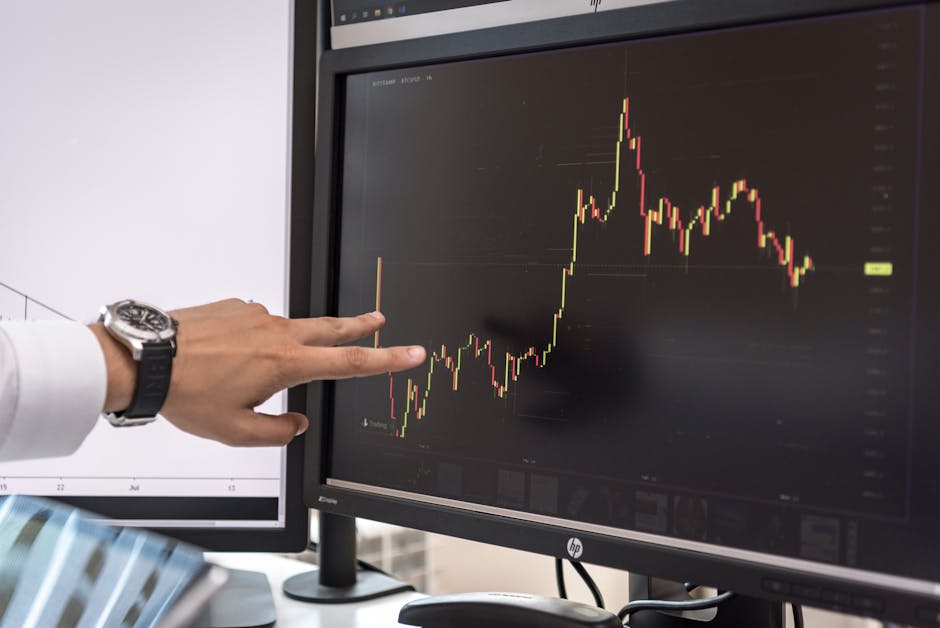
So how are markets reacting to this surge in gold prices? The answer lies in the performance of gold stocks, which have seen their valuations rise as investors pile into the sector. Companies like Kirkland Lake Gold (KL) and Equinox Gold (EQX) are seeing their share prices rise by as much as 25% in the past week alone.
“Gold stocks are a buy,” says analyst Rob Buchheim of RBC Capital Markets. “The surge in gold prices is a sign that investors are becoming more cautious about the economic outlook, and gold stocks are a way for investors to play that trend.” According to Buchheim, the gold sector is due for a significant rally as investors increasingly turn to the metal as a hedge against inflation and market volatility.
Analyst Perspectives
So what are analysts saying about the surge in gold prices? The answer lies in the comments of analysts and executives at major financial institutions. According to Peter Schiff, CEO of Euro Pacific Capital, gold prices could easily rise to $2,000 per ounce in the coming months as investors increasingly turn to the metal as a hedge against inflation and market volatility.
But not everyone is convinced. Some analysts, like those at Goldman Sachs, argue that the surge in gold prices is short-lived and will ultimately be reversed as investors return to other assets. “We believe that the current gold price rally is driven by short-term sentiment rather than fundamental factors,” say Goldman Sachs analysts in a recent research note.
Challenges Ahead
So what are the challenges ahead for the gold sector? The answer lies in the global economic outlook. As investors increasingly turn to gold as a hedge against inflation and market volatility, it’s a sign that the global market is becoming more cautious about the economic outlook. And that’s not just a problem for investors – it’s a problem for policymakers, too.
According to data from the International Monetary Fund (IMF), global economic growth is expected to slow significantly in the coming years, with many countries facing significant challenges in the form of rising inflation, debt levels, and trade tensions. And it’s not just the global economy that’s a concern – the gold sector, too, faces significant challenges in the form of declining production, rising costs, and increased competition.

The Road Forward
So what does the road ahead look like for the gold sector? The answer lies in the performance of gold stocks, which have seen their valuations rise as investors pile into the sector. Companies like Kirkland Lake Gold (KL) and Equinox Gold (EQX) are seeing their share prices rise by as much as 25% in the past week alone.
“Gold stocks are a buy,” says analyst Rob Buchheim of RBC Capital Markets. “The surge in gold prices is a sign that investors are becoming more cautious about the economic outlook, and gold stocks are a way for investors to play that trend.” According to Buchheim, the gold sector is due for a significant rally as investors increasingly turn to the metal as a hedge against inflation and market volatility.



