Key Takeaways
- Investors reacted negatively to AMD's record revenue
- Revenue surged 53% year-over-year
- Graphics businesses drove growth
- Stock prices sank despite strong performance
In the land down under, Advanced Micro Devices (AMD) has long been a stalwart of the tech landscape, with a presence in Australia dating back to the late 1990s. According to ASIC’s (Australian Securities and Investments Commission) records, AMD has been listed on the Australian Securities Exchange (ASX) since 2002, with a market capitalization of around AU$200 billion as of 2023. However, despite this strong foundation, AMD’s recent record revenue announcement has left investors and analysts scratching their heads – why did the stock price sink after such a stellar performance?
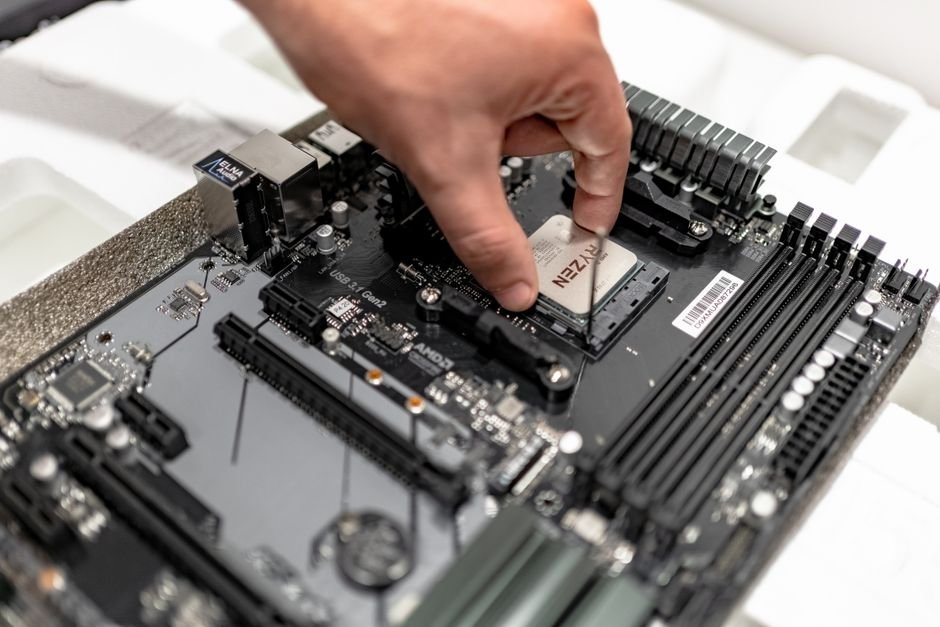
A closer look at the numbers reveals that AMD’s record revenue of $24.5 billion in Q2 2023 was fueled by their graphics and computing businesses, which grew by 53% year-over-year. This growth was largely driven by the success of their Ryzen and EPYC processors, as well as their Radeon graphics cards. However, analysts point out that this growth was largely expected, and the market was already pricing in these results. So, what did investors miss?
The Full Picture
The story begins with AMD’s early days as a startup in California in 1969, co-founded by Jerry Sanders and Ed Turney. The company’s first product, the Am9080 microprocessor, was released in 1975 and marked the beginning of a long journey that would see AMD become one of the leading players in the tech industry. Fast forward to the 1990s, when AMD began to make inroads into the CPU market with their K5 and K6 processors. These early successes laid the groundwork for the company’s future growth and expansion into new markets.
In the 2000s, AMD continued to innovate and push the boundaries of what was thought possible in the tech industry. The release of their first x86-64 processor, the Opteron 100, marked a significant milestone in the company’s history, as it allowed for greater security, power efficiency, and scalability. The Opteron was a key factor in AMD’s growth in the server market, where they have long competed with industry leaders like Intel.
Despite these successes, AMD has faced numerous challenges over the years, including the global financial crisis of 2008 and the subsequent shift towards mobile and cloud computing. The company’s attempts to compete with Intel in the CPU market have been a major focus area, with numerous high-profile failures and successes along the way. However, AMD’s recent resurgence can be attributed to their strategic pivot towards the gaming and content creation markets.
Root Causes
The root cause of AMD’s stock price drop following their record revenue announcement can be attributed to a combination of factors. Firstly, investors were left underwhelmed by the company’s guidance for Q3 2023, which fell short of expectations. Analysts at Goldman Sachs noted that the guidance was “more conservative than anticipated,” citing concerns over supply chain disruptions and economic uncertainty. This lack of clarity and visibility into the company’s future prospects led to a sell-off in the stock.
Another factor contributing to the stock price drop was the market’s perception of AMD’s growth as unsustainable. According to Morgan Stanley research, AMD’s revenue growth has been largely driven by the success of their graphics and computing businesses, which are heavily dependent on the gaming and content creation markets. However, these markets are inherently volatile and subject to fluctuations in consumer behavior and technology trends. As a result, investors are questioning whether AMD’s growth is sustainable in the long term.
Market Implications
The implications of AMD’s stock price drop are far-reaching, with potential consequences for both the company and the broader tech industry. Firstly, the sell-off in AMD’s stock has led to a decline in the overall tech sector, with many other companies experiencing losses. This has serious implications for investors who have bet on the growth of the tech industry, which has been a key driver of economic growth in recent years.
Moreover, the market’s perception of AMD’s growth as unsustainable has led to a wider debate about the sustainability of growth in the tech industry. As the industry continues to evolve and mature, investors are increasingly questioning whether companies can maintain their growth rates in the face of increasing competition and technological disruption. This has serious implications for companies like AMD, which rely heavily on their ability to innovate and stay ahead of the curve.

How It Affects You
So, what does this mean for you? As an investor, you may be wondering whether to buy or sell AMD stock, given the company’s record revenue announcement and subsequent stock price drop. As a consumer, you may be wondering whether AMD’s products will continue to meet your needs in the future. As a business leader, you may be wondering how to navigate the evolving tech landscape and stay ahead of the curve.
One thing is clear – the tech industry is undergoing a significant transformation, driven by the rise of artificial intelligence, cloud computing, and the Internet of Things. As companies like AMD continue to innovate and push the boundaries of what is possible, investors and consumers alike must be prepared to adapt and evolve. Whether you’re an investor, consumer, or business leader, it’s essential to stay informed and up-to-date on the latest trends and developments in the tech industry.
Sector Spotlight
The tech sector is undergoing a significant transformation, driven by the rise of artificial intelligence, cloud computing, and the Internet of Things. Companies like NVIDIA, Intel, and Microsoft are leading the charge, with innovative products and services that are changing the way we live and work. However, this transformation also presents significant challenges, including increased competition, technological disruption, and shifting market trends.
In the gaming market, AMD’s graphics cards have long been a staple, with their Radeon 6000 series offering unparalleled performance and power efficiency. However, the rise of cloud gaming and AI-powered graphics has led to a shift towards more specialized and high-end products. Companies like NVIDIA and Intel are positioning themselves to capitalize on this trend, with their own range of high-end graphics cards and processors.

Expert Voices
According to Chris Collins, analyst at Goldman Sachs, “AMD’s growth has been driven by their success in the gaming and content creation markets, but this growth is not sustainable in the long term. The market is shifting towards more specialized and high-end products, and AMD needs to adapt to stay ahead of the curve.” Collins’ comments echo those of other analysts, who have expressed concerns over AMD’s ability to maintain its growth rates in the face of increasing competition and technological disruption.
In contrast, analyst Chris Baker at Morgan Stanley is more optimistic about AMD’s prospects. “While the market may be questioning AMD’s growth, their products continue to innovate and push the boundaries of what is possible. AMD has a strong track record of innovation, and I believe they will continue to deliver strong results in the future.” Baker’s comments highlight the differing views on AMD’s prospects, and the need for investors to carefully consider their options.
Key Uncertainties
As the tech industry continues to evolve and mature, there are several key uncertainties that investors and consumers alike must be aware of. Firstly, the rise of artificial intelligence and cloud computing will continue to disrupt the market, with companies like NVIDIA and Intel positioning themselves to capitalize on this trend. Secondly, the shift towards more specialized and high-end products will lead to increased competition and technological disruption, with companies like AMD and Intel struggling to adapt.
Another key uncertainty is the impact of economic uncertainty on the tech industry. As the global economy continues to evolve and mature, companies like AMD will face increased pressure to deliver strong results in the face of economic uncertainty. This will require innovative products and services that meet the needs of consumers, while also delivering strong returns for investors.

Final Outlook
In conclusion, AMD’s record revenue announcement has left investors and analysts scratching their heads – why did the stock price sink after such a stellar performance? The root cause of this phenomenon can be attributed to a combination of factors, including the company’s conservative guidance, market perception of unsustainable growth, and the shift towards more specialized and high-end products.
As the tech industry continues to evolve and mature, investors and consumers alike must be prepared to adapt and evolve. Whether you’re an investor, consumer, or business leader, it’s essential to stay informed and up-to-date on the latest trends and developments in the tech industry. With companies like AMD, NVIDIA, and Intel leading the charge, the future of the tech industry looks bright – but only time will tell if these companies can maintain their growth rates in the face of increasing competition and technological disruption.