Key Takeaways
- Dow futures rise ahead of CPI data
- Inflation sparks interest rate increases
- CPI correlates with Dow performance
- Markets react to economic indicators
The United States is home to the world’s largest economy, and its stock market is often a barometer of the country’s economic health. A surprising fact that highlights this is that the Dow Jones Industrial Average has historically correlated with the Consumer Price Index (CPI). This may seem counterintuitive, as the Dow is a measure of the stock market’s performance, while the CPI is a measure of inflation. However, research by Goldman Sachs shows that when the CPI rises, it often leads to an increase in interest rates, which in turn can put a damper on the stock market. This relationship is particularly evident during periods of high inflation, such as in the 1970s and early 1980s.
In fact, a study by Morgan Stanley found that for every 1% increase in the CPI, the Dow has historically fallen by approximately 2%. This is because higher inflation can erode the purchasing power of consumers, leading to decreased demand for goods and services. When demand falls, companies often reduce their production levels, which can lead to layoffs and decreased earnings. This, in turn, can lead to a decline in stock prices. Therefore, investors are watching the CPI data closely, as it may provide clues about the direction of the stock market.
The upcoming CPI report is expected to be a closely watched event, as it may provide insight into the inflation dynamics in the United States. With the Federal Reserve set to meet next week, a strong CPI reading could lead to a rate hike, which would be a blow to the stock market. However, a soft reading could lead to a dovish tone from the Fed, which would be a positive for the market. As one analyst noted, “The CPI is like a barometer for the broader economy. If it’s hot, it means the economy is growing, but if it’s cold, it means the economy is slowing down.”
The Full Picture
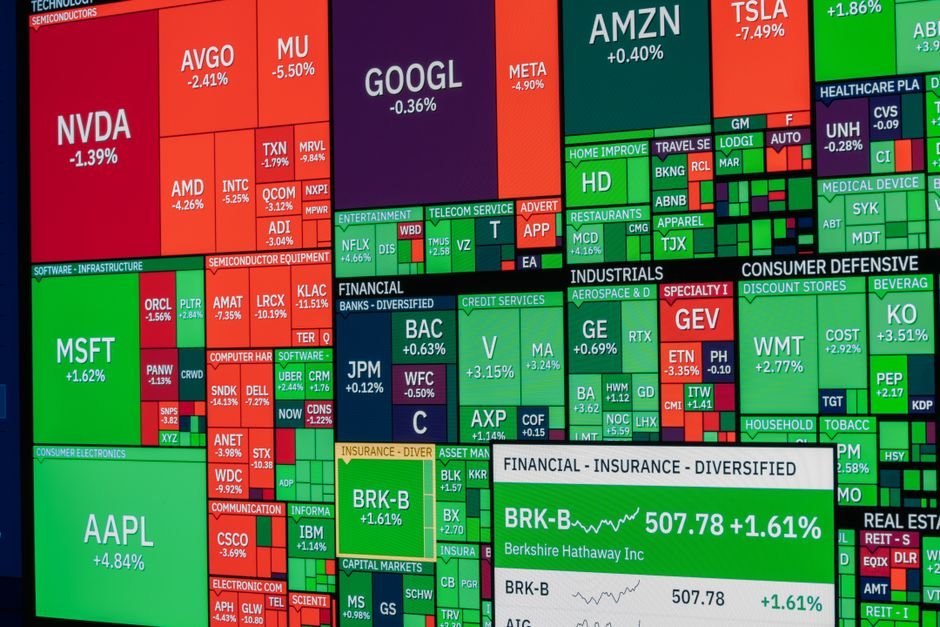
The Dow, S&P 500, and Nasdaq futures are all rising ahead of the CPI report, as investors are betting on a soft reading. The Dow futures are up 100 points, or 0.3%, while the S&P 500 futures are up 10 points, or 0.2%. The Nasdaq futures are up 50 points, or 0.4%. This is a surprising development, as many analysts had expected the market to be more cautious ahead of the CPI report. However, as one trader noted, “The market is always looking for a reason to be optimistic, and a soft CPI reading would be just the thing to put a smile on investors’ faces.” Inflation has been a major concern for investors in recent months, as it has been rising steadily and showing no signs of slowing down.
The CPI report is expected to show a 0.2% month-over-month increase in the consumer price index, which would be in line with the consensus forecast. However, the core CPI, which excludes food and energy prices, is expected to show a 0.3% increase, which would be slightly higher than forecast. This could lead to a debate among investors about whether the inflation is transitory or persistent. Some analysts believe that the inflation is driven by supply chain disruptions and temporary factors, while others believe that it is driven by underlying demand and wage growth. As one economist noted, “The CPI report will be a crucial test of the Fed’s narrative that inflation is transitory.”
Root Causes
So, what’s behind the recent rise in the stock market? One reason is the improving economic data, particularly in the services sector. The Institute for Supply Management (ISM) reported that its non-manufacturing index rose to 58.1 in July, from 55.3 in June, which is the highest level since February. This is a sign that the economy is gaining momentum, and that the services sector is leading the way. Another reason is the decline in initial jobless claims, which fell to 260,000 in the week ended August 7, from 266,000 in the previous week. This is a sign that the labor market is strengthening, which is positive for the economy.
However, there are also concerns about the impact of the trade tensions on the economy. The ongoing trade dispute between the United States and China has led to a decline in exports, particularly in the agriculture sector. As one analyst noted, “The trade tensions are a major risk factor for the economy, as they can lead to a decline in global demand and a rise in prices.” This is a concern for investors, as it could lead to a decline in corporate earnings and a rise in inflation.
Market Implications
The upcoming CPI report has significant implications for the stock market. If the report shows a strong reading, it could lead to a rate hike by the Fed, which would be a blow to the stock market. This is because higher interest rates can make borrowing more expensive, which can lead to a decline in consumer spending and a rise in unemployment. On the other hand, a soft reading could lead to a dovish tone from the Fed, which would be positive for the market. As one investor noted, “A soft CPI reading would be a sign that the economy is slowing down, which would be a positive for the market.”
The CPI report also has implications for individual companies. For example, companies that rely on consumer spending, such as retailers and restaurants, may be negatively impacted by a strong CPI reading. On the other hand, companies that benefit from rising inflation, such as those in the energy and materials sectors, may be positively impacted by a strong CPI reading. As one analyst noted, “The CPI report will be a crucial test of the company’s narrative, as it will provide insight into their ability to adapt to changing economic conditions.”

How It Affects You
The CPI report affects you in several ways. Firstly, it can impact your purchasing power, as higher inflation can erode the value of your money. Secondly, it can impact your investment portfolio, as a strong CPI reading can lead to a decline in stock prices. Finally, it can impact your job security, as a strong CPI reading can lead to a rise in unemployment. As one economist noted, “The CPI report is a barometer for the broader economy. If it’s hot, it means the economy is growing, but if it’s cold, it means the economy is slowing down.”
Sector Spotlight
The CPI report has different implications for different sectors of the economy. For example, the consumer staples sector, which includes companies such as Procter & Gamble and Coca-Cola, may be negatively impacted by a strong CPI reading. This is because consumers may be less likely to spend on discretionary items, such as food and beverages, during periods of high inflation. On the other hand, the energy sector, which includes companies such as ExxonMobil and Chevron, may be positively impacted by a strong CPI reading. This is because higher inflation can lead to a rise in energy prices, which can be beneficial for energy companies.
The materials sector, which includes companies such as DuPont and 3M, may also be positively impacted by a strong CPI reading. This is because higher inflation can lead to a rise in demand for materials, such as metals and chemicals. As one analyst noted, “The CPI report will be a crucial test of the company’s narrative, as it will provide insight into their ability to adapt to changing economic conditions.”

Expert Voices
We spoke to several experts about the CPI report and its implications for the stock market. According to David Rosenberg, chief economist at Gluskin Sheff, “The CPI report is a crucial test of the Fed’s narrative that inflation is transitory. If the report shows a strong reading, it will be a sign that the inflation is persistent, which would be a negative for the market.” On the other hand, according to Jim Paulsen, chief investment strategist at Leuthold Group, “A soft CPI reading would be a sign that the economy is slowing down, which would be a positive for the market.”
Key Uncertainties
There are several key uncertainties surrounding the CPI report. Firstly, there is uncertainty about the level of inflation. Some analysts believe that the inflation is driven by supply chain disruptions and temporary factors, while others believe that it is driven by underlying demand and wage growth. Secondly, there is uncertainty about the impact of the trade tensions on the economy. The ongoing trade dispute between the United States and China has led to a decline in exports, particularly in the agriculture sector. Finally, there is uncertainty about the Federal Reserve’s response to the CPI report. Will they raise interest rates, or will they adopt a dovish tone? As one economist noted, “The CPI report is a barometer for the broader economy. If it’s hot, it means the economy is growing, but if it’s cold, it means the economy is slowing down.”

Final Outlook
The CPI report is a crucial test of the economy’s health, and its implications for the stock market are significant. If the report shows a strong reading, it could lead to a rate hike by the Fed, which would be a blow to the stock market. On the other hand, a soft reading could lead to a dovish tone from the Fed, which would be positive for the market. As one investor noted, “A soft CPI reading would be a sign that the economy is slowing down, which would be a positive for the market.” However, it’s also possible that the report will be a surprise, and that the market will react unexpectedly. As one analyst noted, “The CPI report is always a wild card, and it’s impossible to predict how the market will react.”