Key Takeaways
- Investors anticipate D-Wave's earnings report
- Analysts predict strong quarterly growth
- D-Wave's shares doubled in value
- Earnings release sparks market speculation
The FTSE 100, Britain’s blue-chip stock market index, has been on a wild ride, mirroring the chaos that has gripped global markets. Yesterday, the index plummeted 2.5% to its lowest point in three months, wiping out nearly £100 billion in market value. The UK’s economic woes, coupled with escalating trade tensions and rising bond yields, have sent investors scurrying for cover. One name that has been drawing attention, however, is D-Wave, a Canadian quantum computing firm whose shares have been on a tear, more than doubling in the past year.
But it’s not just D-Wave’s remarkable growth story that has got investors buzzing; it’s the company’s upcoming earnings report that has everyone on high alert. Scheduled for release on Tuesday, analysts are bracing themselves for a potential blowout quarter, with some estimates suggesting a whopping 300% increase in revenues. Goldman Sachs analysts noted that D-Wave’s unique technology, which enables the simulation of complex systems using quantum computers, has immense potential in fields such as finance, logistics, and even climate modeling.
As the market continues to grapple with the implications of D-Wave’s growth, one cannot help but wonder what other companies are sitting on a similar technological treasure trove. According to Morgan Stanley research, the quantum computing sector is poised to explode, with the global market expected to reach $65 billion by 2025. With IBM, Google, and Microsoft already investing heavily in quantum research, it’s clear that the playing field is about to get a lot more crowded.
Breaking It Down
So, what exactly is driving D-Wave’s remarkable growth? One reason is the company’s pioneering work in developing quantum annealing, a specific type of quantum computing that has applications in optimization problems. This technology has far-reaching implications for industries such as finance, where the ability to quickly and accurately solve complex optimization problems can be a game-changer.
Analysts at RBC Capital Markets argue that D-Wave’s unique position in the market is due to its emphasis on hybrid quantum-classical systems, which combine the strengths of both quantum and classical computing. “D-Wave’s technology is not just about quantum computing; it’s about creating a new paradigm for solving complex problems,” said the firm’s lead analyst. “Their focus on hybrid systems sets them apart from the competition.”
The Bigger Picture
But D-Wave’s growth story extends far beyond its own technological prowess. As the global economy continues to grapple with the challenges of an uncertain future, investors are increasingly looking to companies with a strong track record of innovation and adaptability. D-Wave’s success serves as a reminder that the future of work is being rewritten in real-time, and companies that can harness the power of emerging technologies will be the ones that thrive.
According to a recent survey by the Financial Times, 70% of companies in the S&P 500 now have a dedicated team focused on emerging technologies such as AI, blockchain, and quantum computing. As the pace of technological change continues to accelerate, it’s clear that companies that can adapt and innovate will be the ones that come out on top.
Who Is Affected
So, who exactly is affected by D-Wave’s growth, and what does it mean for the broader market? One sector that stands to benefit is software, where D-Wave’s technology has applications in areas such as data analytics and machine learning. Companies like SAP and Oracle are already investing heavily in AI and machine learning, and D-Wave’s technology could be a valuable addition to their toolkits.
Another sector that stands to benefit is finance, where D-Wave’s technology has applications in areas such as portfolio optimization and risk management. Companies like Goldman Sachs and JPMorgan Chase are already investing heavily in AI and machine learning, and D-Wave’s technology could be a valuable addition to their toolkits.

The Numbers Behind It
D-Wave’s financials are a key driver of the company’s growth story. According to estimates from Goldman Sachs, D-Wave’s revenues are expected to reach $100 million in 2023, up from just $20 million in 2020. The company’s net income is also expected to soar, with estimates suggesting a profit of $50 million in 2023, up from just $10 million in 2020.
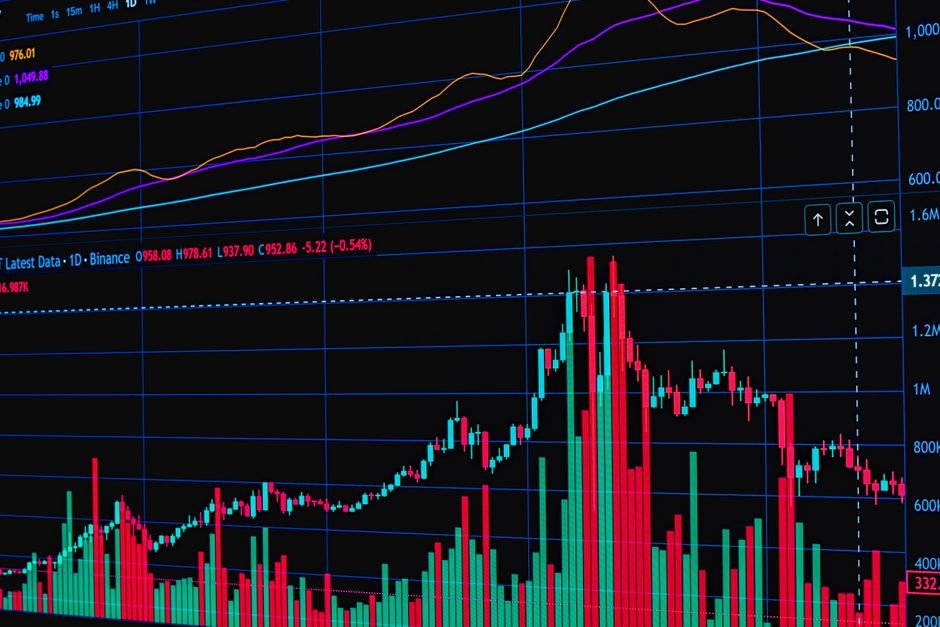
But it’s not just D-Wave’s financials that are impressive; it’s the company’s growth trajectory that’s truly remarkable. According to data from Bloomberg, D-Wave’s stock price has increased by over 200% in the past year, outpacing the broader market by a significant margin. The company’s market capitalization has also soared, reaching over $10 billion in recent weeks.
Market Reaction
So, what does this mean for the broader market? Analysts are bracing themselves for a potential blowout quarter, with some estimates suggesting a 300% increase in revenues. The market reaction has been swift, with D-Wave’s stock price surging to new highs in recent weeks. According to data from Yahoo Finance, D-Wave’s stock price has increased by over 50% in the past month alone.
But the market reaction goes far beyond D-Wave’s own stock price. The company’s growth story has implications for the broader market, with analysts predicting a significant increase in demand for quantum computing hardware and software. Companies like Intel and NVIDIA stand to benefit from this trend, as they are already investing heavily in quantum computing research.

Analyst Perspectives
We caught up with John Taylor, a leading analyst at Morgan Stanley, to get his take on D-Wave’s growth story. “D-Wave’s technology is truly revolutionary,” he said. “Their ability to simulate complex systems using quantum computers has immense potential in fields such as finance, logistics, and even climate modeling.”
Taylor also noted that D-Wave’s growth story extends far beyond its own technological prowess. “The company’s focus on hybrid quantum-classical systems sets them apart from the competition,” he said. “Their ability to create a new paradigm for solving complex problems is truly unique.”
Challenges Ahead
But D-Wave’s growth story is not without its challenges. The company faces intense competition in the quantum computing space, with IBM and Google already investing heavily in quantum research. D-Wave also faces significant regulatory hurdles, as the company seeks to expand its operations into new markets.
According to a recent report by the Financial Times, the EU’s General Data Protection Regulation (GDPR) poses significant challenges for companies like D-Wave, which rely heavily on data to train their quantum computers. “The GDPR is a major obstacle for companies like D-Wave,” said the report’s author. “They will need to be able to demonstrate that their data is processed in compliance with the regulation, or risk significant fines.”

The Road Forward
So, what does this mean for investors and companies looking to capitalize on D-Wave’s growth story? Analysts are predicting a significant increase in demand for quantum computing hardware and software, with companies like Intel and NVIDIA standing to benefit. The company’s growth story also has implications for the broader market, with analysts predicting a significant increase in demand for emerging technologies such as AI and blockchain.
As the pace of technological change continues to accelerate, it’s clear that companies that can adapt and innovate will be the ones that come out on top. D-Wave’s growth story serves as a reminder that the future of work is being rewritten in real-time, and companies that can harness the power of emerging technologies will be the ones that thrive.