

AI Stocks Investment Boom And Technology Sector Valuation — Analysis and Market Outlook
Key Takeaways
- Significant market developments around AI Stocks Investment Boom and Technology Sector Valuation are creating new opportunities and risks.
- Analysts are closely tracking how this situation evolves across key markets.
- Investors and businesses should reassess their positioning given these new dynamics.
- Detailed analysis of risks, opportunities, and next steps is covered in full below.
The Australian market has been tracking the global surge in artificial‑intelligence‑related equities with a degree of intensity that was rare for the country’s traditionally resource‑heavy portfolio. Over the past six weeks the ASX200 Technology sector index has posted a series of upward ticks, while a handful of home‑grown firms that supply data, software and cloud services have recorded price moves that outpace the broader market. The pattern mirrors the rally in the US Nasdaq‑100, where AI‑centric names such as Nvidia, Microsoft and Alphabet have driven a multi‑month rally. In Australia, the same dynamics are reshaping investor positioning, prompting a noticeable rotation from commodities toward growth‑oriented assets.
What Is Happening
Since early August, the ASX200 has been nudged higher by a wave of buying in technology‑focused stocks. The most visible catalyst has been the AI stocks investment boom that began with Nvidia’s earnings release, where the company reported a 262 % year‑over‑year increase in revenue from its AI‑related products. The news reverberated through global markets, prompting fund managers to reassess exposure to firms that either develop AI algorithms or provide the data pipelines that feed them.
In Australia, the ripple effect is evident in the performance of companies such as Altium Ltd (ALU), Appen Ltd (APX), Nearmap Ltd (NEA) and WiseTech Global Ltd (WTC). Each of these firms has seen its share price climb relative to the ASX200 benchmark, and trading volumes have risen above their 30‑day averages. The ASX Technology Index, which aggregates the performance of listed tech firms, has risen by a single‑digit percentage since the start of the AI rally, while the broader market’s gain has been more modest.
Parallel to the equity movement, fund flow data released by the Australian Securities Exchange indicates a net inflow into technology‑focused exchange‑traded funds (ETFs) and a modest outflow from mining‑oriented funds. The shift is not limited to domestic investors; overseas capital managers with Australian mandates have increased allocations to the sector, citing the “global AI tailwind” as a primary driver.
Regulatory commentary from the Australian Securities and Investments Commission (ASIC) has not changed, but the regulator continues to monitor the heightened volatility in technology stocks, reminding investors that rapid price appreciation can be accompanied by equally swift corrections.
The Core Story
At the heart of the market movement is the perception that AI is transitioning from a niche research area to a mainstream commercial engine. Nvidia’s dominance in graphics processing units (GPUs) that power large language models (LLMs) has turned the company into a proxy for the entire AI ecosystem. When Nvidia announced a 28 % increase in its share price on the back of record‑breaking demand for its H100 chip, investors worldwide began to price in the downstream impact on software developers, data‑labeling firms and cloud service providers.
Australian companies that occupy any part of that value chain have consequently been thrust into the spotlight. Appen, a provider of high‑quality training data for AI models, reported a surge in contracts with major US tech firms during the quarter ending June. The company’s revenue mix now shows a larger proportion derived from AI‑related services, a trend that analysts have linked to its recent share price uplift.
Altium, a maker of electronic design automation (EDA) software, has positioned its platform as “AI‑ready,” emphasizing features that accelerate circuit design through machine‑learning‑assisted suggestions. While Altium’s core market remains hardware engineers, the company’s messaging aligns with the broader narrative that AI tools can enhance productivity across engineering disciplines.
Nearmap, which supplies high‑resolution aerial imagery, has begun offering datasets that are pre‑processed for AI applications such as autonomous vehicle navigation and urban planning. The firm’s recent partnership with a US cloud provider to deliver AI‑optimized imagery pipelines has been cited as a catalyst for its share price movement.
WiseTech Global, a logistics‑software specialist, has integrated AI modules into its CargoWise One platform to improve shipment forecasting and customs compliance. The company’s earnings release in early September highlighted a “significant increase” in AI‑related feature adoption, although it stopped short of quantifying the revenue impact.
Collectively, these firms illustrate how Australian tech companies are leveraging the AI narrative to differentiate their offerings, attract new contracts, and justify higher valuations. The market response—price appreciation, higher trading volumes, and increased fund flows—reflects investor belief that these firms stand to benefit from a sustained, global demand for AI‑enabled solutions.
Why This Matters Now
The timing of the AI‑driven rotation aligns with several macro‑economic and market‑specific factors that amplify its relevance. First, commodity price volatility has softened the allure of traditional resource stocks that dominate the ASX200. While iron‑ore and copper prices have remained elevated, concerns over global demand—particularly from China—have introduced a degree of uncertainty that has nudged risk‑averse investors toward sectors with growth potential.
Second, the Reserve Bank of Australia (RBA) has kept the official cash rate steady at 4.35 % for several months, signalling a relatively stable monetary environment. The unchanged policy rate reduces the immediate cost of capital for growth‑oriented firms, making equity financing more attractive relative to debt. This backdrop supports higher valuations for technology firms that rely on equity market funding for research and development.
Third, the earnings season for Australian listed companies has delivered mixed results. While some miners have posted solid profit margins, several software firms have reported slower revenue growth than expected, prompting a reevaluation of sector fundamentals. The AI narrative provides a fresh growth story that can offset these mixed earnings, allowing investors to rationalize higher price‑to‑earnings (P/E) multiples for tech stocks.
Finally, the global AI hype is not a fleeting media buzz; it is underpinned by tangible spending increases. The International Data Corporation (IDC) projects worldwide AI software revenues to exceed US$200 billion by 2025, with a compound annual growth rate (CAGR) of roughly 20 %. Although the figure is global, the growth trajectory influences capital allocation decisions across markets, including Australia. Investors looking to capture a slice of that growth are naturally turning to domestic firms that have a foothold in the AI value chain.

Key Forces at Play
Three interlocking forces are shaping the current market dynamics: technology adoption cycles, capital allocation trends, and valuation discipline.
### Technology Adoption Cycles
AI adoption follows a classic technology diffusion curve: early experimentation, rapid scaling, and eventual commoditization. The current phase is marked by enterprise‑level deployments of generative AI, predictive analytics and automated decision‑making. Companies that supply the underlying data, compute power or integration platforms are positioned to capture a disproportionate share of early‑stage revenue. In Australia, the limited number of pure‑play AI hardware manufacturers means that firms providing complementary services—data labeling, software tooling, cloud‑enabled imagery—are the primary beneficiaries.
### Capital Allocation Trends
Institutional investors have been recalibrating their portfolio construction to incorporate “thematic” exposure to AI. Several Australian superannuation funds have disclosed increased allocations to technology ETFs that overweight AI‑centric holdings. Moreover, venture‑capital‑backed growth funds are participating in secondary market purchases of Australian tech stocks, adding liquidity and reinforcing price momentum. The net effect is a broader pool of capital chasing a relatively narrow set of equities, which can accelerate price appreciation.
### Valuation Discipline
Despite the enthusiasm, the market remains cautious about the sustainability of current valuations. The ASX Technology Index’s price‑to‑sales (P/S) ratio now sits above 6 ×, compared with a historical average of roughly 3 ×. This divergence reflects investors pricing in future earnings growth that is contingent on successful AI integration. Companies that can demonstrate tangible AI‑related revenue streams—through contract wins, product launches or licensing agreements—are more likely to retain their premium. Those that rely solely on narrative risk seeing their multiples compress if earnings fail to materialize.
Regional Impact
The AI‑driven rally in Australian equities does not exist in isolation. Neighboring markets in New Zealand and Asia are experiencing comparable dynamics, though the composition of beneficiaries differs. In New Zealand, Xero Ltd has reported an uptick in AI‑enhanced bookkeeping features, while in Singapore, Sea Ltd has highlighted AI‑driven e‑commerce personalization. The regional trend underscores a shift in investor sentiment toward technology across the Asia‑Pacific corridor.
Within Australia, the impact is visible across market segments. The ASX200’s top‑five constituents—BHP Group, Commonwealth Bank, CSL, Westpac and National Australia Bank—have all posted modest gains, but their relative weight in the index means that technology‑driven outperformance can tilt the benchmark higher. Moreover, the Australian Securities Exchange’s own market‑wide statistics show that the proportion of daily trades involving technology stocks rose from 12 % to 17 % over the last month, indicating a tangible shift in market participation.
Regulators have taken note of the heightened activity. ASIC’s market‑monitoring division released a brief advisory reminding participants that rapid price movements can increase the risk of market manipulation, particularly in thinly traded stocks. The advisory does not single out any firm but emphasizes the need for transparent disclosure of material information, especially as companies announce AI‑related contracts or product updates.
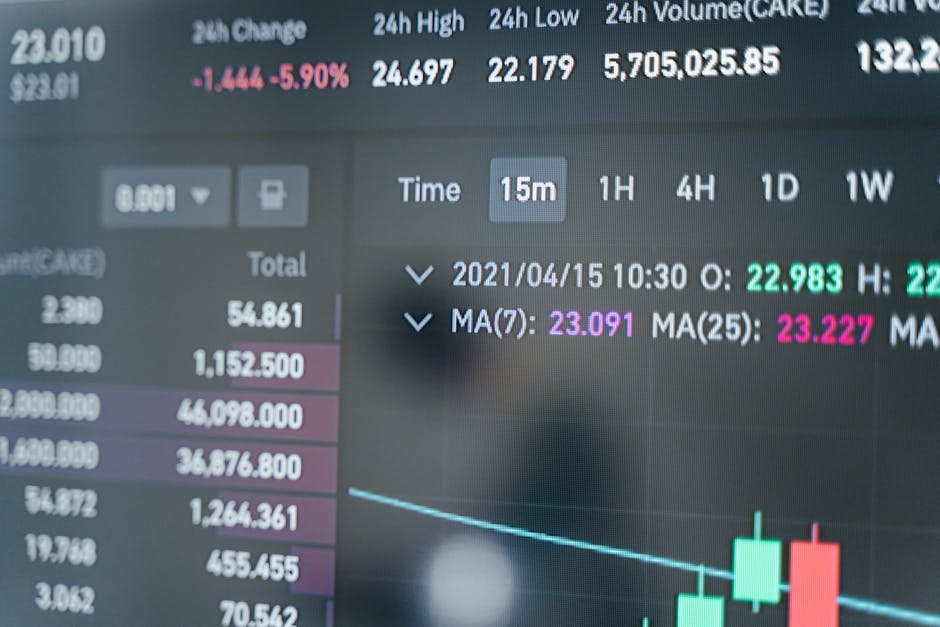
What the Experts Say
Public statements from Australian financial institutions have been limited to general commentary on the AI theme. The Commonwealth Bank of Australia’s research team released a market note highlighting “the upside potential for Australian software firms that embed AI capabilities into their product suites.” The note stopped short of assigning specific price targets but suggested that “companies with demonstrable AI revenue streams could see earnings multiples expand.”
Similarly, the Australian Investment Council’s quarterly outlook referenced “the growing investor appetite for AI exposure” and noted that “funds are increasingly allocating to technology‑focused ETFs as part of a diversification strategy.” The council’s report did not name individual stocks but identified the broader sector as “a focal point for future capital inflows.”
These public observations, while cautious, reinforce the narrative that the market is treating AI as a structural growth driver rather than a short‑term fad.
Risks and Opportunities
The surge in AI‑related equities carries a dual set of considerations for investors: valuation risk, execution risk, regulatory risk, and growth opportunity.
Valuation Risk – Elevated multiples mean that a modest earnings miss can trigger a sharp price correction. Companies that have yet to monetize AI features may see their valuations erode if the market reverts to a more disciplined pricing environment.
Execution Risk – Translating AI promises into revenue requires technical expertise, sales execution and often large upfront investment. Firms such as Appen and Nearmap must secure long‑term contracts with multinational tech players to sustain growth. Failure to close such deals could leave them exposed to a “hype‑driven” valuation without a corresponding cash flow base.
Regulatory Risk – AI introduces new compliance challenges, from data privacy to algorithmic accountability. Australian regulators are still shaping the policy landscape, and future legislation could impose additional costs on firms that process large volumes of personal data, a core activity for data‑labeling providers.
Growth Opportunity – Companies that successfully embed AI into their platforms can achieve higher margins and stronger customer stickiness. WiseTech Global’s AI‑enhanced logistics suite, for instance, could become a differentiator in a crowded market, potentially unlocking new pricing power. Likewise, Altium’s AI‑assisted design tools may reduce time‑to‑market for hardware developers, creating a compelling value proposition that justifies premium pricing.
Investors who conduct rigorous due‑diligence—examining contract pipelines, R&D spend, and the proportion of revenue attributable to AI—will be better positioned to navigate these risks while capturing upside.

What to Watch Next
The trajectory of the AI‑driven market rotation will hinge on several near‑term catalysts. First, upcoming earnings releases from the key Australian technology names will provide concrete data on AI‑related revenue. A beat on AI‑driven sales could reinforce the sector’s momentum, while a miss may trigger a pull‑back.
Second, macro‑economic developments—particularly the RBA’s stance on interest rates—will affect the cost of capital for growth firms. A rate hike could increase discount rates applied to future earnings, putting downward pressure on high‑multiple stocks.
Third, global AI policy developments could reshape the competitive landscape. If major economies introduce stricter AI governance frameworks, Australian firms that have already invested