

European Central Bank Rate Decision And Euro Zone Economy — Analysis and Market Outlook
Key Takeaways
- Significant market developments around European Central Bank Rate Decision and Euro Zone Economy are creating new opportunities and risks.
- Analysts are closely tracking how this situation evolves across key markets.
- Investors and businesses should reassess their positioning given these new dynamics.
- Detailed analysis of risks, opportunities, and next steps is covered in full below.
The Reserve Bank of India keeps a close eye on Frankfurt whenever the European Central Bank convenes to set monetary policy, because shifts in European credit costs alter foreign portfolio flows into Mumbai, modify hedging costs for Indian corporate borrowers raising debt abroad, and recalibrate trade balances between the euro area and South Asia. When the European Central Bank adjusts its primary interest rates, the divergence or convergence between Frankfurt and the Reserve Bank of India’s benchmark repo rate influences how global institutional investors allocate capital across emerging market debt and equity baskets, directly touching the performance of the BSE Sensex and the NSE Nifty 50.
Indian multinationals operating subsidiaries across the European Union, alongside domestic manufacturers exporting textiles, automotive ancillaries, software, and chemicals into core markets such as Germany, France, and Italy, operate on payment terms settled in euros or tied to European financing benchmarks. A shift in the European Central Bank’s policy rate directly impacts European bank lending standards, sovereign bond yields across the continent, and domestic European aggregate demand. For asset managers based in Mumbai and institutional allocators managing offshore India-dedicated funds, every marginal move in the cost of borrowing in Frankfurt forces an evaluation of foreign exchange exposure, sovereign spread differentials, and cross-border portfolio yields.
Breaking It Down
The European Central Bank operates through three primary policy rates: the interest rate on the main refinancing operations, the rate on the deposit facility, and the rate on the marginal lending facility. Decisions on these rates are executed by the ECB Governing Council to maintain medium-term price stability across the twenty member states that share the single currency. When macroeconomic data indicates that headline and core inflation are moving toward the target of two percent over the medium term while economic expansion decelerates, the Governing Council deliberates whether to lower borrowing costs, maintain policy restriction, or adjust the path of asset balance sheet reduction.
The transmission of these policy choices travels through the European financial system by altering the interbank lending rates, government bond yields across sovereign issuers such as German Bunds and French OATs, and corporate bond spreads. Lowering policy rates reduces the yield that financial institutions earn by parking excess liquidity overnight at the central bank, which encourages banks to provide credit to households and corporations at narrower margins. Conversely, holding rates at elevated levels keeps monetary policy restrictive, deliberately depressing aggregate credit demand to extinguish remaining domestic inflationary pressures, particularly within labour-intensive service sectors.
For the external observer looking through the lens of Indian markets, this transmission mechanism is not isolated to European borders. Monetary easing or tightening by the European Central Bank alters the global balance of sovereign yield spreads. When European yields shift relative to Indian sovereign bond yields represented by the benchmark ten-year government bond, the relative attractiveness of Indian fixed income instruments to foreign portfolio investors shifts. At the same time, Indian corporate treasuries that utilize European commercial paper or private placements denominated in euros encounter altered base borrowing costs, shifting their weighted average cost of capital depending on whether they leave currency liabilities unhedged or enter forward foreign exchange agreements.
The decision framework relies heavily on quarterly economic projections prepared by ECB staff. These assessments cover real gross domestic product growth forecasts, headline harmonised index of consumer prices inflation, core inflation excluding volatile components like energy and unprocessed food, and wage growth indicators tracked through negotiated wage agreements. If internal projections suggest economic activity is stagnating under restrictive interest rate burdens, pressure builds on the Governing Council to deliver monetary relief, provided wage-growth measures demonstrate containment.
The Bigger Picture
The macroeconomic environment confronting the euro zone reflects uneven momentum across core industrial economies and service-oriented peripheral nations. Industrial production in Germany has experienced repeated headwinds, tied to structural energy cost transitions, fluctuating external demand from major international trading counterparties, and lingering vulnerabilities in global goods supply networks. Meanwhile, southern European economies, buoyed during recent cycles by tourism resilience and national recovery spending programs, have registered comparatively firmer output, creating an asymmetric policy backdrop for a single, uniform monetary stance.
This divergence across the continent complicates central bank communication. A monetary framework designed to curb inflation generated by services and wage increases in some parts of the monetary union can inadvertently impose severe financing constraints on manufacturing sectors elsewhere that are already confronting weak order books. Because the euro zone does not possess a fully unified fiscal system, monetary policy must bear the primary burden of macro-stabilization, navigating sovereign debt sustainability constraints across member states with high debt-to-GDP ratios while maintaining credibility on inflation containment.
Globally, the policy decisions of the European Central Bank are contextualized against the actions of the United States Federal Reserve, the Bank of England, the Bank of Japan, and emerging market central banks including the Reserve Bank of India. Central banks do not operate in a vacuum; currency valuations fluctuate according to interest rate differentials. If the ECB cuts rates ahead of or more aggressively than other central banks, the euro experiences downward valuation pressure against counterpart currencies, including the United States dollar and the Indian rupee. While a depreciated euro aids European export competitiveness on global markets, it elevates the cost of imported commodities and intermediate components priced in United States dollars, bringing imported inflationary elements back into the European economy.
In India, policymakers at the Reserve Bank of India assess these cross-currents within their Monetary Policy Committee deliberations. India’s external vulnerability indicators, including foreign exchange reserve adequacy, external debt ratios, and current account deficit margins, are sensitive to external financial conditions. If monetary loosening in Europe leads to global capital searching for incremental yield outside low-yielding developed markets, emerging market assets typically see inflows. However, if the European rate reductions are interpreted as a distress signal regarding deep economic stagnation across the European continent, global risk aversion can trigger portfolio outflows from emerging equity markets, shifting institutional allocations into defensive safe-haven sovereign paper.
🏦 Monetary Policy Transmission
The European Central Bank's interest rate moves trigger immediate ripple effects for the Reserve Bank of India, shifting foreign institutional portfolio flows across emerging markets and directly impacting benchmark equity indices like the Sensex and Nifty.
Who Is Affected
A wide spectrum of market participants across multiple asset classes feels the direct consequences of the European Central Bank’s interest rate stance. Within European borders, corporate entities with floating-rate debt structures, prospective mortgage borrowers, and domestic commercial banks observe immediate adjustments to financing costs and net interest margins. Commercial banks, which had benefited from wider deposit-to-lending spreads during the phase of elevated policy rates, face a contraction in lending margins as rate cuts reduce loan pricing power before deposit funding costs fully reprice lower.
Outside the euro area, Indian exporters are prominently exposed. The European Union stands as one of India’s largest trading blocs for bilateral merchandise trade. Exporters of readymade garments in Tirupur, leather manufacturers in Kanpur, pharmaceutical formulators in Hyderabad, and software services conglomerates based in Bengaluru and Pune maintain direct revenue lines linked to European corporate and consumer purchasing power. A restrictive ECB policy stance that slows European consumer spending and capital expenditure programs directly compresses order books for Indian suppliers. If European interest rate cuts successfully revitalize corporate investment across the continent, these export corridors experience secondary demand recovery.
Indian institutional investors and corporate finance teams manage balance sheets subject to European financial market dynamics. Corporate entities that have issued foreign currency convertible bonds or tapped European debt markets through external commercial borrowings face altered refinancing options. When euro benchmark interest rates decline, Indian firms seeking to diversify their global debt portfolios away from dollar-denominated syndications find euro-denominated issuance comparatively attractive, provided the basis swap back into Indian rupees remains economically feasible after accounting for hedging costs.
Foreign Portfolio Investors operating out of European financial centres such as Luxembourg, Frankfurt, Paris, and Dublin are significant contributors to institutional turnover on Indian stock exchanges. These funds deploy cross-border capital based on total return projections, evaluating potential equity capital appreciation against fixed yield opportunities available in home markets. As the risk-free rate within the euro zone declines, the relative hurdle rate for investing in Indian equities and domestic debt securities falls, encouraging these foreign institutional entities to increase their allocations to Indian emerging market portfolios.
The Numbers Behind It
Economic evaluation of the euro area relies on specific macroeconomic measurements published by the European Union’s statistical office, Eurostat. The Harmonised Index of Consumer Prices provides the benchmark standard for inflation across the monetary union. Headline inflation calculations incorporate four main expenditure categories: services, food, alcohol and tobacco, non-energy industrial goods, and energy. A deceleration in headline inflation from historic highs toward the two percent objective allows the European Central Bank scope to reconsider the level of policy restriction, though core inflation—which excludes the energy and unprocessed food sectors—often exhibits stickier behaviour due to wage indexing mechanisms.
Gross domestic product growth across the euro zone has demonstrated marginal expansion, with consecutive quarters registering growth rates close to zero percent in real terms, marked by stagnation in key industrial hubs. Industrial production data, specifically in machine tools, automotive production, and basic chemical manufacturing, has shown persistent contraction or muted output in major manufacturing-dependent member states. At the same time, the unemployment rate across the euro area has held near historically low levels, sustaining upward pressure on labour costs even while overall output growth remains depressed.
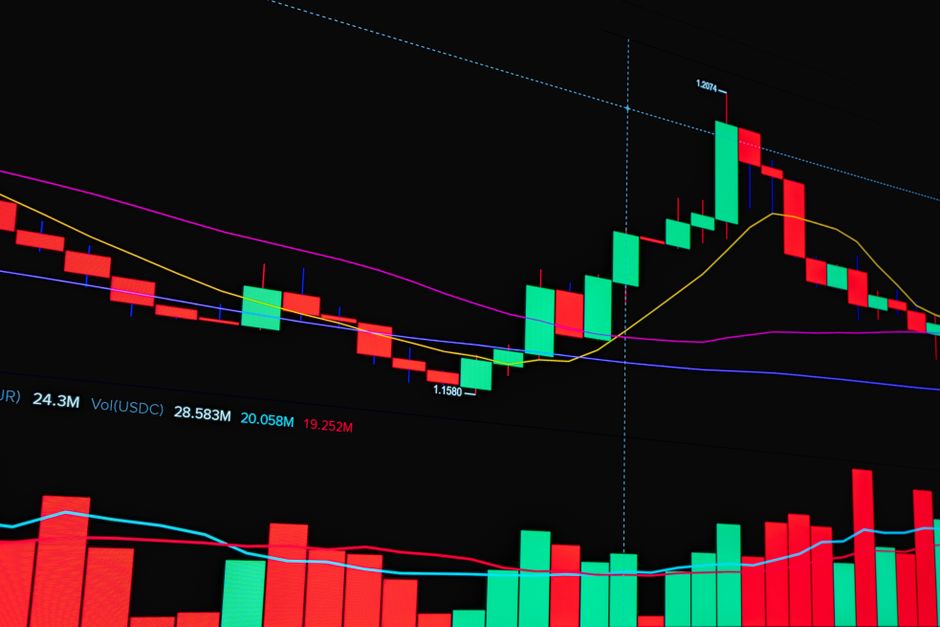
Within financial markets, sovereign bond yields act as the primary quantitative pricing mechanism for credit. The ten-year German sovereign yield, commonly known as the Bund, serves as the risk-free reference benchmark for Europe. Spreads between the Bund and the ten-year sovereign debt of other member states, such as the Italian BTP-Bund spread or the French OAT-Bund spread, illustrate perceived credit risks and fiscal discipline within the monetary union. A narrowing spread indicates market confidence in European economic coherence and central bank liquidity mechanisms, while widening spreads indicate growing concerns regarding sovereign debt sustainability.
For India, the numbers interact through the bilateral current and capital account metrics recorded by the Reserve Bank of India and the Ministry of Commerce and Industry. Trade flows between India and the European Union total tens of billions of dollars annually, with engineering goods, refined petroleum products, gems and jewellery, and textiles forming core components of the export basket. On the capital account, foreign direct investment equity inflows from European nations, led by jurisdictions like the Netherlands and Germany, represent a substantial fraction of cumulative foreign capital deployed into Indian manufacturing, infrastructure, and financial technology ventures.
Market Reaction
The reaction of global financial assets to an ECB monetary policy announcement generally reflects how the actual decision compares with pre-meeting forward guidance and market consensus expectations. If the Governing Council delivers a policy rate adjustment that has already been discounted by pricing in forward rate agreements and sovereign yield curves, immediate market volatility remains modest. However, secondary volatility frequently erupts during the post-decision press conference held by the ECB leadership, where language regarding future rate trajectories, qualitative assessments of growth risks, and commentary on balance sheet reduction is scrutinized by market participants.
European equity markets, represented by major indices such as the EURO STOXX 50, the DAX in Frankfurt, and the CAC 40 in Paris, respond differently depending on sector composition. Exporter-heavy segments frequently gain ground when interest rate trajectories lead to a softening euro, as foreign earnings convert back into home currencies at more favourable terms. Conversely, the banking sector faces headwinds when expectations of rate cuts materialize, as downward revisions to net interest income expectations weigh on projected banking profitability.
The foreign exchange market displays immediate shifts, with the euro fluctuating against the United States dollar, the British pound, and Asian currencies. In Mumbai, the EUR/INR exchange rate quoted on domestic currency derivatives segments reacts directly to changes in the cross-currency valuation of the euro. A softening of the euro against the Indian rupee lowers the landed cost of European capital equipment, specialty chemicals, and machinery imports for Indian businesses, yet simultaneously compresses the rupee realizations of Indian software service firms and merchandise exporters invoicing in euros.
Fixed income markets experience real-time repricing across global curves. A confirmed rate reduction or dovish shift in ECB guidance flattens or steepens sovereign yield curves depending on longer-term inflation perceptions. When European sovereign paper yields drop, institutional capital seeking higher yields often evaluates emerging market sovereign and corporate paper. On Indian debt desks, dealers observe movements in sovereign bond yields alongside foreign portfolio investor purchase activity in the Fully Accessible Route debt securities, which permit unrestricted foreign investment in specific Government of India sovereign debt instruments.
“Every monetary shift orchestrated in Frankfurt quietly reshapes credit conditions in Mumbai, dictating the flow of global capital and defining the competitive edge of Indian enterprise.”

Analyst Perspectives
Institutional financial market analysts, economists at global investment banks, and credit rating agencies approach the European Central Bank’s rate decisions through contrasting analytical lenses. One camp of economists asserts that the ECB must prioritize structural economic growth, arguing that maintaining excessively restrictive monetary policy when manufacturing indicators point downward risks causing long-term damage to the European industrial base. These analysts emphasize that persistent high borrowing costs deter corporate capital expenditure, stall green energy transition investments, and accelerate de-industrialization as corporations shift production facilities to regions with cheaper energy and lower financing costs.
Another contingent of economists and policy researchers urges vigilance against premature monetary easing. Their perspective relies on the observation that wage growth within the euro area services sector has not retreated sufficiently to guarantee inflation stability. This analytical camp argues that if the central bank reduces policy rates too rapidly or by too wide a margin, secondary inflationary pressures could reignite, particularly if external geopolitical disruptions or shipping route challenges introduce unexpected shocks into import prices. Under this view, retaining a restrictive posture ensures that medium-term inflation expectations remain firmly anchored to the two percent objective.
Fixed income strategists in Mumbai assess the ECB’s actions through the lens of interest rate differentials and foreign portfolio capital preservation. Analysts tracking cross-border flows argue that a wider interest rate differential between Indian sovereign bonds and developed market debt encourages continuous capital commitments from global funds into domestic debt markets. If the ECB cuts rates while the Reserve Bank of India maintains its benchmark repo rate to ensure domestic food and core inflation remain on the target path, the widening real yield advantage enhances the carry-trade appeal of the Indian rupee, attracting institutional fixed income capital.
Equity strategists present a more balanced outlook. While lower European borrowing costs can stimulate global liquidity conditions and marginally improve corporate earnings for Indian companies with European customer bases, systemic weakness in the European real economy dampens broad-based demand. Analysts monitoring Indian IT services providers note that European enterprise clients under balance sheet stress prioritize operational cost-cutting over long-term technological transformation, meaning lower rates may not instantly translate into an expansion of discretionary technology spending across the continent.
🌐 Cross-Border Trade Impact
European credit shifts alter corporate hedging expenses for Indian borrowers raising foreign debt while directly affecting domestic exporters in textiles, automotive ancillaries, software, and chemicals navigating euro-settled payment terms across core markets like Germany and France.
Challenges Ahead
The European Central Bank confronts multiple operational and macroeconomic challenges that complicate its forward rate trajectory. First among these is the complex task of unwinding its massive asset balance sheet. Over years of quantitative easing through programs such as the Asset Purchase Programme and the Pandemic Emergency Purchase Programme, the central bank absorbed immense quantities of European sovereign and corporate debt. The systematic, non-reinvestment of maturing securities reduces central bank liquidity, which can exert upward pressure on bond yields even as the Governing Council lowers official headline policy rates, creating cross-currents within monetary transmission.
Fiscal policy coordination across the twenty euro zone nations represents another fundamental structural hurdle. While monetary policy is centralized in Frankfurt, budgetary policy remains the prerogative of sovereign national parliaments, constrained only by European fiscal framework rules. Member states that carry high public debt loads possess limited fiscal space to stimulate their economies or absorb economic shocks through sovereign deficit spending. If central bank policy rates remain restrictive, these countries
Editorial Bottom Line
The ECB’s rate outlook is now as much a function of its balance‑sheet unwind and fragmented fiscal politics as of headline policy rates, meaning any easing could be offset by rising bond yields and uneven national stimulus capacity. Investors should monitor the Governing Council’s guidance on asset‑reduction timelines and the fiscal stance of debt‑laden member states for clues on the euro‑zone’s monetary transmission path. In short, the next policy decision will hinge on how the bank juggles liquidity drainage with divergent fiscal realities, not just on the numbers it announces.

Frequently Asked Questions
How will the ECB's latest rate decision affect Indian investors' exposure to Eurozone assets?
The ECB’s decision to raise or cut rates directly influences Eurozone equity and bond valuations. A rate hike usually strengthens the euro, raises European bond yields, and can compress equity multiples, which may depress returns for Indian investors holding Euro‑denominated funds. Conversely, a cut can boost European equities and lower bond yields, improving total returns. Indian investors should review currency‑hedged versus unhedged exposure, as currency risk can offset or amplify the impact of the ECB move on portfolio performance.
What impact does an ECB rate hike have on the INR/EUR exchange rate?
When the ECB raises rates, the euro typically appreciates against currencies with lower yields, including the Indian rupee. Higher euro rates attract capital inflows, narrowing the INR/EUR spread. Historically, a 25‑basis‑point ECB hike has led to a 0.5‑1.0% rise in the euro against the rupee within weeks. Indian importers and travelers should anticipate higher euro‑priced costs, while exporters may benefit from a relatively weaker rupee, but the effect can be moderated by domestic monetary policy and global risk sentiment.
Should Indian mutual funds with Eurozone exposure be rebalanced after the ECB decision?
Rebalancing depends on the fund’s mandate and the magnitude of the ECB move. If the decision signals a sustained tightening cycle, Eurozone equities may face valuation pressure, and bond funds could see rising yields and falling prices. Investors might shift from duration‑heavy European bond holdings to shorter‑duration or inflation‑linked instruments, and consider adding sectors that benefit from higher rates, such as financials. However, frequent rebalancing can increase transaction costs, so a strategic review rather than a knee‑jerk change is advisable.
How does the ECB's policy stance influence European bond yields and Indian fixed‑income investors?
The ECB sets the benchmark for short‑term rates, which cascades into the entire Eurozone yield curve. A hawkish stance pushes yields up, lowering the price of existing European sovereign and corporate bonds. Indian fixed‑income investors holding Euro‑denominated bonds will see a decline in market value but may benefit from higher coupon income if they reinvest. Conversely, a dovish stance depresses yields, boosting bond prices but reducing income. Investors should assess duration risk and consider diversifying into inflation‑linked or short‑duration Euro bonds to manage volatility.
What are the implications of the ECB's rate decision for Indian exporters to the Eurozone?
An ECB rate hike generally strengthens the euro, making Indian goods relatively cheaper for European buyers, which can boost export volumes. However, higher euro rates may also tighten financing conditions in Europe, potentially slowing demand for capital‑intensive imports. Indian exporters should monitor euro‑rupee exchange movements and consider pricing strategies that lock in favorable rates. Additionally, firms with Euro‑denominated debt may face higher borrowing costs, so managing currency exposure through hedging becomes increasingly important after an ECB rate change.