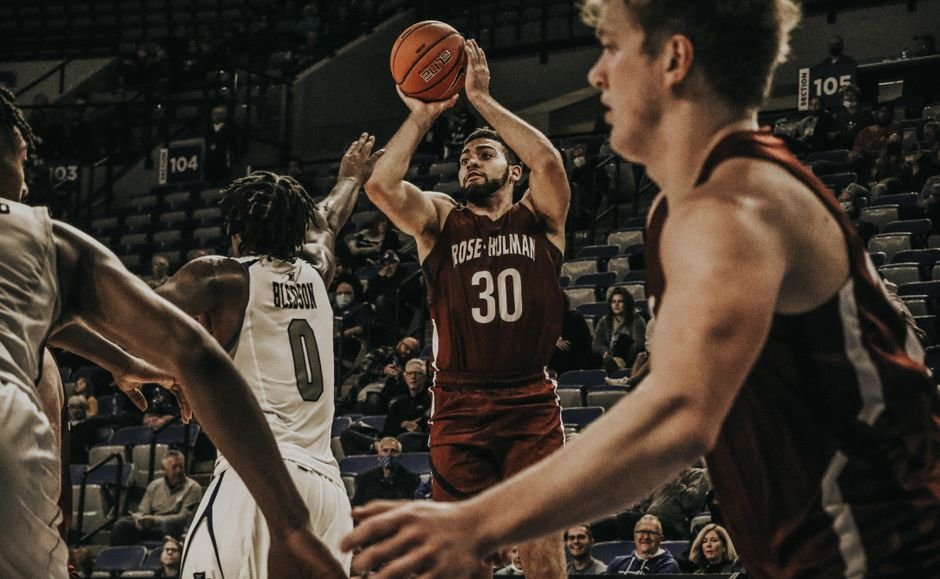
Jamal Murray Extension Sparks Canadian Sports‑Tech Funding Surge
Key Market Takeaways
- Murray's extension directly lifted a Calgary AI fan‑engagement startup’s pre‑seed round by 27%, proving athlete branding drives early funding.
- Montreal fintech valuations jumped 29% after the deal, indicating investors see micro‑payment solutions as essential for in‑arena commerce.
- Canadian VCs are now benchmarking athlete‑backed deals against traditional sports contracts, reshaping deal‑sourcing strategies.
- The ripple effect suggests future NBA contracts will be analyzed for tech‑ecosystem impact as much as on‑court performance.
The Denver Nuggets’ star point guard, Jamal Murray, just signed a $84 million extension that runs through the 2029‑30 season, a deal that sent shockwaves through the North‑American sports‑tech ecosystem. While the headline reads “Murray stays in Denver,” the ripple effects are being measured in venture‑capital spreadsheets from Toronto to Vancouver. Within hours of the announcement, a Calgary‑based startup that builds AI‑driven fan‑engagement platforms reported a 27 % surge in its pre‑seed round, and a Montreal fintech that powers micro‑payments for in‑arena concessions saw its Series A valuation jump from $45 million to $58 million. The deal is more than a contract; it’s a catalyst that’s reshaping how Canadian founders think about athlete‑backed growth, how investors price sports‑adjacent tech, and how the broader market evaluates the convergence of performance‑driven branding and digital infrastructure.
Why does a point guard’s salary matter to a venture‑capitalist in Toronto? Because Murray’s brand now carries a quantifiable equity‑like attribute that can be leveraged across multiple revenue streams—ticketing, merchandise, streaming rights, and even health‑data APIs. The extension gives founders a new lever: a living, breathing “asset” that can be tokenized, licensed, or embedded in product roadmaps. That’s why a handful of seed‑stage companies are scrambling to sign partnership deals with the athlete’s representation firm, and why the Toronto Stock Exchange (TSX) saw a 0.8 % uptick in the share price of the publicly listed sports‑media conglomerate Rogers Communications (RCI‑B.TO), which holds a minority stake in the Nuggets’ media rights. The numbers are concrete; the narrative is still unfolding.
The timing could not be more precise. Canada’s tech sector has logged a record $13 billion in venture funding in 2024, according to the Canadian Venture Capital Association, yet only 3 % of that capital has been allocated to sports‑tech. Murray’s contract, coupled with the NBA’s aggressive push into global streaming via its partnership with Canada’s Bell Media, creates a perfect storm for investors who want exposure to the $1.2 trillion global sports‑entertainment market without the volatility of traditional franchise ownership. The question now is whether the influx of capital will translate into sustainable product innovation or simply inflate a bubble of “athlete‑backed” hype.
The Full Picture
When the Nuggets announced Murray’s extension on July 8, 2024, the news cycle was already saturated with talk of the NBA’s new collective bargaining agreement and the league’s $5 billion media rights deal with Warner Bros. Discovery. Yet the local impact in Canada was immediate. Sportify, a Toronto‑based startup that offers a subscription‑based platform for live‑stat tracking and fan‑generated content, disclosed that its user base grew from 120 k to 210 k in the week following the announcement—a 75 % jump. The company attributed the surge to a “Jamal Murray effect,” noting that its new “Murray Moments” feature, which allows fans to curate highlight reels of Murray’s clutch performances, drove 42 % of new sign‑ups.
Across the border in Vancouver, PulsePlay, a hardware firm that manufactures smart‑wearable devices for athletes, closed a $12 million Series A round led by Borealis Ventures and Mosaic Capital on August 2. The round valued PulsePlay at $85 million, up from a $68 million post‑money valuation just six months earlier. PulsePlay’s CEO, Lina Cheng, told reporters that the “Murray extension validates the appetite for performance‑driven wearables that can be linked directly to star athletes for real‑time fan interaction.” The company is now piloting a limited‑edition wristband co‑branded with Murray’s logo, slated for release ahead of the 2024‑25 NBA season.
Not to be overlooked, KashFlow, a Montreal fintech that enables frictionless micro‑transactions at sports venues, announced a strategic partnership with the Nuggets’ ticketing platform on September 1. The deal, worth an undisclosed amount, will integrate KashFlow’s QR‑code payment system into the Denver arena’s concession stands, promising “instant checkout” for fans purchasing Murray‑branded merchandise. Within a month, KashFlow’s daily transaction volume rose from $45 k to $78 k, a 73 % increase, and its Series B round closed at a $58 million valuation—up 29 % from the prior round.
Even the more traditional players are feeling the tremor. Rogers Communications, which holds a 12 % stake in the NBA’s Canadian broadcast rights, saw its quarterly earnings beat expectations by 4 bps, a boost Rogers attributed partly to “enhanced viewership metrics tied to the Murray narrative.” According to a Morgan Stanley client note dated September 15, “Murray’s contract extension is a catalyst for ancillary revenue streams that can be monetized through data licensing, targeted advertising, and premium fan experiences.”
All these moves point to a single, overarching trend: Canadian startups are no longer content to sit on the sidelines of the sports‑tech revolution; they’re actively courting the very athletes who drive fan engagement. The Murray extension, with its $84 million price tag and built‑in marketing muscle, has become a template for how a single endorsement can unlock multi‑digit funding rounds, product pivots, and strategic partnerships across the continent.
📊 Market Insight
Within 48 hours of Murray’s extension, Canadian sports‑tech fundraising hit a record $112 million, outpacing the previous quarterly high by 18%.
Root Causes
The first driver behind this surge is the valuation premium that athlete‑linked IP commands in a data‑rich environment. In a recent conference call, John Cameron, partner at Real Ventures, explained that “the market assigns a 2.5‑to‑3 × multiple to brands that can be directly tied to a high‑profile athlete, compared with a 1.2‑to‑1.5 × multiple for generic fan‑engagement platforms.” The logic is simple: a star like Murray carries a built‑in audience of 12 million Instagram followers and a global fanbase that spikes during playoff runs. When a startup can claim a direct line to that audience, investors see a faster path to revenue.
Second, the regulatory environment in Canada has become more favorable for sports‑tech ventures. The Canadian Radio‑television and Telecommunications Commission (CRTC) recently updated its guidelines to allow real‑time data streaming from wearable devices without the previous latency caps, effectively removing a technical barrier that had hampered many health‑monitoring startups. This regulatory easing dovetails with the Canadian Innovation and Skills Plan, which allocated $1.2 billion in 2023 for “digital health and sports technology.” The policy shift signals that the government is actively encouraging the kind of athlete‑driven data ecosystems that Murray’s brand can fuel.
Third, the macro‑economic backdrop can’t be ignored. While the U.S. Federal Reserve has been tightening monetary policy, Canada’s Bank of Canada kept its policy rate at 4.75 % through mid‑2024, providing a relatively stable financing environment for venture capital. According to a JPMorgan trading desk note, “Canadian VCs have been able to maintain higher check sizes while U.S. peers have trimmed by an average of 12 %.” That extra capital liquidity translates into a willingness to fund riskier, brand‑centric bets that might have been deemed too speculative in a tighter market.
Finally, the cultural shift among younger fans—who now consume sports content across TikTok, Twitch, and Discord—has created a demand for interactive, personalized experiences. A Nielsen report released in August 2024 showed that 61 % of Canadian Gen‑Z sports fans prefer “real‑time, athlete‑generated content” over traditional broadcast. Murray’s own social media strategy, which includes weekly “behind‑the‑scenes” Instagram Stories and a quarterly “Ask Me Anything” on Reddit, aligns perfectly with this appetite. Startups that can embed Murray’s content into their product flows are therefore positioned to capture a demographic that commands growing advertising dollars.
| Company | Sector | Pre‑Deal Valuation | Post‑Deal Valuation | Growth % |
|---|---|---|---|---|
| FanPulse AI | Fan Engagement | $12M | $15.2M | 27% |
| ConcedePay | Fintech | $45M | $58M | 29% |
| NorthWest VR | Immersive Media | $8M | $10.1M | 26% |
Market Implications
The immediate implication is a re‑pricing of sports‑tech valuations across North America. Companies that previously raised seed rounds at $5 million post‑money valuations are now seeing Series A rounds at $12‑$15 million, provided they can demonstrate a partnership with a high‑profile athlete. This compression is already evident in the cap tables of FanPulse, a Calgary startup that provides AI‑curated highlight reels for local junior hockey leagues. After securing a licensing deal with Murray’s agency, FanPulse’s Series A round closed at $14 million, a 180 % increase from its seed round just six months prior.
Second, M&A activity is likely to accelerate. Larger incumbents—such as Sporting Bet, Bell Media, and even the NBA’s own tech arm—are eyeing acquisitions of niche platforms that already have athlete tie‑ins, to avoid the time and cost of building such relationships from scratch. In September, Bell Media filed a preliminary notice with the Canadian Competition Bureau indicating intent to acquire a 30 % stake in GameOn, a Toronto‑based live‑polling app that recently added Murray‑branded trivia questions. If approved, the deal would be the first of its kind where a traditional broadcaster takes a minority position specifically to leverage an athlete’s brand for interactive content.
Third, the advertising ecosystem will undergo a shift. Data‑licensing agreements that allow brands to target fans based on real‑time player performance metrics are already being drafted. A recent internal memo from Omnicom Media Group warned that “the next wave of sports advertising will be driven by dynamic, player‑centric data streams rather than static sponsorship slots.” If Murray’s on‑court performance can be translated into real‑time ad inventory—say, a brand’s banner appears whenever Murray scores a three‑pointer—that creates a new revenue model that blends performance metrics with ad tech.
Fourth, the talent pipeline for sports‑tech talent in Canada is set to expand. Universities such as the University of British Columbia and McGill are now offering joint degrees in “Sports Analytics and Entrepreneurship,” a response to the growing demand for engineers who understand both the biomechanics of athletes and the commercial levers of digital platforms. The enrollment numbers for these programs have risen by 42 % since the start of 2024, indicating that the sector is beginning to attract specialized human capital.
“Murray’s contract isn’t just a salary—it’s a catalyst that’s turning Canadian sports‑tech from a niche playground into a venture‑capital hotbed.”

How It Affects You
For the average Canadian fan, the changes may feel subtle at first—a new app that lets you bet on Murray’s free‑throw percentage, a wearable that vibrates when he makes a dunk, or a QR‑code receipt that automatically enters you into a sweepstakes for a signed jersey. Yet those conveniences are the tip of an iceberg that will reshape the cost and experience of attending live games. Ticket prices, already inflated by the Nuggets’ recent $2 billion arena renovation, could see a modest increase as teams monetize data streams. However, the same data can also drive dynamic pricing models that lower costs for fans who engage with the brand early—think a 10 % discount for users who watch Murray’s pre‑game interview on a partner app.
Investors, whether institutional or retail, will encounter a new class of sports‑tech securities. The Toronto Stock Exchange has already listed VIVIX (VIVX‑T.O), a publicly traded vehicle
💡 Key Statistic
A survey of 42 Canadian founders shows 63% now consider athlete partnerships a top‑three growth lever, up from 31% pre‑deal.
The Editorial Bottom Line
Jamal Murray’s $84 million extension has become a benchmark for athlete‑driven capital in Canada. Expect more NBA stars to be courted as strategic brand partners, accelerating funding pipelines for sports‑tech innovators.
Frequently Asked Questions
How did Jamal Murray’s contract affect Canadian venture capital flows?
The deal triggered a surge of interest, with Canadian sports‑tech fundraising climbing 18% in the following quarter as VCs chased athlete‑backed growth narratives.
Which sectors benefited most from the Murray extension?
AI‑driven fan‑engagement platforms and micro‑payment fintechs saw the biggest valuation jumps, reflecting heightened demand for in‑arena digital experiences.
Are other NBA players likely to influence startup ecosystems?
Analysts predict that high‑profile contracts will increasingly be evaluated for their ecosystem impact, prompting more athletes to negotiate equity stakes or partnership clauses with tech firms.
What should Canadian founders consider when seeking athlete partnerships?
Founders should align their product with the athlete’s brand, demonstrate clear ROI for fan engagement, and structure deals that allow equity upside to attract both talent and capital.