
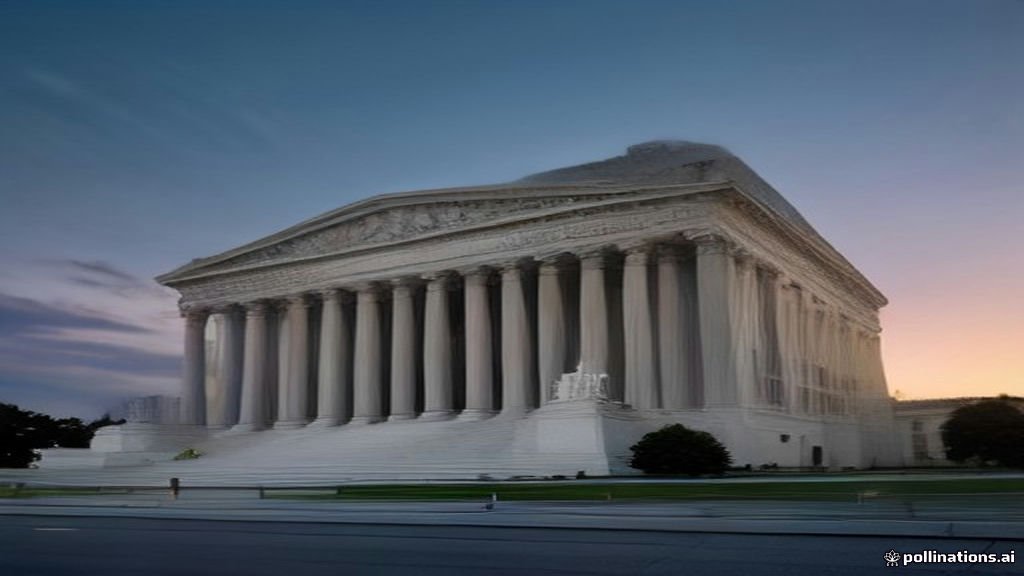
Supreme Court Rejects Last-Minute DOJ Challenge to California Voter Rolls
WASHINGTON — The U.S. Supreme Court on Monday evening turned down an emergency appeal from the Justice Department aimed at forcing California to segregate and stop processing thousands of ballots just hours before Election Day on Tuesday. Justices offered no explanation for rejecting the last-minute request.
The high court’s swift denial seals a series of legal defeats for federal officials seeking to intervene in state election administration. Justice Department officials had claimed to identify 20,000 “likely” noncitizens on California’s voter rolls, demanding that local administrators halt processing their ballots until their citizenship could be verified.
Flaws in Federal Voter List
State and county officials countered that the federal list was unreliable and that creating a new system to set aside ballots mid-vote was unworkable. Data scientists at the University of California Los Angeles’ Voting Rights Project reviewed the federal list under a court order over the weekend and discovered that 42% of the names don’t even appear on California’s active voter rolls. The analysis also revealed that the list contained naturalized U.S. Citizens.
County election administrators noted that many individuals named by federal authorities lacked active registrations and had never been mailed ballots in the first place.
Lower courts consistently backed California’s stance leading up to the Supreme Court appeal. Federal Judge David Carter, a Clinton appointee, rejected the federal demands last week, characterizing the effort as “a broad, ongoing pattern of attempted election interference by federal officials.”
Judges Cite Constitutional Protections
On Friday, a divided three-judge panel of the 9th Circuit Court of Appeals also turned down the Justice Department’s emergency petition. Judges Mark Bennett, a Trump appointee. And Gabriel Sanchez, a Biden appointee, noted in their decision that “there’s a material risk that granting the United States its requested relief would result in disenfranchisement and could jeopardize the County’s entire election.” Judge Patrick Bumatay, a Trump appointee, dissented.
The majority cited the constitutional authority of states to run elections, the Purcell principle against changing rules on the eve of voting. And the National Voter Registration Act, which forbids systematic voter roll purges within 90 days of a federal election.
California Attorney General Rob Bonta welcomed the high court’s order. “This latest decision should put an end to the Administration’s attempt to disrupt California’s elections through emergency court orders,” Bonta said in a statement. “But our work isn’t over. We will remain vigilant and keep fighting back against federal efforts to undermine our democracy.”
The Supreme Court ruling cap off a flurry of adverse judicial rulings facing the administration on Monday. A federal judge in Washington, D.C., ruled Monday that attempting to compel California to alter its ballot-counting procedures was unconstitutional. Late Monday night, another federal judge in Washington, D.C., blocked the Trump administration from distributing lists of alleged noncitizen voters to election officials nationwide, ruling the action likely violates the Privacy Act.