
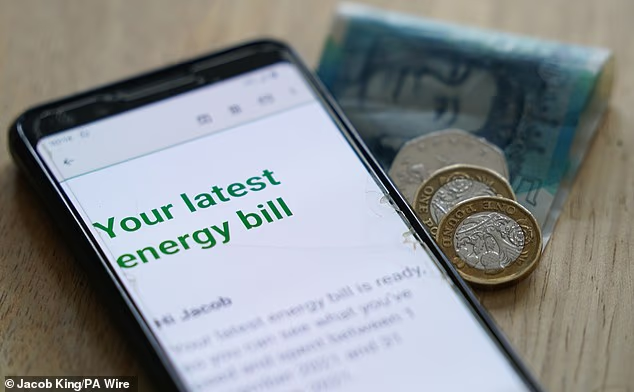
The escalating conflict in the Middle East is causing chaos across commodities markets, prompting concern households could bear the brunt of rising energy prices.
Gas prices in Europe and the UK have surged in recent days as Qatar’s state-run energy business, which accounts for a fifth of the liquified natural gas (LNG) trade, shut down production.
Experts warn a sustained rise in gas prices is likely to wipe out the recently announced cut to the energy price cap, with some experts predicting a possible surge in average annual household energy bills to £2,500.
This would echo the 2022 bills spike in the energy crisis, after Russia invaded Ukraine.
The energy price cap has already been set from 1 April, at £1,641 for the average home, but is due to change again in July. If it rose to £2,500, as analysts at Stifel suggest, it would shoot up by 52 per cent.
That would mark the highest level for energy bills since the Russian invasion of Ukraine, which sent gas prices soaring.
> Best energy deals: The fixed tariffs that BEAT the price cap
Wholesale gas markets are surging and could lead to higher energy bills for some households
How do gas prices affect our energy bills?
Households have become acutely aware of how conflict can cause price rises and leave them struggling to pay their bills in recent years.
While gas prices are not yet at the level of the 2022 crisis, there are concerns the longer the current conflict goes on, the harder it will be for consumers.
The UK increasingly relies on LNG imports from Qatar, which is now the world’s second biggest supplier of the gas behind the US.
Wholesale gas prices in Britain jumped as much as 45 per cent on Monday, and rose a further 25 per cent to above 150p per therm this morning, the highest level since January 2023.
Meanwhile, European gas prices extended their rally by another 40 per cent to €60/MWh, after rising nearly 35 per cent on Monday.
Simon Francis, coordinator of the End Fuel Poverty Coalition, says the spike in gas prices translates to higher energy costs ‘because the UK remains so heavily dependent on gas and the mature North Sea basin will be unable to meet domestic demand within the next few years.’
And it’s not just customers who use gas that are affected by surging prices.
Francis adds: ‘Our energy system also links the cost of gas to electricity prices because the grid still relies on gas-fired power stations, although this influence eased last year.’
What does it mean for the price cap?
In the immediate term, households are protected from rising wholesale prices whether they’re signed up to a fixed or variable deal.
Households on a fixed deal will continue to pay their current unit rate, while those on a standard variable tariff are protected by the Ofgem set energy price cap, which will fall by over £100 from April.
From next month, the typical dual fuel household will pay £1,641 for their energy and will be protected until July, when the price cap changes again.
If the Middle East conflict resolves relatively quickly, the impact on households should be minimal, but if gas prices continue to rise, then it could flow through to the price cap by the summer.
That’s because Ofgem uses the average prices during the three-month observation window and other related costs.
Francis says: ‘Bills are effectively protected until at least 1 July 2026 because the April to June cap has already been set.
‘The cap works by smoothing out price spikes and delaying the passing on of cost increases to consumers. But that also means the real risk is what happens next.
‘If wholesale prices fall back, the impact may be limited.
‘But if elevated prices persist, they will affect Ofgem’s next price cap decision in May, which takes effect from July.’
Richard Neudegg, director of regulation at comparison site Uswitch says: ‘If we see sustained higher wholesale prices in the coming period, Ofgem would have to reflect this which could have a knock-on effect for the July price cap level.’
Stifel analysts say that a tripling in European wholesale gas prices to €100 could push a typical bill up to £2,500 a year and risk ‘a repeat of 2022’ unless the conflict eases.
Currently, EDF predicts the price cap to rise by £65 to £1,706 between April and July, after increases in wholesale prices.
But it warned ‘there is still a long time before the next cap period is confirmed and so our forecast is very uncertain at this point.’
It will become more of an issue if disruption to Qatari exports extends into the colder months, and Europe is forced to compete with Asian buyers.
This would ‘hinder Europe’s ability to refill gas storage ahead of winter, elongating the impact,’ says Bridget Payne, head of energy forecasting at Oxford Economics.

Spike: The price of gas has soared this week thanks to the conflict
Is it a good idea to fix now?
Regulator Ofgem has been urging households to fix their energy bills even before the conflict in the Middle East erupted.
Suppliers are offering significant discounts to the price cap, so if wholesale prices do rise for a sustained period of time, locking in a deal should save you money in the long run.
There will no doubt be some repositioning of fixed deals from major suppliers as they work out where energy prices might move.
No major suppliers have pulled or changed their deals, but this could change quickly.
Francis warns that in periods of uncertainty, ‘they often withdraw or increase the price of deals to avoid exposure to volatile wholesale costs.’
Uswitch’s Neudegg advises households not currently on a fixed rate to consider moving to one now.
‘At the moment, there are still well-priced fixed deals available, up to an average £74 below the upcoming April price cap.
‘Those who switch will also receive a further reduction to their unit rates once the Government’s energy bill cuts take place from 1 April.’
Currently, the best buy energy deals include Outfox the Market with an annual cost of £1,509, Fuse Energy at £1,515 and Eon Next at £1,543.
Compare the best fixed energy deals in the box below.