
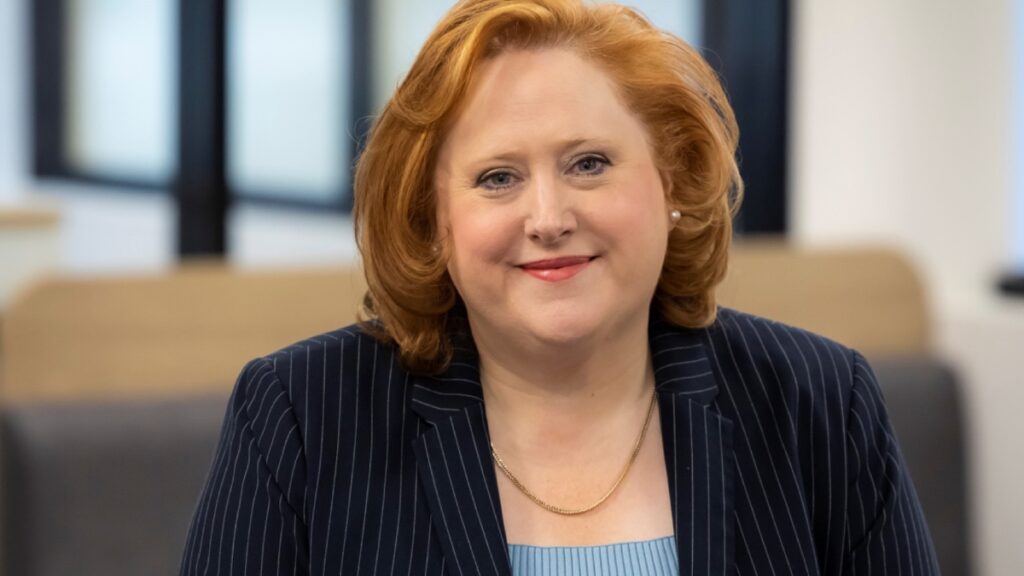
Strathcona principal Lorna Beegan tells Dynamic Business what small business owners consistently get wrong about mentoring women.
Why this matters: For SMEs and startups competing to attract and retain talented women, the gap between good intentions and genuine inclusion often comes down to the everyday signals most leaders barely notice. Beegan names them directly.
Most International Women’s Day conversations in business circles centre on pipelines, promotions and pay. Lorna Beegan, Principal of Strathcona Girls Grammar, wants to talk about something smaller and, she argues, far more consequential.
“The conversations that happen at the watercooler, the jokes made in meetings, the offhand comments delivered with a smile,” she says. “All matter more than many leaders realise.”
Beegan leads one of Australia’s longest-running girls’ schools, now in its 103rd year. From that vantage point, she has watched generations of young women move from the classroom into the workforce, and she has some clear-eyed observations for the business owners and startup leaders they are walking into.
The first thing Beegan wants employers to understand is who, exactly, is arriving at their door.
“When Strathcona’s young women enter the workforce, they do so with a different kind of confidence,” she says. “They are not waiting to be authorised to lead. They have been educated to advocate, to question, and to act with purpose.”
At Strathcona, leadership is not treated as an ambition for later. It is, Beegan explains, a daily practice built into how students learn, debate, and make decisions together. The school’s Strategic Plan 2026–2030 frames leadership not as a title, but as agency shaped by values in action.
“Students are empowered to co-construct learning with courage, to question inherited assumptions with integrity, and to engage ideas with respect and compassion for others and for evidence,” she says.
The practical implication for employers is that these women arrive with expectations. They understand systems, power and responsibility, and they are already looking at whether the organisations they join live up to the same standards.
“They are already nudging organisations to think more clearly, act more responsibly, and lead with greater integrity,” Beegan says.
Watch your language
For small business owners serious about developing women, Beegan’s most direct advice is about culture, and it is more specific than most leadership frameworks allow for.
“Pay close attention to language, culture and the everyday signals that shape who feels they belong at your workplace,” she says.
She is not talking about formal policy. She is talking about tone.
“What was once dismissed as harmless humour or ‘just how things are said’ is now recognised for what it can be: a form of soft power that reinforces prejudice, hierarchy and exclusion,” Beegan says. “Our young women are entering the workforce with a heightened awareness of this. They are discerning listeners, attuned to tone as much as intention, and they are holding more senior colleagues to a higher standard of respect and accountability.”
The shift, she is careful to note, is not about eliminating warmth or humour from workplaces.
“It means the rules have shifted. Language is more deliberate, unconscious bias is more likely to be named, and leadership is increasingly judged not only by what they deliver but also by how thoughtfully people speak,” she says. “Businesses that take this seriously will not only retain talented women but also build cultures that are more intelligent, more self-aware, and better suited to the future of work.”
On mentoring specifically, Beegan pushes back against approaches that soften expectations in the name of support.
“Women, like all people, benefit from mentors who clearly name their strengths, challenge them intellectually, and refuse to lower the bar in moments of uncertainty,” she says. “Effective development requires time, proximity, and honesty.”
Leadership beyond the breakthrough
When asked which women inspire her, Beegan resists the familiar IWD formula of celebrating firsts and exceptions.
“On International Women’s Day, there is often a temptation to celebrate only the exceptional: the first woman to do this, the only woman in that,” she says. “Yet for over 103 years, a school like Strathcona tells a more sustaining story, one of continuity, community and collective contribution.”
One alumna she does name is Janette Kendall AM, who graduated in 1979 and was recently recognised in the 2026 Order of Australia Honours List for her service to business, the arts, marketing and the wider community. With more than 25 years of governance experience, Kendall has built a career spanning ASX-listed, private and not-for-profit organisations, working across strategic planning, digital transformation and cross-cultural business operations.
What business can borrow from school
For Beegan, what makes Kendall’s career instructive is not the scale of her success but what she has done with it.
“Through her advocacy, example and generosity of spirit, she has consistently created pathways for others, particularly women, to lead with confidence and ambition,” Beegan says. “Strong leadership is not diminished by lifting others; it is strengthened by it.”
It is, in many ways, the same argument Beegan makes for schools and businesses alike. The work of educating women to lead and the work of building workplaces that let them do so are, she believes, the same project.
“When we educate girls to lead with confidence and values, we are preparing them for careers and a life well lived,” she says. “Our aim is to contribute to a future of work that is more thoughtful, more humane, and better equipped for the complexity ahead.”
For small business owners still treating inclusion as a HR footnote, Beegan’s message is simple: the young women walking into your business right now have already been prepared. The question is whether you have.