
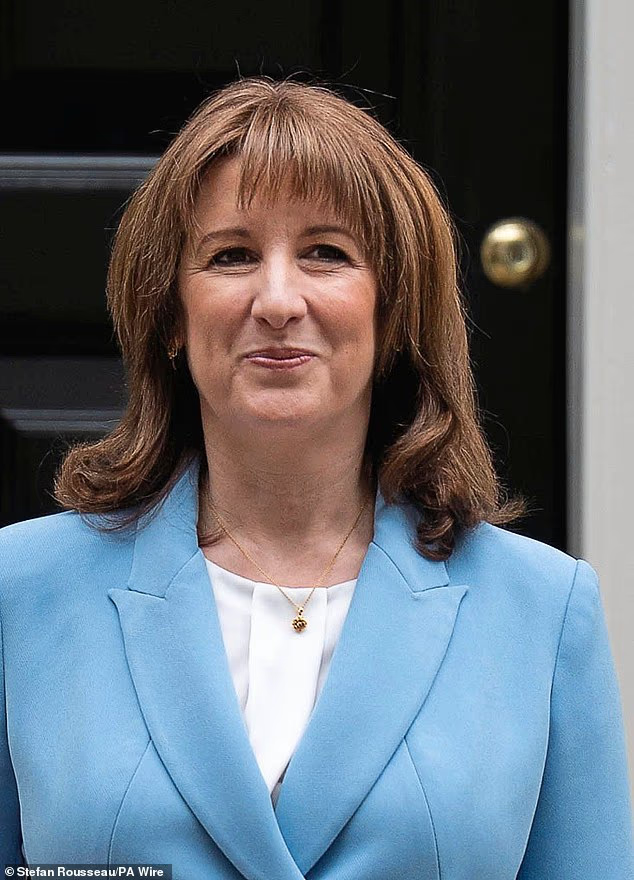
Rachel Reeves has been humiliated after the OECD declared it was the only G7 nation with inflation above 3 per cent – just as it is expected to get even worse.
The report means that consumers in Britain are suffering a bigger cost of living squeeze than those in the US, Canada, Germany, Japan, Italy and France.
Inflation in the UK has been the highest in the G7 group of advanced nations for months.
Until war broke out in the Middle East less than two weeks ago, hopes were high that it was on the way down and would drop to its two per cent target in April.
Now, surging oil and gas prices mean it is likely to be higher than feared, driving up petrol prices and eventually household energy bills. Some experts think it could rise to five per cent.
A monthly comparison of global inflation figures for January compiled by the 38-member Organisation for Economic Cooperation and Development (OECD), showed Britain was already in worse shape than G7 rivals even before the crisis.
Rachel Reeves has boasted of her efforts to keep inflation ‘low and stable’
France registered the lowest headline inflation in the group at just 0.3 per cent.
And across the OECD, easing energy and food price pressures meant it has been coming down, including in the UK.
But stripping out those volatile factors, so-called ‘core’ inflation remained stubborn and was ‘the main driver of headline inflation across all G7 countries’, the OECD said.
It added: ‘This was especially true in the United Kingdom, which remains the only G7 country with headline inflation above 3 per cent.’
Latest official figures show consumer price inflation (CPI) was 3 per cent in January. For its comparisons, the OECD used a separate measure, CPIH, which was 3.2 per cent.
The report comes a week after the Chancellor, in her spring statement, boasted of her efforts to keep inflation ‘low and stable as possible’ and an official forecast that it would come down faster than previously thought.
But that outlook has immediately become obsolete as the Middle East crisis takes hold.
The worsening inflation picture also spells misery for borrowers as hopes that there would be two interest rate cuts this year have evaporated.
Britain’s wider economic picture is also grim, with growth of just 1.3 per cent last year and experts warning that the knock-on effects of the Iran war will curtail any hopes of improvement this year.