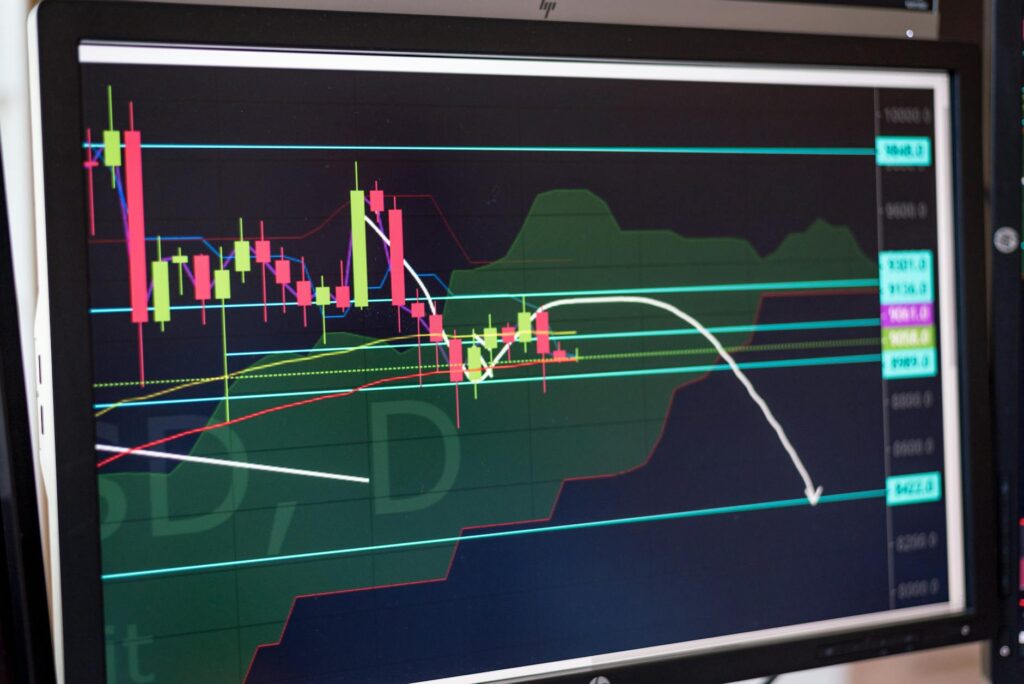
As the Dow Jones Industrial Average and the Nasdaq Composite officially enter correction territory, Canadian investors are on high alert, wondering how to navigate the increasingly volatile market landscape. The terms “correction” and “bear market” are often thrown around, but what do they really mean for your portfolio? In simple terms, a correction is a decline of 10% to 20% from a recent peak, while a bear market signifies a drop of more than 20%. With both major U.S. indexes now in correction territory, it’s more crucial than ever for investors to reassess their strategies and consider smart, defensive moves. One such move could be investing in the right Exchange-Traded Fund (ETF), which can provide a diversified portfolio and help mitigate losses during market downturns. But which ETF stands out as the smartest buy amidst this turmoil, especially for Canadian investors looking to protect and grow their wealth?
What Is Happening
The current market situation is marked by significant uncertainty, driven by factors such as inflation concerns, monetary policy shifts, and geopolitical tensions. The Dow Jones Industrial Average, often seen as a benchmark for the overall health of the U.S. stock market, has experienced a notable decline, dipping into correction territory. Similarly, the Nasdaq Composite, which is heavily weighted with technology stocks, has also suffered significant losses. This decline is not isolated to the U.S. market; Canadian investors are also feeling the pinch, with the TSX (Toronto Stock Exchange) experiencing its own set of challenges. As investors look for ways to safeguard their investments, the appeal of ETFs has grown, given their ability to track a wide range of assets, from stocks and bonds to commodities and currencies. Among these, some ETFs are designed to perform well during times of market stress, making them particularly attractive in the current environment.
Why It Matters
Understanding why the Dow Jones and Nasdaq entering correction territory matters is crucial for Canadian investors. The interconnectedness of global markets means that economic shifts in the U.S. can have a ripple effect, influencing markets in Canada and around the world. When major indexes enter correction territory, it signals a potential shift in investor sentiment, often driven by economic indicators, policy changes, or global events. For Canadian investors, this shift can impact not only their U.S.-listed holdings but also their domestic investments, as market sentiment can quickly turn bearish. Moreover, the Canadian dollar’s value against the U.S. dollar can fluctuate in response to these changes, affecting the purchasing power of Canadian investors in international markets. Therefore, having a smart investment strategy that includes defensive positions, such as the right ETF, can help Canadian investors navigate these challenging market conditions.

Key Drivers
Several key drivers are contributing to the current market volatility. Inflation, which has been on the rise, prompts central banks to increase interest rates, making borrowing more expensive and potentially slowing down economic growth. This monetary policy tightening can lead to decreased consumer spending and business investment, negatively impacting stock prices. Additionally, geopolitical tensions, especially those involving major economic powers, can introduce significant uncertainty into the market. In Canada, the energy sector, a significant component of the TSX, is particularly sensitive to global economic trends and geopolitical events. An ETF that tracks a broad market index or is focused on sectors less correlated with the overall market, such as consumer staples or healthcare, could provide a hedge against these risks.
Impact on Canada
The impact of the Dow Jones and Nasdaq entering correction territory is not limited to U.S. investors; it has significant implications for the Canadian market as well. The TSX, heavily influenced by the energy and financial sectors, can be particularly volatile in response to global market trends. Canadian investors, therefore, need to be cautious and proactive. Investing in an ETF that is diversified across different sectors and geographic regions can help mitigate risk. Moreover, considering ETFs that track the Canadian market, such as those focused on the TSX Composite Index, can provide a way to participate in the domestic market while managing risk through diversification. It’s also worth noting that some Canadian companies, especially those in the tech sector, are listed on the Nasdaq, making the performance of the Nasdaq Composite of particular interest to Canadian investors with holdings in these companies.

Expert Outlook
Experts suggest that during times of market volatility, it’s essential for investors to maintain a long-term perspective and avoid making knee-jerk reactions to short-term market fluctuations. Diversification is key, and ETFs can play a significant role in achieving a balanced portfolio. For Canadian investors looking to navigate the current market environment, experts recommend considering ETFs that offer broad diversification, low fees, and a track record of performing well during periods of market stress. Additionally, ETFs that focus on quality stocks with strong financials and a history of stable dividend payments can provide a relatively stable source of income, even in tumultuous market conditions. As the market continues to evolve, staying informed and adapting investment strategies accordingly will be crucial for Canadian investors aiming to protect and grow their wealth.
What to Watch
As the market continues on its volatile path, there are several factors that Canadian investors should keep a close eye on. The actions of central banks, particularly the Federal Reserve in the U.S. and the Bank of Canada, will be critical in determining the direction of interest rates and, by extension, the overall market sentiment. Economic indicators, such as GDP growth, unemployment rates, and inflation numbers, will also provide valuable insights into the health of the economy and potential future market trends. Furthermore, geopolitical events and their impact on global trade and economic stability cannot be overlooked. In terms of ETFs, watching for those that are attracting significant inflows or experiencing large outflows can provide insights into where other investors are placing their bets. Ultimately, a combination of staying informed, maintaining a diversified portfolio, and being prepared to adapt to changing market conditions will be essential for Canadian investors navigating the current correction territory and beyond.