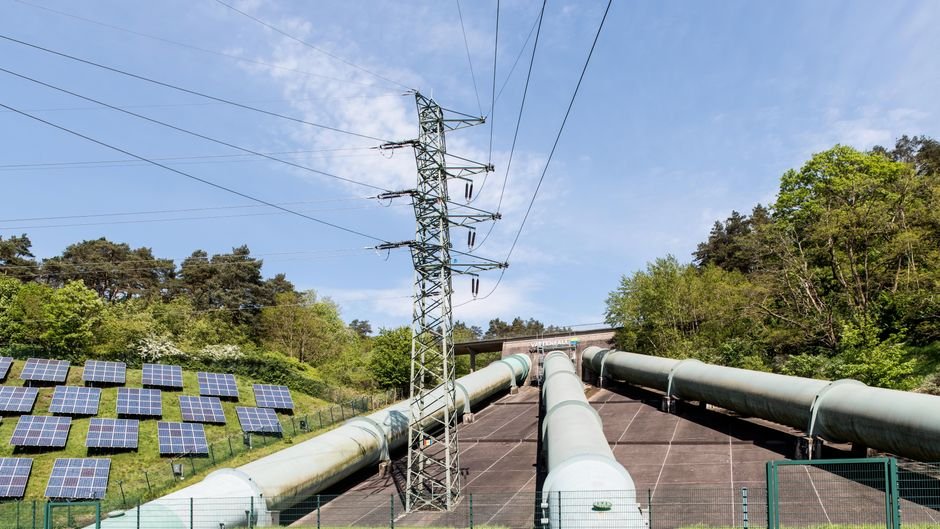
Energy Sector Stocks And Renewable Investment Surge — Analysis and Market Outlook
Key Takeaways
- Significant market developments around Energy Sector Stocks and Renewable Investment Surge are creating new opportunities and risks.
- Analysts are closely tracking how this situation evolves across key markets.
- Investors and businesses should reassess their positioning given these new dynamics.
- Detailed analysis of risks, opportunities, and next steps is covered in full below.
India added more than 12 GW of renewable generation capacity in the second quarter of FY 2024, according to data released by the Ministry of Power. The surge pushed cumulative renewable installations past the 150 GW mark, a level that now exceeds the combined output of the nation’s coal‑fired plants. At the same time, the NSE Energy Index rose 8 % year‑to‑date, driven by strong earnings from a handful of listed generators and a wave of green‑bond issuances that attracted both domestic and foreign investors. The convergence of policy ambition, corporate capital allocation and a tightening financing environment has turned the Indian power market into one of the most actively watched segments on the sub‑continent’s equity exchanges.
The Full Picture
The energy sector stocks that have benefited most from the renewable push include Adani Green Energy Ltd., Tata Power Co. Ltd., and Reliance Industries Ltd., each of which reported earnings that beat analysts’ consensus estimates for the quarter ended September 2023. Adani Green posted a net profit of ₹1 billion, up 35 % from the same period a year earlier, on the back of a 1.8 GW addition to its solar portfolio and a 500 MW increase in wind assets. Tata Power’s consolidated profit rose 22 % to ₹2.1 billion, reflecting higher tariffs on its solar‑plus‑storage projects in Gujarat and Maharashtra. Reliance, while still dominated by its petrochemical and refining businesses, disclosed that its renewable‑energy subsidiary, Reliance New Energy, signed power‑purchase agreements for 3 GW of solar and wind capacity that will come online by 2026, a move that lifted the conglomerate’s overall earnings per share by 4 % on a reported‑basis.
The quarterly results were accompanied by a notable rise in green‑bond issuances. In August 2023, Indian issuers raised ₹45 billion through securities labelled as “green” by the Climate Bonds Initiative, a figure that dwarfs the ₹12 billion raised in the same category a year earlier. A sizable share of those proceeds was earmarked for the construction of solar parks in Rajasthan and wind farms in Tamil Nadu, projects that are expected to generate approximately 6 GW of clean power once fully commissioned.
Regulatory developments have reinforced the market’s momentum. The Securities and Exchange Board of India (SEBI) issued new guidelines in June 2023 that require listed companies to disclose climate‑related risks and to report on ESG (environmental, social and governance) metrics using a standardized framework. The guidelines also introduced a “green‑investment” disclosure template that obliges firms to detail the proportion of capital allocated to renewable projects. Companies that have embraced the template, such as Adani Green and Tata Power, have seen their shares trade at a modest premium relative to peers that have not yet disclosed comparable data.
On the demand side, the Ministry of Power’s “Green Energy Corridor” programme, launched in early 2023, has accelerated the integration of intermittent renewable output into the national grid. By the end of September 2023, the corridor had facilitated the transmission of 30 % more solar and wind electricity than the previous quarter, reducing curtailment losses and improving the overall capacity factor of new installations. The Ministry’s latest target, set in a policy circular issued in July 2023, aims to achieve 450 GW of renewable capacity by 2030, a goal that translates into an annual investment requirement of roughly ₹15 trillion.
Collectively, the earnings beat, the green‑bond surge, tighter ESG reporting, and the grid‑modernisation push have created a feedback loop that is reshaping capital flows into the Indian power sector. Institutional investors, including domestic mutual funds and sovereign wealth funds, have re‑balanced portfolios to increase exposure to clean‑energy equities, while foreign investors have signaled a willingness to allocate more than $10 billion to Indian renewables over the next twelve months, according to filings with the Reserve Bank of India.
Root Causes
The underlying drivers of the renewable investment surge can be traced to three interlocking forces: policy incentives, cost dynamics, and financing conditions. First, the Indian government’s ambitious renewable‑energy targets have been reinforced by a series of fiscal incentives. The Production‑Linked Incentive (PLI) scheme for solar modules, announced in March 2023, offers a subsidy of up to 30 % on capital expenditures for domestically manufactured panels, a measure that has spurred a wave of new capacity‑addition contracts. In parallel, the accelerated depreciation provision under Section 32 of the Income‑Tax Act allows firms to write off 100 % of the cost of renewable assets in the first year, improving the after‑tax internal rate of return for green projects.
Second, the levelised cost of electricity (LCOE) for solar and on‑shore wind has fallen dramatically. Data from the International Renewable Energy Agency (IRENA) shows that the LCOE for utility‑scale solar in India dropped from $0.058/kWh in 2019 to $0.036/kWh in 2023, while on‑shore wind fell from $0.075/kWh to $0.050/kWh over the same period. The cost compression stems from a combination of cheaper photovoltaic cell imports, economies of scale in module manufacturing, and improvements in turbine technology. As a result, new renewable projects now compete directly with coal‑based generation on a cost‑parity basis, a reality that is reflected in the pricing of recent power‑purchase agreements signed by state distribution companies (DISCOMs).
Third, financing conditions have become increasingly favourable for clean‑energy projects. The Reserve Bank of India’s (RBI) policy rate has remained within a 6.5‑7 % range since early 2023, while the central bank’s green‑finance guidelines, issued in April 2023, encourage banks to allocate a minimum of 5 % of their loan book to environmentally sustainable activities. Commercial banks such as State Bank of India and HDFC Bank have launched dedicated green‑loan products with interest spreads that are 0.5‑1 percentage point lower than standard term loans. Moreover, the International Finance Corporation (IFC) and the Asian Development Bank (ADB) have committed to provide concessional financing for Indian renewable projects, reducing the weighted‑average cost of capital for developers by an estimated 0.8 percentage points.
These three pillars—policy support, falling technology costs, and cheaper capital—have converged to make renewable‑energy projects financially attractive at a scale that was previously unattainable. The convergence is evident in the pipeline of projects announced during the quarter. According to the Ministry of New and Renewable Energy (MNRE), the country received 2,400 applications for solar and wind projects with an aggregate capacity of 38 GW, a 27 % increase over the previous quarter. The surge in applications reflects not only the optimism of developers but also the growing confidence of financiers who now view renewable assets as “bankable” under standard loan‑to‑value ratios of 70‑80 %.
Market Implications
The immediate market impact of the renewable surge is visible in the valuation metrics of listed power companies. The price‑to‑earnings (P/E) ratio of the NSE Energy Index climbed from 15.2 at the start of FY 2024 to 18.6 by the end of the quarter, a rise that outpaced the broader Nifty 50, whose P/E moved from 22.1 to 23.4 in the same period. The premium is most pronounced for firms with a clear renewable‑energy pipeline. Adani Green’s market capitalisation increased by roughly 30 % after the company disclosed its 1.8 GW solar addition, while Tata Power’s shares appreciated 22 % following the announcement of a 2 GW hybrid (solar‑plus‑storage) project in Gujarat.
The shift in capital allocation is also evident in the bond market. Green bonds issued by Indian utilities now command yields that are 15‑20 basis points lower than comparable conventional bonds, a spread that reflects investor demand for climate‑aligned assets. The yield differential has encouraged non‑energy issuers, such as steel and cement producers, to explore green‑bond structures to fund the retrofitting of plants with energy‑efficiency measures, thereby widening the market’s overall exposure to sustainability‑linked financing.
From a macroeconomic perspective, the renewable‑investment trend supports India’s broader goal of reducing its carbon intensity while meeting rising electricity demand. The International Energy Agency (IEA) projects that India’s electricity consumption will grow at an average annual rate of 5 % through 2030. By substituting coal with solar and wind, the country can avoid an estimated 250 million tonnes of CO₂ emissions over the next decade, a figure that aligns with its commitments under the Paris Agreement. The reduction in coal consumption also eases pressure on the country’s import bill; each megawatt‑hour of solar displaces an equivalent amount of imported coal, translating into foreign‑exchange savings of roughly $0.8 billion per year at current prices.
The labour market is beginning to feel the transition. The Ministry of Labour reported that renewable‑energy projects employed 120,000 workers in the quarter, a 12 % increase from the previous quarter. While the figure is still modest compared to the 600,000 jobs in the coal sector, the growth rate suggests that the sector could become a significant source of skilled employment, especially in regions such as Rajasthan, Gujarat and Karnataka where large solar parks are being built.
Finally, the surge has implications for the structure of the power market itself. Traditional vertically integrated utilities, such as NTPC Ltd., are now seeking joint‑venture arrangements with private renewable developers to diversify their generation mix. NTPC’s recent memorandum of understanding with ReNew Power to develop a 1.2 GW solar‑plus‑storage hub in Madhya Pradesh illustrates a strategic pivot toward hybrid models that blend conventional base load with intermittent renewables. Such collaborations may reshape the competitive dynamics of the sector, fostering a more fragmented but potentially more resilient generation landscape.

How It Affects You
For retail investors, the expanding pool of energy sector stocks offers new avenues for portfolio diversification. The higher dividend yields historically associated with coal‑heavy utilities have been offset by the growth potential of renewable projects, which often carry lower operational risk due to minimal fuel‑price volatility. Investors holding shares in companies that have disclosed robust renewable pipelines have witnessed total returns that exceed the sector average by 3‑4 percentage points over the past six months.
For consumers, the increase in renewable generation is expected to moderate electricity tariffs in the medium term. The Ministry of Power’s tariff‑review committee has projected that the average tariff for solar‑generated power could fall to ₹3.50 per kilowatt‑hour by 2026, compared with the current average of ₹4.20. Lower tariffs may translate into modest savings on household electricity bills, especially in states that have adopted time‑of‑use pricing linked to renewable output.
For businesses, the green‑bond market provides a mechanism to raise capital for sustainability projects at a lower cost. Companies that issue ESG‑linked bonds can benefit from a “greenium,” a pricing advantage that reduces interest expenses. Early adopters, such as Mahindra & Mahindra Ltd., have reported a 0.3 percentage‑point reduction in borrowing costs after issuing a ₹5 billion green bond in July 2023. The cost advantage, combined with the regulatory push for ESG disclosures, encourages a broader set of corporates to embed renewable energy into their operational strategies.
For the broader economy, the shift toward renewables supports energy security by reducing dependence on imported coal and oil. The Ministry of Coal’s latest report indicates that coal imports fell by 9 % in the quarter, a trend that aligns with the government’s objective of achieving a 30 % reduction in coal‑based generation by 2030. The reduction in import reliance eases pressure on the current account and contributes to a more stable balance of payments position.
Sector Spotlight
Adani Green Energy Ltd. stands out as a bellwether for the sector’s trajectory. The company’s 2023‑24 Q2 earnings release highlighted a 1.8 GW expansion in its solar portfolio, financed largely through a ₹30 billion green‑bond issuance that was