
Products featured in this article are independently selected by This is Money’s specialist journalists. If you open an account using links which have an asterisk, This is Money will earn an affiliate commission. We do not allow this to affect our editorial independence.
Hargreaves Lansdown is the best–known investment platform in the UK. Find out whether popularity equals quality in our expert Sam Bromley’s review of Hargreaves Lansdown, looking at whether its higher prices justify the ‘Waitrose of investing’ tag.
Hargreaves Lansdown was established in 1981 and has become synonymous with do–it–yourself (DIY) investing, leading the way as the internet revolutionised personal investing in Britain.
It now manages more than £170billion of assets for customers and offers investors a range of options for accessing the stock market, including shares, funds and ready–made investments.
Hargreaves Lansdown is well known for its customer service and the range of investment research and education it has available.
It’s also known for its fees, which are higher than rivals – although its headline account fee reduced from 0.45 per cent to 0.35 per cent on 2 March. Many investors seem happy to pay the price for the level of service that the platform provides.
In our Hargreaves Lansdown review, we give our opinion of the investment platform, helping you work out whether it’s the right choice for you and your money.
Cashback: The platform is offering between £75 and £4,000 cashback when you open a Sipp or Isa and deposit or transfer at least £10,000. This is for each account, so there’s a maximum of £8,000 on the table. Find out more*.
> Read more: Our round–up of the best investing platforms
Hargreaves Lansdown: Who does this investment platform suit?
> Learn more about Hargreaves Lansdown and open an account*
You can open these accounts with Hargreaves Lansdown:
- Stocks and shares Isa – check our review of the best stocks and shares Isa providers
- Self–invested personal pension (Sipp) – read our full round–up of the best Sipp providers
- General investment account
- Lifetime Isa – we also have a review of the best Lifetime Isa providers
- Junior Isa and junior Sipp
- Cash savings accounts including a cash Isa – Hargreaves Lansdown’s own cash Isa has a good rate of 4.3 per cent
This review focuses on how Hargreaves Lansdown performs as an investment platform, so doesn’t take its savings products into account.
Why you can trust us
This is Money has been covering investing and personal finance since 1999. Read more about how we test and review investment platforms.
About our writer
Sam has been helping break down financial topics for his readers for more than a decade and has written extensively about investment accounts and types of investments. He enjoys investing himself and likes to follow economic news and market developments. He’s written for organisations including NerdWallet, the Financial Ombudsman Service, Simply Business, and This is Money for the past year.
Hargreaves Lansdown fees: Overview
Account fees
Hargreaves Lansdown generally charges tiered account fees that start at 0.35 per cent, a decrease from its previous 0.45 per cent charge. At certain thresholds, fees go down as the value of your investment pot increases.
However, your exact fees depend on the type of account you have with the investment platform and the type of investments you hold.
When you invest in funds the below annual charges apply on stocks and shares Isas, Sipps and general investment accounts:
- account fees are 0.35 per cent for investments between £0 and £250,000
- this decreases to 0.25 per cent for investments between £250,000 and £1million
- then it’s 0.1 per cent for investments above that
- there’s no charge for investments over £2 million
The annual fee for holding other investments including shares, exchange traded funds (ETFs), investment trusts and bonds is 0.35 per cent capped at £150 a year for stocks and shares Isas, Sipps and general investment accounts.
This is a big change, because before 2 March you were able to hold shares, ETFs and investment trusts in a general investment account with no account fees to pay.
The annual cap has also increased for these investments in a stocks and shares Isa, from £40 to £150, while for Sipps it’s decreased from £200.
Lifetime Isa
Fees for the Lifetime Isa are slightly different, starting at 0.25 per cent for funds on the first £1million. This decreases to 0.1 per cent between £1million and £2million and then no charge above that.
For other investments it’s 0.25 per cent capped at £45 a year.
Dealing fees and other charges
Hargreaves Lansdown has shaken up its dealing fees, introducing a £1.95 fee for trading funds when it was free before. By comparison, Bestinvest and Fidelity have free fund dealing, whereas Interactive Investor charges £3.99 a deal and AJ Bell charges £1.50.
On the other hand, the platform has cut its fees for trading other investments, essentially meaning shares, ETFs and investment trusts. It’s now £6.95 rather than £11.95.
This fee is reduced if you placed more than 20 trades in the previous month, going down to £3.95 a trade.
Still, the likes of AJ Bell, Bestinvest and Interactive Investor all offer cheaper share dealing fees, while some rivals like Trading 212 don’t charge at all. You should keep this in mind if you’ll be trading shares regularly, because high fees will eat into the value of your investments.
You can only trade most bonds, gilts and Venture Capital Trusts (VCTs) over the phone, which costs £29 a trade.
Hargreaves Lansdown offers discounted ongoing fund charges for selected funds.
It’s positive that unlike some other platforms, HL doesn’t cost anything to set up regular automatic investing or dividend reinvestment.
This is Money’s view of Hargreaves Lansdown’s fees
Hargreaves Lansdown’s fees shake–up has proven controversial. On the surface, it looks like many existing investors will save money, but as ever the devil is in the detail.
If you’re choosing a new provider, fees are still expensive when compared with other platforms, so whether you think they’re worth paying depends on the type of investor you are.
The new fund dealing fee is a blow, considering other platforms still offer this for free, but the cheaper 0.35 per cent account charge may offset the new cost – especially if you think the premium is worth it for the platform’s customer service and investment research.
By comparison, Fidelity has no fund dealing fees and account fees also start at 0.35 per cent.
If you trade other investments such as shares and ETFs frequently, you may be better off elsewhere considering the £6.95 trading fee, which is still relatively expensive. The likes of Trading 212 and InvestEngine will probably save you money and Prosper even refunds fees on 30 index funds, making zero–fee investing possible.
The real kick in the teeth is the new universal £150 account fee cap when investing in shares, investment trusts and ETFs. Previously, it was possible for investors holding these to use the platform cheaply, with a low £45 annual cap on account fees in an Isa – and no account fees at all in a general investment account.
Despite a reduced 0.35 charge, these investors face much higher fees because of the hiked cap.
As ever, it’s important to think about what you intend to invest in, how often you’ll be trading and the level of support you need when deciding where to put your money.
What is Hargreaves Lansdown’s investment choice like?
As one of the UK’s pioneering DIY investment platforms, it’s no surprise that Hargreaves Lansdown has a huge range of investments available through its service, including:
- Funds
- Stocks and shares
- Exchange traded funds (ETFs)
- Bonds and gilts
- Investment trusts
There are over 3,000 funds, 8,000 stocks, and 300 investment trusts to choose from.
This level of choice is generally expected of the full fat established DIY investing services. AJ Bell, Bestinvest, Fidelity, Interactive Investor and Charles Stanley Direct all have a similar range of options.
If you’d rather not build your own portfolio, you could opt for a Hargreaves Lansdown Ready–Made Investment.
There’s a good range of these, suited to different financial goals and risk tolerances. We also like the fact that Hargreaves Lansdown gives you the choice of going for an actively managed ready–made fund or a cheaper, more passive option that tracks the markets instead.
In short, investors of all stripes – from less confident beginners to experienced stock pickers – have everything they need to get started on Hargreaves Lansdown.
> Investing for beginners: The best platforms for those starting out
What is Hargreaves Lansdown’s customer service like?
Hargreaves Lansdown is particularly well regarded for its customer service. A big advantage for investors is the ability to contact the customer service team six days of the week, with phone lines open Monday to Friday from 8am to 5pm and Saturday from 9.30am to 12.30pm.
Some investment platforms we’ve covered only offer customer service availability Monday to Friday.
There are a few ways you can get in touch with its customer service team, including phone, online form, and sending a message from your online account.
Hargreaves Lansdown has lots of great help and support pages on subjects like buying and selling investments and transferring to its platform.
How did Hargreaves Lansdown’s customer service perform?
I asked long–term user Simon Lambert, publisher of This is Money, how he feels about Hargreaves Lansdown’s customer service.
He said: ‘I’ve had to contact Hargreaves Lansdown’s customer service a couple of times over the years to ask about a variety of things. I’ve called them to ask about a Sipp and about when fund trades would go through. They were helpful, answered promptly and knew what they were talking about.
‘I’ve also used the secure messaging service on my mum’s Sipp account to ask questions about a tax relief complication and taking a lump sum. Answers were prompt and detailed, although there was some “cut and paste” information included.’
What is Hargreaves Lansdown’s platform like to use?
As part of my testing, I set up a Hargreaves Lansdown fund and share account, which was quick and painless.
After logging in to my account on desktop, it was noticeable that on the surface the platform isn’t quite as slick as some of its rivals.
However, I still found it straightforward to use. It’s simple to navigate – whether that’s searching for investments, opening a new account, adding funds to your account, or asking customer service a question.
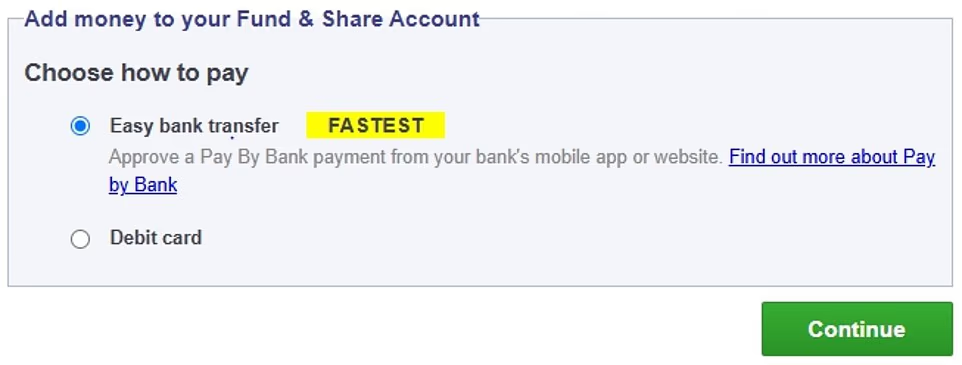
Pay by bank: Like most investment platforms, Hargreaves Lansdown offers an instant transfer option
Discovering investments can be a better experience on other platforms. For example, I like how Freetrade sorts investments into particular sectors or themes.
That being said, if you’re looking for inspiration, Hargreaves Lansdown’s detailed investment research and analysis can make up for this shortcoming, and it’s simple and quick to buy and sell investments.
Setting up regular investing
It’s straightforward to set up regular investing to an investment of your choice. The process for setting this up is more flexible than other platforms I’ve reviewed, because you can set up a direct debit and choose the investment in one go.
Some other platforms separate the process – first you set up the direct debit to make sure there’s cash in your account, then you set up the regular investment instruction.
Another plus with Hargreaves Lansdown is that your cash isn’t sitting around too long before it’s invested. Hargreaves Lansdown collects the money on the 7th of the month and invests it on the 10th.
When I reviewed Interactive Investor, I noted that it requests direct debits on the 12th (annoyingly not matching most people’s pay days whether at the end of the month or mid–month) and makes trades on the first Wednesday of each month – leaving cash in your account for three weeks earning a paltry interest rate.
What is Hargreaves Lansdown’s mobile app like?
As part of my testing, I downloaded and used Hargreaves Lansdown’s app. I found using the app to be slicker than the browser–based platform.
Simon Lambert agrees the app is very good and easy to use, if not as detailed as its desktop counterpart.
He says: ‘You can drill down into investments, for example by exploring a fund’s top holdings, and getting further details on what they do, better than you can with apps from Hargreaves Lansdown’s rivals,’ he added.
What other features does Hargreaves Lansdown offer?
Hargreaves Lansdown offers a more complete ‘one–stop shop’ for your personal finances than other platforms we’ve reviewed.
For example, you can open a cash savings account, stashing your money in a cash Isa or Active Savings account.
The platform also offers both financial advice and investment advice. These come with a fee of 1 or 2 per cent of the assets being advised on, depending on the type of advice and the value of your assets.
You can also use a Portfolio Analysis tool that drills down into your investments, showing your overall asset allocation, the underlying investments – for example in a fund – and performance details.
It’s helpful that you can choose to analyse your entire portfolio, or home in on certain accounts or investments.

Analyse this: The tool lets you drill down into your whole portfolio or specific parts of it
> Read more: Five of the best cash Isas
What is Hargreaves Lansdown’s research and educational content like?
Hargreaves Lansdown excels in investment research and offers a medley of content for investors, allowing them to pick their investments carefully and keep up with the latest market insights.
The information on offer should be ample to help investors choose where to put their money, in particular:
- Wealth Shortlist: Funds that Hargreaves Lansdown’s analysts believe have the potential to perform – there are currently more than 60 from a range of sectors.
- News and insights: A regular stream of updates, including investment ideas, news affecting markets and your personal finances, and podcasts.
- Market reports: Company information provided by news website Sharecast.
- Stock market data: The latest prices and movements in the market.
While other platforms I’ve reviewed have comparable information, Hargreaves Lansdown presents it in a more organised and digestible way than most.
The platform also has information to help you learn about investing, giving beginners the lowdown on the essentials. Again, this is similar to information that investment platforms such as Bestinvest, Fidelity and Interactive Investor provide.
Hargreaves Lansdown produces videos for YouTube, has a regular podcast and runs events and webinars.
Hargreaves Lansdown: This is Money’s overall review
There’s no getting around the fact that Hargreaves Lansdown is expensive, but it’s an established and well-regarded platform and some investors may prefer paying a premium for the peace of mind that provides.
Its simplified fee structure means that you might want to give HL another look, but as ever you should consider what type of investor you are before going ahead.
Fund investors may be more tempted to try the platform, but they should beware the new £1.95 dealing charge.
In general, the platform will still be costly for most. And the hike in the account fee cap when investing in shares, ETFs and investment trusts in an Isa and a general investment account removes the ability to try the platform on the cheap.
All that being said, the platform itself performs well in our tests, as does its customer service, investment research and educational content. Many will find all the bells and whistles worth the extra outlay.
> Learn more about Hargreaves Lansdown and open an account*