
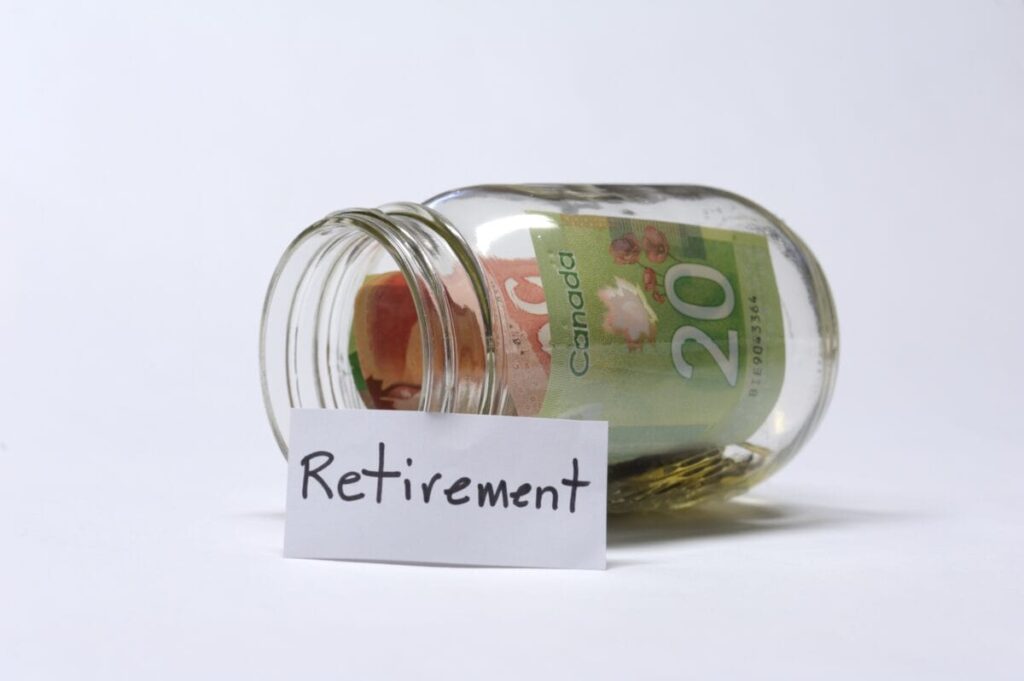
Most Canadians treat the Tax-Free Savings Account (TFSA) as a savings jar. However, you can own a variety of qualified investments in the registered account, which include stocks, bonds, and exchange-traded funds.
The real power of the TFSA lies in what your portfolio generates inside it. The 2026 TFSA contribution limit sits at $7,000. But if your investments produce $7,000 in annual income or gains on their own, you’ve effectively doubled the value of your yearly contribution without adding a single dollar from your paycheque.
That’s the goal: turn your TFSA into a machine that runs itself. This strategy is ripe for Canadians with a sizeable risk appetite and long-term investment horizon. And when done right, the compounding inside a TFSA quietly turns steady contributions into serious, long-term wealth.
Source: Getty Images
Own quality dividend stocks in the TFSA
A Canadian who has been eligible to contribute since the TFSA launched in 2009 could have a maximum contribution limit of $109,000 in 2026. Invest that entire amount at a yield of just over 6.4%, and the portfolio throws off $7,000 in tax-free income annually, matching the annual contribution without touching a cent of new savings.
For everyone else working their way there, the math still holds up. At a 4% yield, you’d need about $175,000 invested to generate $7,000 per year.
The key is to combine an attractive and growing yield with long-term capital gains. It’s essential to identify quality companies that offer investors a sustainable dividend payout.
You need to look for companies with sustainable payout ratios, durable earnings growth, strong balance sheets, and proven histories of raising their dividends.
Why the TSX stock belongs in your TFSA
Few stocks check those boxes as convincingly as Brookfield Asset Management (TSX:BAM).
BAM just wrapped up one of its strongest years on record.
- Fee-related earnings (FRE) hit US$3 billion in 2025, up 22% from the prior year.
- Distributable earnings reached US$2.7 billion, a 14% increase.
- And fee-bearing capital crossed $600 billion.
The company’s board just approved a 15% dividend increase, bringing the quarterly payout to roughly US$0.50 per share, or about US$2.01 annualized, indicating a yield of over 4%. That’s a meaningful raise for a stock that has consistently rewarded long-term shareholders.
BAM’s business spans infrastructure, renewable power, private equity, real estate, and credit — spread across more than 2,500 institutional clients globally.
No single segment generates more than one-third of fee revenue. That diversification is the kind of built-in resilience a TFSA investor should want.
The long-term tailwinds are hard to ignore. The Canadian dividend stock has planted itself squarely in the middle of the buildout of artificial intelligence infrastructure. It has secured data centre and power investments alongside sovereign and hyperscaler clients across North America, Europe, and the Middle East.
CEO Connor Teskey emphasized that demand for AI infrastructure is “a multitrillion-dollar capital formation cycle” expected to last 15 years or more.
BAM already manages assets that power the backbone of the global economy, and AI is just the next layer.
Analysts tracking BAM stock forecast adjusted earnings to grow from $1.65 per share in 2025 to $2.86 per share in 2030.
If BAM stock is priced at 24.6 times forward earnings, which is similar to its current multiple, it could gain 50% over the next four years. If we adjust for dividends, cumulative returns could be closer to 70%.
Build a TFSA that generates its own contribution
BAM alone won’t get you to $7,000 in annual income, and diversification still matters. Pair BAM with dividend growers across banking, utilities, energy, and other infrastructure plays to lower portfolio risk.
The goal is a portfolio that produces resilient, growing income that compounds quietly in the background. The TFSA rules haven’t changed. But how you use the space inside them can make all the difference.
Start with quality. Stay patient. And let compounding do the heavy lifting.