
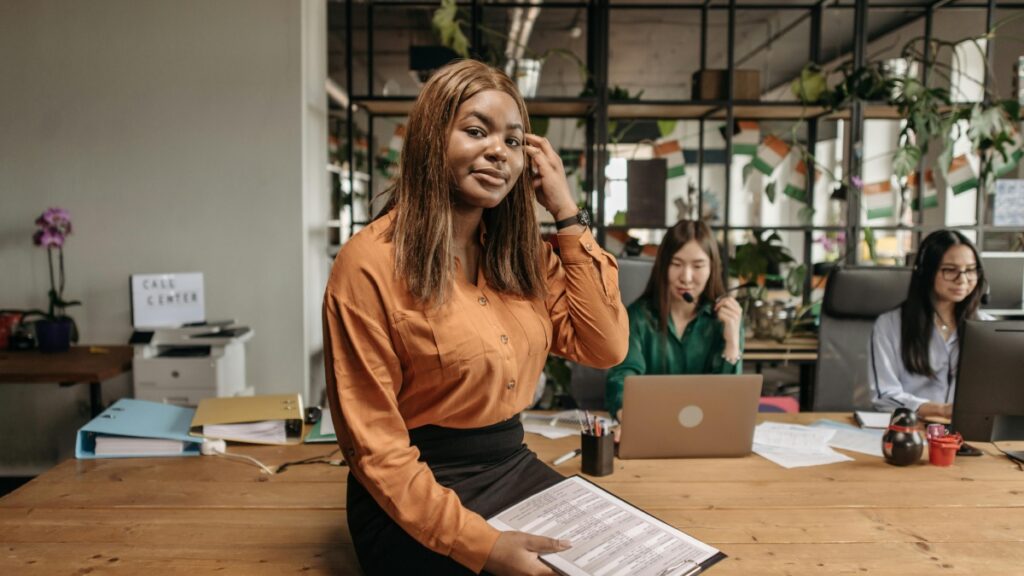
Only five per cent of women business owners report facing no barriers to growth. Australia’s small business ombudsman says bias in the system is real and requires action now.
What’s happening:ASFBEO Bruce Billson marked International Women’s Day yesterday by recognising the contribution of women in small and family business, while calling out the structural barriers that continue to limit their growth.
Why this matters: Only five per cent of women business owners report facing no barriers to growth, pointing to a gap between how far women have come and how far the systems supporting them still need to travel.
More than half a million Australian women describe running a small business as their main job. They represent 35 per cent of all small business owners nationally, a share that has grown from just 19 per cent in 1966. On International Women’s Day yesterday, Australian Small Business and Family Enterprise Ombudsman Bruce Billson said that progress deserves recognition, and that it also demands action.
“This represents a profound shift,” Billson said. “In 1966, women accounted for just 19 per cent of business owners. Today, women are starting, leading and sustaining businesses across every sector and every region of the country. This progress deserves recognition, and it also demands action.”
The picture Billson painted is one of genuine advancement sitting alongside persistent, structural friction. Women are building businesses across Australia, he said, but the systems designed to support them have not kept pace with their lived experience.
The numbers bear that out. When women-owned and led businesses were asked about their prospects, just over half reported strong opportunities for growth. At the same time, only five per cent said they faced no barriers to growing their business at all.
“When we asked women owned and led businesses about their prospects, just over half reported strong opportunities for growth. At the same time, only five per cent said they faced no barriers to growing their business,” Billson said.
Bias in the system
Access to capital emerged as the most commonly reported barrier, and for Billson, one specific finding stood out as a clear signal that bias remains embedded in parts of the finance system.
“Access to capital remains the most commonly reported barrier. Some reported being advised to add a male to their loan application in order for business finance to be approved, and this is a clear signal that bias persists in parts of the system,” he said.
Beyond finance, women also described being judged against an outdated picture of what a typical business owner looks like, with assumptions that they are distracted by responsibilities outside their business. Those assumptions, Billson said, have real consequences.
“Many women reported being judged against a narrow and outdated view of what a ‘typical’ business owner looks like, with assumptions that they are distracted by responsibilities and priorities outside their business. These assumptions can limit access to finance, government procurement and other opportunities critical to business growth,” he said.
Alongside financing barriers, women highlighted the dual responsibility of running a business while caring for others as a significant and often invisible constraint. Billson noted this pressure is particularly acute in regional Australia, where access to services and support can be limited.
Across all of these experiences, one consistent finding emerged: women value mentors, advisers and systems that recognise the diversity of their business journeys rather than assuming a single pathway to success.
“Rather than outdated assumptions about who a business owner should be, or one size fits all models that assume a single pathway to success, policy, finance and support systems need to adapt to how women actually do business,” Billson said.
Optimism despite the obstacles
Despite the barriers, the broader sentiment among women business owners remains positive. The Australian Social Attitudes Survey found that 70 per cent of female business owners say Australia is a good place to start a business.
Billson said International Women’s Day, and this year’s Balance the Scales theme in particular, reinforces a straightforward expectation that should apply to women in small business as much as anywhere else.
“This year’s ‘Balance the scales’ theme reinforces a simple expectation that women should be safe, heard, and free to shape their own lives. In this context, to ensure women in small and family business are heard, policy settings should reflect the realities of the women in small and family business. That means fair access to capital, removing structural barriers and outdated assumptions, designing policy and finance systems to how women do business,” he said.
Keep up to date with our stories on LinkedIn, Twitter, Facebook and Instagram.