
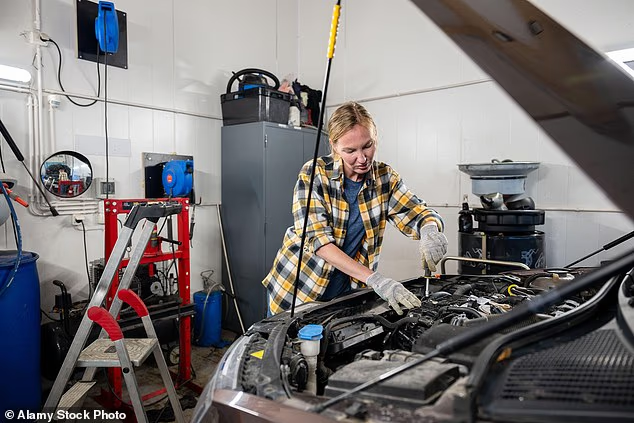
Spring is in the air, the sun is shining and going for a drive is a tempting idea. But have you kept your car fighting fit for 2026?
Routine servicing is becoming more expensive, as exclusive new data compiled for the Daily Mail by the Warranty Solutions Group (WSG) reveals. But delaying necessary repairs and maintenance could cost you dear.
Rising costs for parts and labour means repair bills are climbing sharply across the UK, analysis of more than 20,000 customer warranty claims shows.
Some jobs are costing 23 per cent more, and many drivers face a ‘postcode lottery’ of prices.
The average hourly labour rate has risen by five per cent in a year, and the average total repair bill is now an inflation-busting eight per cent higher.
What were once relatively straightforward jobs increasingly require diagnostic equipment, software resets or specialised parts, which extend repair times and inflate labour charges. Everyday repair jobs seeing significant year-on-year price increases include braking systems, suspension components, electrical faults and problems related to sophisticated ADAS electronic driver-assistance systems including lane-assist sensors.
Rising costs: A trip to the garage could be a shock for many
‘Even minor issues such as alternators, coil springs, batteries and wheel-speed sensors are more costly and more common than they were 12 months ago,’ says the WSG.
Alternator repairs have seen the sharpest rise in cost, increasing by 23 per cent to an average claim of £607. The second biggest price hike has been for Nitrogen Oxide (NOx) pollution sensors which increased by 22 per cent to an average of £795, caused mainly by limited supply.
These were followed by: oxygen (O2) sensors (up 13 per cent to £312); shock absorbers (up 11 per cent to £550) and thermostat housings (up 10 per cent to £364).
The biggest increase in repair frequency was for washer pumps – up 45 per cent in a year. The most common cause of failure was too little, or the wrong type, of washer fluid.
This was followed by repairs to coil springs in a car’s suspension (up five per cent). I hardly need to say this is caused mainly by pothole damage.
In third place was O2 sensor faults (up 3.8 per cent) caused largely by overheating.
WSG group director Steph Newbery said: ‘These may look like small jobs, but the increases are telling. It’s a clear sign that delaying maintenance isn’t paying off.
‘A faulty washer pump or sensor today can turn into a dashboard full of warnings tomorrow – and a much bigger bill.’
Delaying routine servicing or ignoring early warning signs could cost drivers hundreds of pounds more – or in some cases, thousands, says the report.

Inflation-busting costs
Rising labour and parts costs are adding to motorists’ woes.
Analysis by WSG shows that while labour times have stayed broadly the same, the cost of that labour has risen by 8 per cent over the last 12 months – faster than the UK inflation rate.
Average repair times for jobs requiring specialist electronic and diagnostic tools have also increased in a year.
Parts inflation also continues to bite, with some manufacturers seeing double-digit rises in component costs over the past 12 months. This all means motorists paying ‘noticeably more’ for the same hour of workshop time than they were a year ago, adding between £20 and £40 to many routine repairs, says the WSG report.
The average charge for labour relating to battery replacements has risen from around £90 to £96.
Labour for oxygen O2 sensors is up from £180 to £192; alternator labour has climbed from £240 to £255; and coil spring labour has increased from £140 to £150.
Jobs relying heavily on diagnostics have been hit the hardest. Labour costs for ABS anti-lock braking wheel-speed sensor checks have risen in a year from £80–£88 to £85-£95 because of higher hourly workshop rates.

‘Perfect storm’
Cars aged between four and seven years account for a disproportionate share of the cost increase.
That is because these vehicles are typically out of manufacturer warranty but still heavily dependent on expensive original manufacturer parts – creating ‘the perfect storm’ for drivers.
Newbery says: ‘It’s becoming increasingly clear that cars may be lasting longer, but they’re certainly not cheaper to maintain.’
‘Postcode lottery’
Motorists also face a ‘postcode lottery’ on repair costs.
Those in London and the South East face the steepest prices because of higher labour rates and overheads.
Drivers in the North and Midlands generally pay less, though WSG notes: ‘Even these areas are seeing steady increases as garages adjust for rising costs.’
Newbery notes: ‘It really is becoming a postcode lottery. Two drivers with the same fault can face repair bills that differ by several hundred pounds depending purely on where they live.’
Eye-watering repairs
The report also highlights eye-watering repairs drivers can least afford to ignore to prevent a small issue snowballing into a major problem if servicing is delayed.
Some of the largest claims paid last year included: £17,214 for a complete engine replacement on a Range Rover Sport SDV6; nearly £12,000 for the same on a Mercedes-Benz X-Class; and more than £11,000 for an automatic gearbox replacement on a Seat Leon.
‘Four figure bills’
WSG group director Steph Newbery said: ‘Drivers think they’re saving money by putting off that service, but today’s vehicles don’t give you much leeway. A small warning light can very easily turn into a four-figure bill.
‘If you’re trying to avoid a shock bill, the smartest move you can make is to stay ahead of maintenance, not fall behind it.’
The WSG report noted: ‘Motorists heading into 2026 face yet another squeeze on their wallets – and this time it’s their cars feeling the strain.
‘While the rising price of fuel and insurance has grabbed the headlines, it’s the surge in garage labour rates, parts shortages and increasingly complex vehicle technology that are quietly pushing repair costs to record highs. ‘
The analysis noted: ‘Many of the large repairs initially began as minor symptoms, ignored as families tightened their belts.
‘With household finances likely to remain under pressure this winter, skipping a service may feel like a quick saving. But the combination of rising labour costs, parts inflation and increasingly intricate vehicle technology means today’s ‘minor issue’ can easily become tomorrow’s major expense.’
Soaring motoring costs could also lead to long-term impacts on mobility, employment, rural access and family independence as car ownership becomes less secure for millions of households, it concluded.
Gear up for exciting motor shows across Britain this year
Discounted tickets are on sale for the family-friendly live action, ride-and-drive British Motor Show (thebritishmotorshow.live), from August 21-23, in Farnborough, Hampshire, left.

Best of British: Motoring fans can plan ahead for their favourite shows this summer and beyond
Goodwood Festival of Speed (goodwood.com) in West Sussex from July 9 to 12 is already selling out fast with the more leisurely Goodwood Revival set to follow from September 18 to 20.
The London International Motor Show (londonmotorshow.com) is a new event at the capital’s ExCeL centre from February 26-28, 2027, co-hosted alongside Motorsport Expo.