
The Chancellor’s boast that people will be £1,000 better off under Labour was unravelling yesterday amid warnings over a squeeze on households – even as benefits Britain is protected.
Rachel Reeves used her Spring Statement this week to trumpet an increase in living standards over the course of the current Parliament.
But analysis by the Resolution Foundation, a Left-leaning think-tank with close ties to Labour, painted a gloomier picture with households facing a tougher period after this year.
That was even before accounting for the impact of war in the Middle East which has pushed up oil and gas prices and threatens to drive energy bills and costs for motorists higher.
And the think-tank’s boss Ruth Curtice pointed out that two-thirds of the £1,000 boost boasted of by the Chancellor had already happened.
‘The party happened and you missed it,’ she said.
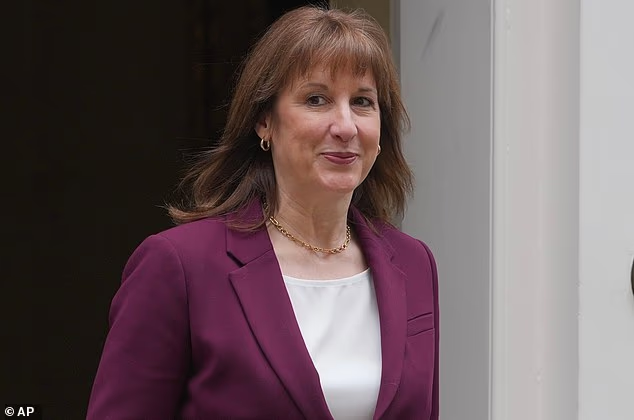
Handouts: Rachel Reeves used her Spring Statement this week to trumpet an increase in living standards over the course of the current Parliament
At the same time, latest official forecasts show Britain’s benefits bill is on course to swell even further to £407billion over coming years.
Treasury minister James Murray yesterday repeatedly refused to say Labour wants to bring down welfare spending.
Asked whether Labour believed the bill should be reduced, he would only say: ‘We’ve been clear that welfare spending needs to be made sure it keeps under control.’
A top business leader claimed Labour wanted ‘more people on the benefits drug’ to shore up votes for the party.
Tory business spokesman Andrew Griffith said: ‘The Chancellor’s promise of making people £1,000 better off is proving no more accurate than her CV.
‘Hard working Brits are squeezed and it’s only benefits street who are better off.’
The latest developments left the Chancellor’s claims about the economy in tatters less than 24 hours after she delivered her Spring Statement.
Events in the Middle East meant that forecasts from the Office for Budget Responsibility (OBR) were immediately out of date.
Yesterday, consultants at Cornwall Insight predicted that annual energy bills will go up by £160 from July as a result of the crisis – adding to fears of a cost of living squeeze. Others have predicted they could rise by as £500.
But even before taking that into account, the Chancellor’s claims were looking shaky.
Analysis by the Resolution Foundation of OBR economic forecasts together with tax and benefit policies suggested that while living standards are expected to rise by £300 over the coming year for typical working age families, that will soon fade.
The boost for this year rises to £800 for lower-income households, driven by the abolition of the two-child limit for child benefit and an above-inflation increase in the basic rate of universal credit.
But the outlook for the following couple of years will be ‘far bleaker’, the think-tank said, with typical families expected to be £150 worse off.
Ms Curtice said: ‘This coming year is set to be a decent one for living standards. But a fresh energy price shock risks puncturing this good news.
‘With wage growth set to tail off, the living standards picture for the rest of the Parliament is bleak.’
The Joseph Rowntree Foundation, a poverty charity, was even more gloomy on living standards – saying they were on course to grow by just £40 over Labour’s term and would fall by £580 from April 2026 to the end of Parliament.
Meanwhile, John Roberts, boss of online electrical retailer AO World, fired off an angry response to the Chancellor’s decision to push up benefits and scrap the two-child limit.
He told Times Radio the benefit cap decision was ‘just simple political turpitude because where’s the sense of responsibility?’
Mr Roberts added: ‘I think it’s right that there should be a safety net. But at what stage do we say, well, you can’t just keep doing things that you can’t afford? And why should working people have to then pay for that sort of effective family irresponsibility?
‘They want to create a nation of dependency. And they want to put more and more people on the benefits drug because then those people are more dependent politically to vote for this party.’
Shadow Chancellor Mel Stride said: ‘The Chancellor is boasting that people will be better off, but look under the bonnet and the reality is clear.
‘Incomes were rising faster when Labour took over, before they hit the economy with a torpedo of tax rises.
‘From now until the next election, incomes are expected to barely grow at all – except for those on benefits of course, who are seeing their welfare payments go up, paid for by working people whose living standards are stagnating under Labour.
‘Rachel Reeves is picking hardworking people’s pockets so others can sit at home.’
Join the debate
Is it fair for benefits to rise while working families face stagnating living standards?
DIY INVESTING PLATFORMS

AJ Bell
AJ Bell
Easy investing and ready-made portfolios

Hargreaves Lansdown
Hargreaves Lansdown
Free fund dealing and investment ideas

interactive investor
interactive investor
Flat-fee investing from £4.99 per month

Freetrade
Freetrade
Investing Isa now free on basic plan

Trading 212
Trading 212
Free share dealing and no account fee
Affiliate links: If you take out a product This is Money may earn a commission. These deals are chosen by our editorial team, as we think they are worth highlighting. This does not affect our editorial independence.
Compare the best investing account for you