
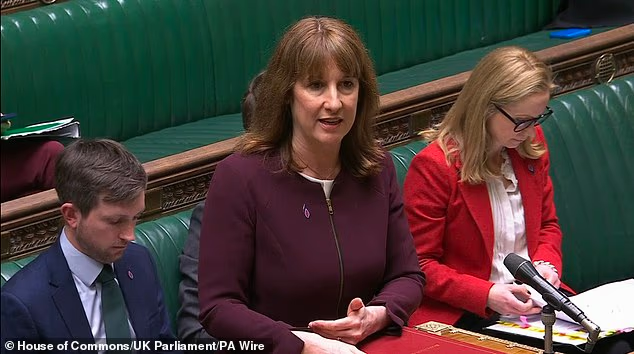
Rachel Reeves could be forced to hike taxes even more thanks to the crisis in the Middle East, despite warnings that increases are already threatening to damage growth.
The Chancellor is on course to lift the tax burden to 38.5 per cent of gross domestic product (GDP), a post-war record.
Now experts fear that soaring oil and gas prices after the attack on Iran could stoke a surge in inflation that will further add to the squeeze on public finances.
Together with demands for higher spending on defence and in other government departments it could mean Ms Reeves’s ‘headroom’ against meeting Budget targets is wiped out.
New forecasts by the Office for Budget Responsibility (OBR) show this headroom has increased slightly from £21.7billion to £23.6billion since last year’s Budget.
But the figures have been blown out of the water by the conflagration in the Middle East which threatens to upend the global economy.
The big squeeze: Chancellor Rachel Reeves is on course to lift the tax burden to 38.5% of gross domestic product – a post-war record
It will also pile further pressure on Labour to spell out how it will pay for plans to ramp up defence spending – something that the Institute for Fiscal Studies (IFS) calculates could mean it has to add another 3 to 3.5 percentage points to all income tax rates, or to VAT.
IFS director Helen Miller said meeting the Nato commitment to lift defence spending to 3.5 per cent of national income would cost around £35billion a year – equivalent to what is currently spent on the Ministry of Justice and the Home Office combined.
Ms Miller said: ‘We should not expect the Government to be able to meaningfully increase what we spend on defence – if that’s what it decides it wants to do – without significantly cutting other government programmes or raising taxes.
‘The Chancellor said nothing about future spending challenges in the Spring Forecast, but we should expect them to be central at the autumn Budget.’
Ms Miller said departments’ spending already faces being curbed from 2028 under last year’s Budget plans – with the hope that savings will be delivered through efficiencies.
But that funding has already been topped up with extra funds for children with special educational needs and disabilities and the Chancellor will have to look at her plans again in the autumn, Ms Miller suggested.
‘The Government will have to decide whether they do in fact think they have the “right plan” or whether they want to raise more taxes so that they can top up spending plans further.’
However, the OBR’s David Miles has warned that the soaring tax burden risked deterring people from working, saving, investing, and businesses from employing them.
Yesterday, Professor Miles said: ‘The UK already has in certain areas, very high marginal tax rates.’ If some of those rise ‘that will do further damage and will really constrain growth’.
And he told the BBC: ‘It’s very difficult to increase taxes faster than GDP – which is what’s needed really to bring the fiscal situation back under control – it’s difficult to do that without doing some damage to incentives to invest, work, save.’
He said the OBR already has ‘a view that it is eroding somewhat what you might call the productive capacity of the UK’.
‘I think having to raise taxes faster than GDP, it is very difficult to do that without having some knock-on effects which are probably on balance negative on employment, productive potential of the economy,’ Professor Miles added.
Paul Dales, chief UK economist at consultancy Capital Economics, said that while the OBR forecasts on the face of it gave Ms Reeves ‘a bit more money to play with’ in the autumn Budget ‘that could be swamped by events in the Middle East’.
He added: ‘The economics could therefore point to more tax hikes.’
Mr Dales said the ‘headroom’ of £23.6billion could be cut to £16.5billion if oil and gas prices remain high, pushing up inflation with a knock-on effect for debt interest, welfare and pension spending.
Added to further pressures including defence spending it could be ‘enough to wipe out the Chancellor’s headroom’, Mr Dales said.
DIY INVESTING PLATFORMS

AJ Bell
AJ Bell
Easy investing and ready-made portfolios

Hargreaves Lansdown
Hargreaves Lansdown
Free fund dealing and investment ideas

interactive investor
interactive investor
Flat-fee investing from £4.99 per month

Freetrade
Freetrade
Investing Isa now free on basic plan

Trading 212
Trading 212
Free share dealing and no account fee
Affiliate links: If you take out a product This is Money may earn a commission. These deals are chosen by our editorial team, as we think they are worth highlighting. This does not affect our editorial independence.
Compare the best investing account for you