
France holds a peculiar place in the landscape of global business. It’s a large, dynamic economy at the heart of the European Union, widely celebrated for its culture, innovation and quality of life. Yet at the same time, it’s a country often portrayed (fairly or unfairly) as a challenging place to do business.
For anyone thinking about starting a business or expanding to France, it’s important to take a clear-eyed view of both the risks and the rewards that France presents. Below we’ll explore the genuine hurdles that companies may encounter in France, from political and economic dynamics to social factors and infrastructure, and contrast them with the significant advantages that continue to make France an attractive business destination.
France and industrial action
France’s reputation as a difficult environment for businesses is a long-standing one. For decades, commentators have highlighted issues like high taxes, rigid labour laws, and frequent strikes as evidence that France is reluctant to embrace a modern, entrepreneurial economy. Headlines about protests, labour disputes and political unrest don’t do much to allay the impression that the country is inhospitable to foreign investors.
There’s a grain of truth in these perceptions, but they also ignore the full picture. France is far from unique in having social and political dynamics that affect its economy, as recent world events are keen to demonstrate. Many major economies experience tensions between labour, government and business; the difference in France is that it has always placed a strong emphasis on social protection and collective bargaining.
Related article: How to start a business in France in 8 steps
This can sometimes result in highly visible industrial action, something that can be unfamiliar and alarming to foreign entrepreneurs. But they are typically short-lived, and concentrated in specific sectors which are mainly in the vein of public service such as education and transport. The vast majority of days in France pass without national disruption to businesses, and the result is broadly a happy and productive workforce. French institutions and businesses have also learned to adapt, with contingency planning for transit disruptions, and robust remote work arrangements.
The challenge of political instability
Closely connected to the narrative around strikes is a broader perception of political instability. France has seen significant political turbulence in recent years, including several changes of government in just a few years, high-profile resignations, and vocal opposition movements. It’s reasonable to suggest that these have brought uncertainty about future policy directions, particularly when it comes to businesses.
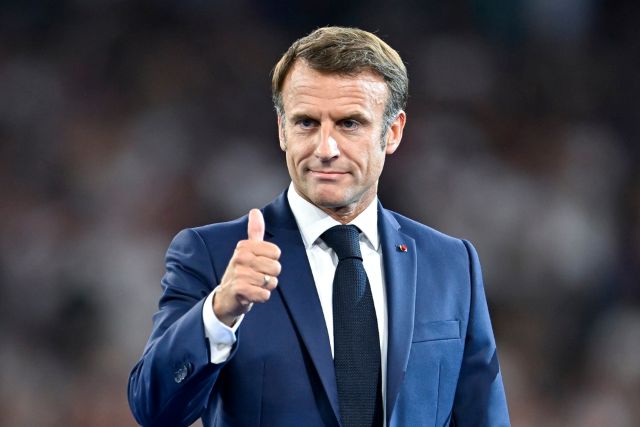
Yet there’s also stability in the instability. For all the political posturing, things have remained broadly the same, with President Macron (pictured) now having been in office for almost a decade. While decisions around investment, hiring and long-term planning are inevitably influenced by the political environment, the jockeying for position in French politics has seen all sides stymying each other’s policies in many areas, meaning that the political environment has actually been fairly predictable. The biggest policy victories for Macron have actually been positive for businesses, such as expanding business hours on Sundays, and making it easier to fire people.
Related article: France Entrepreneur Visa – Everything You Need to Know
France is ultimately a mature democracy with stable institutions, and a legal framework that protects property rights, enforces contracts, and allows for amicable dispute resolution. Many international companies operate in France precisely because these institutions are strong and predictable over the long term, in contrast to countries where governance is weaker, and the legal environment is less predictable, and less supportive of investment and commerce.
The resilience of French infrastructure
An example of criticisms that actually mask a major strength for France is infrastructure. France is known for its well-developed transportation networks, including high-speed rail, airports and urban transit. However, like many countries, it also has ageing infrastructure in certain segments, and periodic challenges both with upkeep and industrial action.
Public transport strikes can disrupt travel and logistics, which in turn can affect commutes and the movement of goods. Road maintenance and congestion can add to costs for companies that rely on trucks and freight, while some ports – though modern and substantial within European logistics—do face competition and capacity constraints that can affect throughput.
For all of this, France has invested heavily in infrastructure over a number of years. Recent plans to regenerate the port of Dunkirk will be turning it into a hub for low-carbon energy, advanced manufacturing and enhanced logistics. The high-speed TGV rail network connects major cities efficiently, while major airports in Paris, Lyon, Nice and other cities offer global connectivity.
The energy grid is robust by international standards, and France’s significant nuclear capacity means that businesses generally benefit from low-carbon, reliable electricity—a huge competitive advantage in an era of not just increasing concerns about the climate, but unstable fossil fuel prices due to conflict.
Labour relations and hiring
Labour relations in France are another frequent topic of debate. The country’s labour laws are comprehensive, offering strong protections for employees in areas like contracts, unfair dismissal, working hours, and social benefits. Hiring and firing in France can be tricky to navigate at first, with appropriate cause needed to terminate contracts without severance obligations, and some sector-specific regulations. Employers also need to contribute to social security and pension systems at slightly higher rates than some other jurisdictions.
However, this does not mean that businesses can’t hire effectively in France. Many major companies operate successfully in France by building a deep understanding of local labour law, and engaging with the French social contract, as well as working with HR partners when entering the country. There’s also the huge benefit of being able to freely hire employees from across the Schengen area, thanks to freedom of movement within the EU.
France also has its own large and highly educated workforce. The country produces thousands of engineering, business and tech graduates each year, contributing to a talent pool that international businesses find extremely attractive. Paris, in particular, is a global city with deep pools of specialised talent in sectors ranging from finance and luxury goods to software development and artificial intelligence.
Corporate taxation and administrative complexity
Another question about starting a business in France is the tax regime, and the administrative processes associated with it. Corporate tax rates in France have historically been perceived as high relative to some competitors, and the process of starting a company and the reporting requirements involved with it can feel burdensome.
While the French formation process is still longer than some other nations, successive governments have made deliberate efforts to address these issues. Corporate tax rates have been reduced in phases, and France now offers a competitive rate compared with many other major economies. There are targeted incentives and credits for research and development, innovation, green investment and international expansion, while programmes such as the French Tech Visa and R&D tax credits are designed to lower barriers for foreign founders and innovative companies.
Some administrative processes can be complex, particularly for businesses unfamiliar with French legal and regulatory systems. Setting up payroll, understanding how to file your taxes, and navigating specific requirements in certain sectors can require expert advice (which is where we come in!). Yet this is not unique to France. Most advanced economies have regulatory frameworks that require time and attention to master. What sets France apart is that once systems are understood and compliance put in place, the country offers greater stability, access to capital, and a larger integrated market than many other nations.
Related article: What’s the difference between a SARL, SAS, SA, EURL, Micro-Entreprise & Auto-Entrepreneur?
France is also part of the European Union’s single market, meaning that companies established there enjoy tariff-free access to some of the richest consumer markets in the world. As one of the leading powers in Europe, France’s leaders also have a significant influence on EU policy, meaning that businesses in France are liable to benefit from future legal developments.
Operational costs and cost of living
 Another risk mentioned by some international founders is the cost of operating in France.
Like most major capitals, office space in Paris and other major cities can be expensive, while salaries (particularly for highly skilled workers) are moderate to high by global standards. This can translate into large fixed costs for businesses, especially in the early stages.
However, these costs need to be weighed against the benefits. Major urban centres in France are magnets for talent, and not just in Paris.
While the capital offers unparalleled access to European transport hubs, major financial institutions, and an enviable quality of life for employees, there are also a range of entrepreneurial cities across the country.
Related article: The best cities for tech startups in France
Regional cities in France such as Lyon, Toulouse, Bordeaux and Nantes all offer attractive alternatives, with lower operating costs and growing ecosystems for technology, manufacturing, and the creative industries. This has been aided by the work of La French Tech, with different cities specialising in different areas, and boasting a range of support networks and coworking facilities.
France’s enduring appeal
Business is always a balance between risks and rewards, and the rewards for starting a business in France or expanding there continue to be substantial. France is the second-largest economy in the EU, and one of the largest in the world. Its consumer market is vast and sophisticated, with strong demand for a wide range of goods and services, while its position in the EU single market allows companies there to operate across borders with minimal trade friction.
France is also a major centre of innovation. Paris, in particular, is among Europe’s leading cities for startups and scale-ups, attracting a large proportion of the investment and venture capital available in Europe. The French Tech ecosystem in particular has grown rapidly, supported by government incentives and an influx of international talent, with sectors such as AI, biotechnology, fintech and cleantech all flourishing, and presenting their products and services on a global stage.
The strength of France’s research base also shouldn’t be overlooked. French universities and research agencies consistently rank highly in fields such as engineering, computing, and life sciences, boosted by the presence of French firms such as Airbus, Sanofi and L’Oréal. Partnerships between academia and industry are helping to fuel innovation, and provide a pipeline of skilled graduates ready to contribute to businesses of all sizes.
France is also well positioned in key future industries such as green energy, aerospace, and advanced manufacturing. Strategic investments in hydrogen, electric mobility, semiconductor capacity, and digital infrastructure all align with Europe’s industrial priorities, and look set to create new opportunities for businesses with the ingenuity and wherewithal to capitalise.
Balancing risk and reward
No country is perfect, and every market comes with its own hazards and unknowns. France has risks, no question. But the factors mentioned above are more than balanced by its many advantages: the size and stability of the market, access to the EU, a strong educational system, and the lifestyle advantages that make France the world’s favourite tourist destination.
For many businesses, the challenge is to manage risks rather than to eliminate them entirely. The companies that thrive in France are those that best understand what it means to operate in France, doing their research beforehand, and building relationships when they get there. With preparation and the right advice, the rewards for starting a business in France can be significant.
Doing business in France isn’t inherently easier or harder than in other major economies; it’s just different. If you’d like some help navigating those differences, don’t hesitate to get in touch with us here at Euro Start Entreprises—we’ll be happy to help.