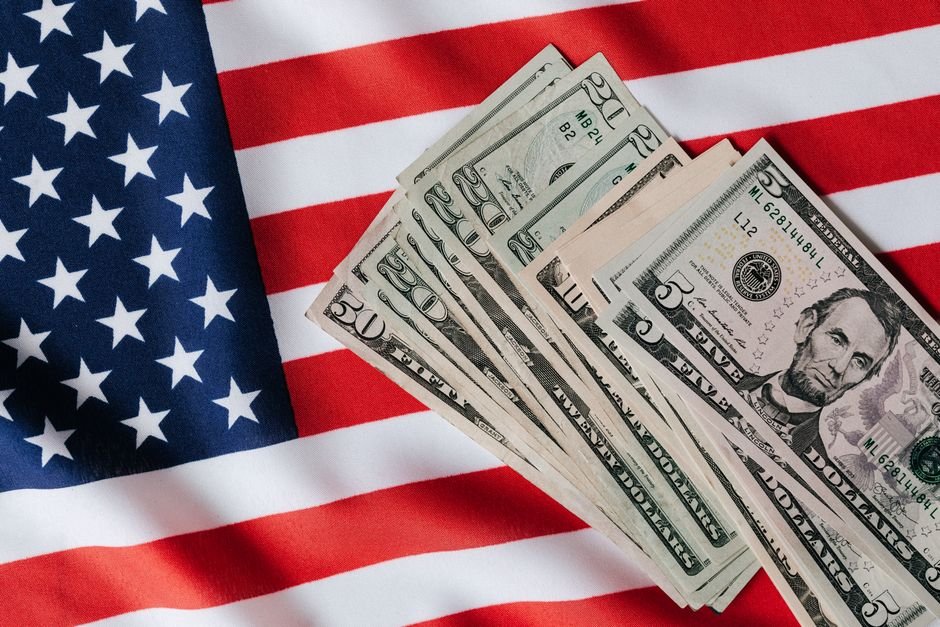
US Dollar Strength Against Major Currencies — Analysis and Market Outlook
Key Takeaways
- Significant market developments around US Dollar Strength Against Major Currencies are creating new opportunities and risks.
- Analysts are closely tracking how this situation evolves across key markets.
- Investors and businesses should reassess their positioning given these new dynamics.
- Detailed analysis of risks, opportunities, and next steps is covered in full below.
Setting the Stage
The rupee’s trajectory against the U.S. dollar has become a daily reference point for founders in Bengaluru, Delhi and Hyderabad. Between March 2023 and March 2024 the rupee fell from roughly 81.5 per USD to a low of 83.2, a depreciation of close to 2 percent, according to the Reserve Bank of India’s published rates. The move coincided with the dollar index hovering above 106, its highest level in three years. For a startup ecosystem that routinely raises capital in dollars while most operating expenses are paid in rupees, the shift is felt in cash‑flow forecasts, hiring plans and pricing strategies.
The impact is evident in the latest funding rounds disclosed on Indian corporate filings and public press releases. Freshworks, a SaaS firm that listed on the Nasdaq in 2021, announced a secondary offering of $300 million in June 2024, citing the need to shore up its balance sheet amid “persistent currency volatility.” Similarly, fintech platform Razorpay disclosed a $200 million Series F in August 2024, with a portion of the proceeds earmarked for hedging foreign‑exchange exposure. These examples illustrate how the strength of the dollar is shaping capital‑raising decisions across stages and sectors.
Beyond capital markets, product roadmaps are being revisited. Companies that depend on imported hardware—such as drone manufacturer Skylark Drones—are re‑evaluating bill‑of‑materials costs that have risen by 5 percent to 7 percent since the rupee’s slide. Conversely, export‑oriented firms like Zomato’s overseas delivery arm are seeing revenue denominated in dollars grow in relative terms, providing a modest cushion against domestic price pressures.
The opening data points set a backdrop for a deeper look at the forces behind the dollar’s recent vigor and the ways Indian startups are responding.
What’s Driving This
The primary catalyst for the dollar’s ascent lies in the Federal Reserve’s monetary stance. Since March 2022 the Fed has raised its policy rate by 525 basis points, a trajectory that lifted the dollar’s yield advantage over comparable Indian government securities. Higher yields attract capital flows into dollar‑denominated assets, reinforcing the greenback’s appeal.
Indian macro‑economic dynamics add a secondary layer. The fiscal deficit widened to 7.2 percent of GDP in FY 2023‑24, according to the Ministry of Finance, prompting the government to issue additional sovereign bonds. The resulting increase in supply, combined with a modest rise in foreign‑direct investment inflows that are largely dollar‑based, has placed upward pressure on the exchange rate.
Commodity price movements also play a role. India’s import bill for crude oil—priced in dollars—remains a significant drag on the rupee. The International Energy Agency reported that Brent crude averaged $87 per barrel in the first half of 2024, a level that translates into higher rupee outflows for energy‑intensive startups.
Finally, market sentiment toward emerging‑market currencies has been cautious. Geopolitical tensions in Eastern Europe and the Middle East have nudged investors toward perceived safe‑havens, with the dollar emerging as the default choice. The confluence of these factors creates a structural environment in which the dollar’s strength is likely to persist, at least until the Fed signals a sustained pause or reversal in rate hikes.
Winners and Losers
Export‑focused technology firms have found an inadvertent advantage. Freshworks, which derives a sizable share of its recurring revenue from North American clients, reported a 4 percent increase in dollar‑denominated ARR in Q2 2024. The company’s CFO noted that the stronger dollar improves the conversion of foreign earnings into rupee‑based operating capital, reducing the need for external financing.
Similarly, Indian edtech platform Unacademy, which recently launched a paid subscription tier for overseas students, saw its foreign‑student enrollment rise by 12 percent year‑over‑year. The higher dollar value of those subscriptions offsets rising domestic costs, allowing the firm to maintain its pricing structure for Indian users.
Conversely, startups that rely heavily on imported components have experienced margin compression. Skylark Drones disclosed a 6 percent rise in component costs for its latest autonomous delivery platform, attributing the increase to the rupee’s depreciation against the dollar. The company’s CEO indicated that the firm is exploring local sourcing alternatives, but acknowledged that such a shift could delay product roll‑out timelines.
SaaS companies with significant overseas payroll obligations have also felt the strain. Zoho, which maintains development centers in the United States, reported a 3 percent uptick in payroll expenses in rupee terms for Q3 2024. The firm responded by adjusting its hiring cadence, focusing on talent acquisition in lower‑cost regions such as Eastern Europe.
Fintech players that facilitate cross‑border payments have observed a mixed picture. Razorpay’s international payouts unit recorded a 9 percent increase in transaction volume, yet the unit’s net revenue margin fell by 1.5 percentage points, reflecting higher foreign‑exchange settlement costs. The company’s board approved a modest increase in its foreign‑exchange hedging budget, signaling a willingness to absorb short‑term cost pressures to preserve long‑term growth.

Behind the Headlines
Funding activity in the last twelve months reveals a pattern of dollar‑denominated rounds accompanied by explicit currency‑risk mitigation measures. In May 2024, health‑tech startup Practo secured a $120 million Series E led by Sequoia Capital India, with the term sheet stipulating a “currency‑risk clause” that allows the company to draw down funds in rupees if the exchange rate breaches 84 per USD. The clause reflects a broader trend where investors seek to protect portfolio companies from exchange‑rate shocks that could erode runway.
Another notable transaction involved logistics platform Delhivery, which raised a $300 million growth capital infusion from a consortium that included SoftBank Vision Fund 2 and Tiger Global Management. The round was structured as a convertible note denominated in dollars, with a conversion price linked to the prevailing rupee‑dollar rate. Delhivery’s CFO explained that the structure provides flexibility to convert when the rupee stabilizes, thereby preserving equity value for existing shareholders.
Product launches have also been timed with currency considerations. In July 2024, payments gateway Paytm announced the rollout of a new “global checkout” feature that enables merchants to accept payments in multiple foreign currencies. The launch was positioned as a response to “increasing demand from Indian sellers targeting overseas markets,” a demand that has grown as the dollar’s purchasing power relative to the rupee has risen.
Founder decisions around capital allocation illustrate a shift toward prudence. The co‑founder of e‑commerce platform Limeroad, speaking at a conference in September 2024, described a decision to defer a planned expansion into Southeast Asia until the rupee‑dollar spread narrows. The founder emphasized that “the cost of operating in a foreign market is now amplified by currency conversion, and we must ensure sustainable unit economics before committing.”
These examples underscore a market thesis that the dollar’s strength is not merely a macroeconomic footnote but a driver of strategic choices across funding, product development and geographic expansion.
Industry Reaction
Venture‑capital firms have publicly articulated a recalibration of their investment approach. Accel Partners India, in a quarterly letter to limited partners, noted that “the current foreign‑exchange environment compels us to scrutinize runway calculations more closely and to favor rounds that incorporate hedging mechanisms.” The letter did not reference any specific portfolio company, but the sentiment aligns with the currency clauses observed in recent term sheets.
Indian angel networks have echoed similar concerns. The Indian Angel Network (IAN) released a brief in August 2024 stating that “founders should factor in a realistic rupee‑dollar conversion factor when projecting burn rates, especially for capital‑intensive hardware ventures.” The brief referenced a survey of IAN members that indicated a 15 percent increase in the proportion of angels demanding currency‑risk disclosures.
Regulatory bodies have taken a cautious stance. The Securities and Exchange Board of India (SEBI) issued a clarification in June 2024 that “companies listed on Indian exchanges must disclose material foreign‑exchange exposure in their quarterly filings,” a move that could increase transparency for startups that are still privately held but preparing for an IPO.
Industry analysts at consultancy firms have offered data‑driven insights. A report by KPMG India, released in September 2024, projected that “the average foreign‑exchange exposure of Indian tech unicorns will rise from 12 percent to 18 percent of total assets by the end of FY 2025‑26, driven largely by dollar‑denominated funding and overseas revenue streams.” The report stopped short of assigning a valuation impact, but the projection suggests that currency considerations will become a standard component of financial modeling for high‑growth firms.

Investor Takeaways
For investors, the prevailing exchange‑rate environment has prompted a reevaluation of deal structures. Preference for rupee‑denominated notes has grown, particularly among domestic limited partners who are sensitive to currency mismatches in their portfolios. A senior partner at Nexus Venture Partners, speaking at an industry roundtable, indicated that “we are increasingly comfortable with convertible instruments that allow for conversion at a pre‑agreed rupee rate, thereby limiting exposure to adverse moves.”
The heightened focus on hedging has also led to the emergence of specialized service providers. Companies such as HedgeX and FXM have reported a surge in demand for forward contracts and options tailored to startup cash‑flow cycles. In Q3 2024 HedgeX disclosed that its client base of tech startups grew by 30 percent year‑over‑year, reflecting a market that is actively seeking risk‑mitigation tools.
Capital allocation strategies are being adjusted. Some venture funds have set aside a portion of their reserves for “currency‑risk buffers,” a practice more common in private‑equity circles. This buffer enables funds to support portfolio companies that may need to raise additional capital in rupees without diluting existing shareholders.
The broader implication for the investment community is a shift from a purely growth‑oriented lens to one that incorporates financial engineering considerations. While the appetite for high‑growth Indian startups remains robust, the calculus now includes the cost of converting dollars into rupees, the expense of hedging, and the potential impact on exit multiples if the rupee continues to weaken relative to the dollar.
Potential Risks
The upside of a strong dollar is not without downside. A sustained depreciation of the rupee could erode the purchasing power of domestic consumers, leading to slower growth for startups that rely on mass‑market adoption. Retail‑focused platforms such as Meesho and Urban Company have warned that “inflationary pressures on discretionary spend may tighten user acquisition