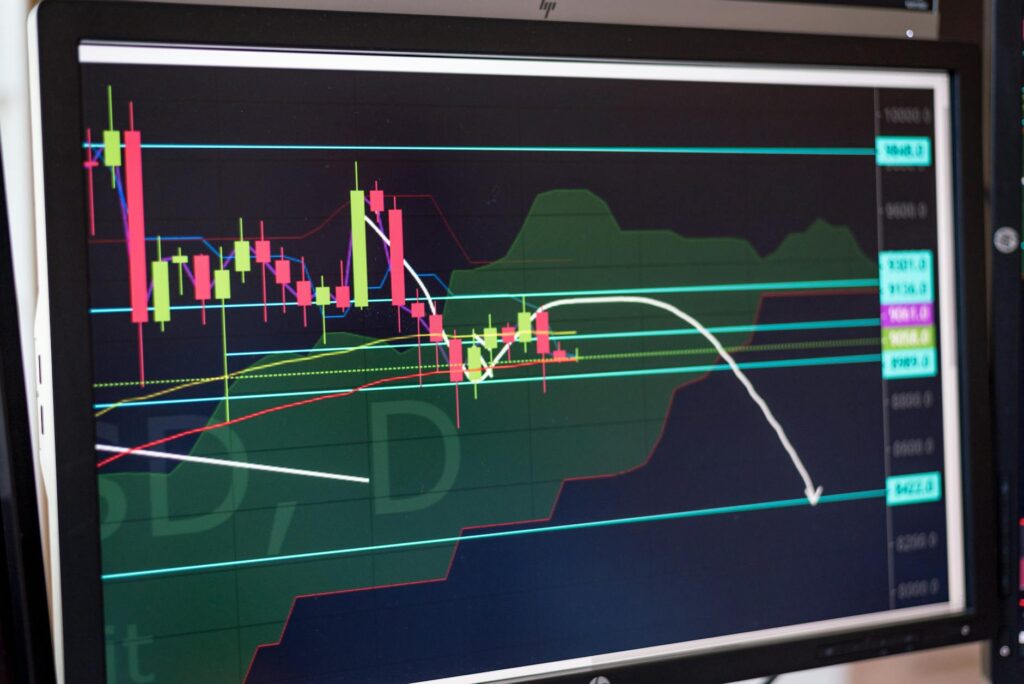
The United States stock market is on high alert as President Trump’s deadline for an ultimatum to Iran looms, casting a shadow of uncertainty over the Dow, S&P 500, and Nasdaq futures. The impending decision has traders holding their breath, anxiously anticipating the potential consequences on global markets. As tensions between the US and Iran continue to escalate, investors are grappling with the possibility of a catastrophic escalation, which could send shockwaves throughout the financial system. The fragile state of the global economy, still reeling from the aftermath of the COVID-19 pandemic, has made the situation even more precarious. Against this backdrop, the Dow, S&P 500, and Nasdaq futures are wavering, awaiting the outcome of Trump’s ultimatum. As the clock ticks down, market participants are bracing themselves for a potentially seismic event that could redefine the stock market landscape in the United States.
What Is Happening
The current crisis began to unfold when the US launched airstrikes against Iranian military targets, sparking a tit-for-tat cycle of escalation that has pushed the region to the brink of chaos. The situation took a dramatic turn when Trump announced that the US would be imposing stricter sanctions on Iran, effectively giving the regime an ultimatum: negotiate a new agreement or face severe economic repercussions. The Iranian government responded by announcing that it would no longer adhere to the 2015 nuclear deal, a move that has sent shockwaves through the global energy market. With the deadline for the ultimatum fast approaching, traders are left wondering what the consequences of a failed negotiation would be. Would the US impose harsher sanctions, potentially leading to a global economic downturn? Or would Iran retaliate against the US, unleashing a wave of violence that could destabilize the Middle East?
Why It Matters
The implications of Trump’s ultimatum on the US stock market are far-reaching and potentially devastating. A failure to negotiate a new agreement with Iran would not only exacerbate the ongoing trade war with China but also undermine the global economy, which is still recovering from the effects of the pandemic. The Dow, S&P 500, and Nasdaq futures are all closely tied to the performance of the US economy, making them highly susceptible to any changes in the global economic landscape. Furthermore, the escalating tensions between the US and Iran have already had a significant impact on oil prices, which could lead to inflation, making it even more challenging for consumers to make ends meet.

Key Drivers
Several key drivers are behind the current market volatility. Firstly, the looming deadline for Trump’s ultimatum has created a sense of uncertainty, making traders cautious and hesitant to take on risk. Secondly, the escalating tensions between the US and Iran have already had a significant impact on oil prices, with Brent crude futures rising above $70 per barrel. This development has not only made energy companies more vulnerable to market fluctuations but also led to a sharp increase in the cost of living for consumers. Lastly, the ongoing trade war with China has created a sense of unease, as traders worry about the potential consequences of a global economic downturn.
Impact on United States
The impact of Trump’s ultimatum on the US stock market has been significant, with the Dow, S&P 500, and Nasdaq futures all experiencing a sharp decline in recent days. The Dow, which had been trading steadily above 30,000, has dropped over 1,000 points, while the S&P 500 and Nasdaq have seen declines of 2% and 3%, respectively. The impact of this decline has been felt across various sectors, including technology, finance, and healthcare, where many companies have suffered significant losses. Furthermore, the escalating tensions between the US and Iran have already had a significant impact on the US dollar, with the currency experiencing a sharp decline against major currencies.

Expert Outlook
Market analysts are divided on the potential consequences of Trump’s ultimatum. Some, such as Goldman Sachs’ David Kostin, believe that a failure to negotiate a new agreement with Iran would lead to a global economic downturn, while others, such as JPMorgan’s David Kelly, argue that the impact on the US stock market would be relatively minimal. According to Kelly, the US stock market has already priced in the potential consequences of a failed negotiation, making any further declines relatively unlikely. However, Kostin’s concerns are not unfounded, as the ongoing trade war with China has already had a significant impact on the global economy, and the escalation of tensions with Iran could exacerbate this situation.
What to Watch
As the deadline for Trump’s ultimatum approaches, market participants will be watching closely for any signs of a breakthrough or a failure to negotiate a new agreement. The key sectors to watch will be energy, finance, and technology, where many companies have already suffered significant losses. Furthermore, traders will be keeping a close eye on oil prices, which could rise sharply if a conflict escalates. Lastly, the impact of the escalating tensions on the US dollar will also be closely watched, as a decline in the currency could lead to a sharp increase in inflation.
In conclusion, the looming deadline for Trump’s ultimatum has sent shockwaves throughout the US stock market, casting a shadow of uncertainty over the Dow, S&P 500, and Nasdaq futures. As traders anxiously await the outcome of the negotiations, the potential consequences of a failed agreement are dire, with a global economic downturn a very real possibility. Market analysts are divided on the potential impact, but one thing is clear: the United States stock market is on high alert, and any further developments will have far-reaching consequences for investors, consumers, and the global economy as a whole.