
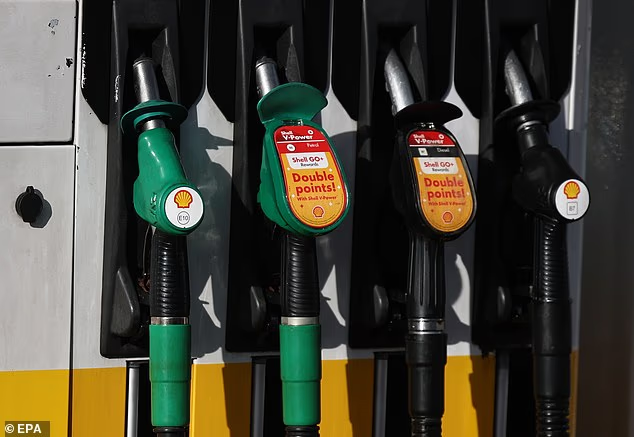
The outbreak of conflict in Iran and retaliatory attacks on the Middle East is likely to trigger a surge in the cost of filling up your car.
Strikes on Iran by the US and Israel over the weekend, which have been followed by retributive strikes in Bahrain, Iraq, Jordan, Kuwait, Oman, Qatar and the UAE, has sparked a near 10 per cent increase in oil prices from markets closing on Friday and opening on Monday.
The price of Brent crude oil – which is typically used in the manufacture of unleaded petrol – rose from $73 to almost $80 per barrel.
This is the highest price on record for eight months, since the US dropped ‘bunker-buster’ bombs on Iranian nuclear facilities in June.
Iran’s responsive targeted attacks on oil tankers in Strait of Hormuz – the only sea passage from the Persian Gulf – on Sunday and on Saudi Arabia’s Ras Tanura refinery on Monday morning, means Britons are very much likely to see a rise in fuel prices.
But while the RAC has suggested that oil would need to remain at around $80-a-barrel for an extended period for these costs to be passed on at the pumps, many economists believe prices could hit $100 if the situation drags on for an extended period.
The price of Brent crude oil – typically used in the manufacture of unleased petrol – has risen by almost 10% over the weekend on the back of fresh conflict with Iran
The Middle East is the biggest and most vital oil-producing region across the globe.
The Strait of Hormuz on Iran’s southern border – the target of recent drone strikes – is also a fundamental transport network for shipping oil to various markets.
This crucial trading route sees around 21 million barrels per day – which is approximately a fifth of the world’s oil trade – pass through its waters.
The 100-mile stretch links the Persian Gulf to the Gulf of Oman and to the Arabian Sea and the Indian Ocean, with any threat of the waterway becoming blocked likely to spark a rise in oil pricing.
When might pump prices start rising?
On Monday morning, the average price of petrol was 132.7p per litre.
This is almost 60p shy of the record highest unleaded price of 191.5p seen in July 2022, triggered by Russia’s war on Ukraine.
While fuel retailers adjust their pricing on petrol and diesel based on a number of factors, it is the cost of oil – and its impact on wholesale fuel prices – that has the biggest impact and is most likely to cause fluctuations in fuel bills.
Yet the RAC says increases in crude oil typically takes two weeks to filter through to forecourt pricing in Britain.
‘Forecourt prices were already on the rise due oil trading nearer to $70 a barrel in the last few weeks,’ explains Simon Williams, fuel spokesman at the motoring organisation.
‘Regardless of the current situation, petrol rose by a penny a litre in February and is likely to go up by another penny in the next week or so to an average of 134p per litre.
‘If oil were to climb to and stay at the $80 a barrel mark, then drivers could expect to pay an average of 136p for petrol.
‘A 2p per litre difference from 134p could cost already-cash-strapped drivers an extra £1 per fill-up.
‘At $90, we’d be looking at over 140p a litre (over £2 more per fill-up) and $100 would take us nearer to 150p (over £3 more), but it’s all too soon to know.’
Another thing that impacts pump costs is the exchange rate because oil is priced in US dollars, the RAC says.
This means a stronger British pound against the US dollar makes UK prices less expensive.

The Strait of Hormuz is 100 miles and links the Persian Gulf to the Arabian Sea and the Indian Ocean. It is a fundamental waterway for the transportation of oil from the Middle East
Shipping might have to adjust to Middle East conflict
Dr Jorge Leon, an energy economist at intelligence firm Rystad Energy, said any potential blockage would directly impact British motorists.
‘We have a direct effect – which is higher prices at the pump and higher electricity bills, but also a secondary effect, which is things will get more expensive because inflation might increase.’
However, other experts say the oil sector could make adjustments to offset any impact of the Strait of Hormuz being targeted.
John Stawpert, principal director and head of the marine department at the International Chamber of Shipping says this is not the industry’s ‘first rodeo’ and that the sector has the capacity to adapt to challenges in the region.
He said: ‘It’s important to stress that, whilst this is a big shock, and we are concerned about reported attacks against shipping in the region, trade is continuing to flow, the straits are not closed, so any impact that we would see is likely to be minimal unless there is a big change in the security dynamic in that region.
‘We will continue to assess the situation, shipping lines will continue to do real-time assessments of the threats vessels will face.
‘Ultimately, this isn’t our first rodeo, unfortunately, we have experienced these sorts of threats before in other parts of the world, and shipping is very well placed to adapt in the face of a crisis.’