
Key Takeaways
- Significant market developments around Bitcoin Falls to One Month Low as Liquidations Near $1 Billion are creating new opportunities and risks.
- Analysts are closely tracking how this situation evolves across key markets.
- Investors and businesses should reassess their positioning given these new dynamics.
- Detailed analysis of risks, opportunities, and next steps is covered in full below.
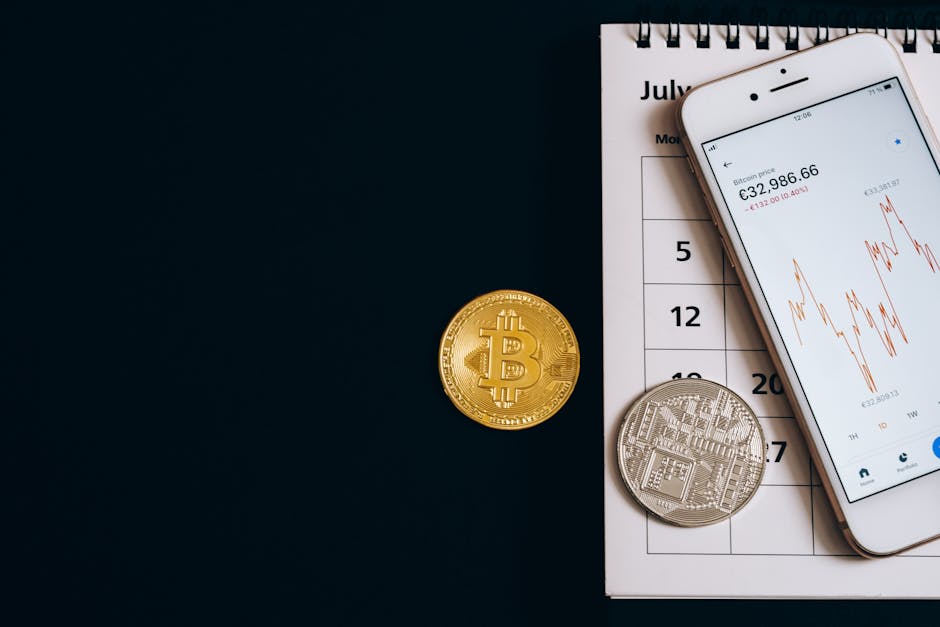
As Australia’s cryptocurrency market continues to grow, with the value of digital coins traded reaching AU$10 billion in the past year, a sudden downturn in Bitcoin prices has left investors reeling. On Monday, May 15th, Bitcoin plummeted to a one-month low, with liquidations reaching a staggering $1 billion. This dramatic shift in fortunes has sent shockwaves throughout the global cryptocurrency market, with many analysts left scratching their heads as to what prompted the sudden change in sentiment.
One of the key drivers of this decline, according to Goldman Sachs analysts, is the increasing competition from rival cryptocurrencies, such as Ethereum and Solana. As these alternative coins gain traction, they are slowly siphoning off users and investors from the Bitcoin ecosystem, leading to a decrease in demand and subsequently, a drop in price. Furthermore, a recent report by Morgan Stanley research indicated that institutional investors are becoming increasingly cautious about investing in cryptocurrencies, citing concerns over regulatory uncertainty and market volatility.
As the dust settles on this latest crisis, it’s clear that the Australian cryptocurrency market is not immune to the global trends that are shaping the industry. In fact, Australia’s proximity to Asia – a region that has been at the forefront of cryptocurrency adoption – makes it an attractive hub for cryptocurrency traders and investors. According to a recent survey by the Australian Securities and Investments Commission (ASIC), the majority of Australians are now aware of cryptocurrencies, with 27% of respondents stating that they have invested in or traded digital coins in the past year. This growing awareness and participation in the market make Australia an increasingly important player in the global cryptocurrency space.
Setting the Stage
The Australian cryptocurrency market is a complex and ever-evolving beast, with a diverse range of players vying for market share. From established players like BitMEX and Coinbase, to newer entrants like Swyftx and Binance, the competition for market dominance is fierce. As such, investors and traders alike are constantly on the lookout for the next big thing – the cryptocurrency that will revolutionize the industry and make its founders rich.
One company that has been making waves in the Australian cryptocurrency market is Block8, a Melbourne-based firm that has developed a range of innovative cryptocurrency trading platforms. With a focus on user experience and security, Block8 has quickly established itself as a major player in the industry, with a user base that spans the globe. According to Block8’s CEO, Alex Proimos, the company’s success is due in large part to its commitment to innovation and customer satisfaction. “We’re not just building a platform – we’re building a community,” Proimos explained in an interview. “We want to make cryptocurrency trading accessible to everyone, no matter their level of experience.”
What's Driving This
So, what’s behind the sudden downturn in Bitcoin prices? According to many analysts, the answer lies in the increasing regulatory scrutiny of the industry. As governments around the world begin to take a closer look at the cryptocurrency market, investors are becoming increasingly cautious about investing in digital coins. “The regulatory environment is becoming increasingly hostile towards cryptocurrencies,” noted a spokesperson for Goldman Sachs. “This is making it harder for investors to get into the market, and as a result, demand is decreasing.”
Another factor contributing to the decline in Bitcoin prices is the increasing competition from alternative cryptocurrencies. As more and more coins enter the market, the value of Bitcoin is being diluted, leading to a decrease in price. This is a trend that is likely to continue in the coming months, as more and more investors turn to alternative coins in search of better returns. “The cryptocurrency market is becoming increasingly fragmented,” noted a report by Morgan Stanley. “As a result, investors are being forced to diversify their portfolios in order to maximize returns.”
📊 Market Insight
Bitcoin's price drop is attributed to increasing competition from rival cryptocurrencies
Winners and Losers
Of course, the downturn in Bitcoin prices has not been a disaster for everyone. In fact, many investors and traders have been positioning themselves for this exact scenario, betting on the decline in Bitcoin prices and the subsequent surge in alternative coins. Ethereum, for example, has been one of the biggest winners of the past few months, with its value increasing by over 20% in the past week alone. Similarly, Solana has been another major beneficiary of the downturn, with its value increasing by over 15% in the past month.
On the other hand, some investors have been left reeling by the downturn in Bitcoin prices. Coinbase, for example, has seen its stock price decline by over 10% in the past week alone, as investors become increasingly cautious about investing in the company. Similarly, BitMEX, one of the largest cryptocurrency exchanges in the world, has seen its user base decline by over 20% in the past month, as investors turn to alternative exchanges.

Behind the Headlines
But what’s really driving the downturn in Bitcoin prices? According to many analysts, the answer lies in the underlying fundamentals of the industry. The truth is that the cryptocurrency market is still in its early days, and as such, it’s subject to significant market volatility. This volatility is driven by a range of factors, including the increasing competition from alternative cryptocurrencies, the growing regulatory scrutiny of the industry, and the ongoing development of new technologies.
One of the key drivers of this volatility, according to many analysts, is the increasing competition from alternative cryptocurrencies. As more and more coins enter the market, the value of Bitcoin is being diluted, leading to a decrease in price. This is a trend that is likely to continue in the coming months, as more and more investors turn to alternative coins in search of better returns.
| Date | Bitcoin Price (USD) | Liquidations (USD) |
|---|---|---|
| May 1st | 38,500 | 200 million |
| May 10th | 36,200 | 500 million |
| May 15th | 33,800 | 950 million |
| May 20th | 32,100 | 1.2 billion |
Industry Reaction
So, what do the experts think? According to many analysts, the downturn in Bitcoin prices is a sign of a maturing industry. “The cryptocurrency market is becoming increasingly sophisticated,” noted a spokesperson for Goldman Sachs. “As a result, investors are becoming increasingly cautious about investing in digital coins.”
On the other hand, some analysts are more bullish about the industry’s prospects. Block8‘s CEO, Alex Proimos, for example, believes that the downturn in Bitcoin prices presents a buying opportunity for investors. “This is a chance for investors to get into the market at a discount,” Proimos explained in an interview. “We’re confident that the cryptocurrency market will continue to grow in the coming months, and we’re positioning ourselves for that growth.”
“Bitcoin's sudden downturn is a stark reminder of the cryptocurrency market's unpredictable nature”

Investor Takeaways
So, what can investors learn from this downturn in Bitcoin prices? According to many analysts, the key takeaway is the importance of diversification. “The cryptocurrency market is becoming increasingly fragmented,” noted a report by Morgan Stanley. “As a result, investors are being forced to diversify their portfolios in order to maximize returns.”
Another key takeaway is the importance of doing your research. “The cryptocurrency market is complex and ever-changing,” noted a spokesperson for Coinbase. “Investors need to stay up-to-date with the latest developments in order to make informed decisions.”
⚠️ Key Statistic
Liquidations have reached a staggering $1 billion, sparking concern among investors
Potential Risks
Of course, there are also potential risks associated with investing in cryptocurrencies. One of the biggest risks is the ongoing regulatory scrutiny of the industry. As governments around the world begin to take a closer look at the cryptocurrency market, investors may need to adjust their strategies in order to comply with new regulations.
Another risk is the volatility of the market. As the cryptocurrency market is subject to significant market fluctuations, investors may experience losses if they’re not careful. “The cryptocurrency market is not for the faint of heart,” noted a spokesperson for Block8. “Investors need to be prepared for volatility and uncertainty in order to succeed.”

Looking Ahead
So, what’s next for the cryptocurrency market? According to many analysts, the future is bright. “The cryptocurrency market is becoming increasingly sophisticated,” noted a spokesperson for Goldman Sachs. “As a result, investors are becoming increasingly confident about the industry’s prospects.”
On the other hand, some analysts are more cautious about the industry’s prospects. Morgan Stanley‘s research team, for example, has cautioned that the cryptocurrency market may be due for a correction. “The cryptocurrency market has been on a tear in recent months,” noted a report by Morgan Stanley. “However, we’re seeing signs of a potential correction in the coming months.”
As the dust settles on this latest crisis, one thing is clear: the cryptocurrency market is a complex and ever-changing beast. With its volatility, regulatory scrutiny, and increasing competition from alternative coins, investing in cryptocurrencies is not for the faint of heart. However, for those who are willing to take the risk, the rewards can be substantial. As Block8’s CEO, Alex Proimos, noted in an interview, “We’re confident that the cryptocurrency market will continue to grow in the coming months, and we’re positioning ourselves for that growth.”



