Key Takeaways
- This article covers the latest developments around Everyone's Talking About the SpaceX IPO. Why I Think You Should Avoid It, and What to Buy Instead. and their market implications.
- Industry experts and analysts are closely monitoring how this situation evolves.
- Investors and business professionals should review exposure and strategy in light of these changes.
- Key risks and opportunities are examined in detail below.
Spacex’s long-awaited IPO has sparked a frenzy of interest among investors, with many eagerly anticipating a chance to get in on the ground floor of the privately-held rocket manufacturer and space tourism company. But as the hype builds, should you really be jumping on the bandwagon? As I dug deeper into the IPO, I couldn’t shake the feeling that this might be a stock to avoid – at least, not just yet. Here’s why.
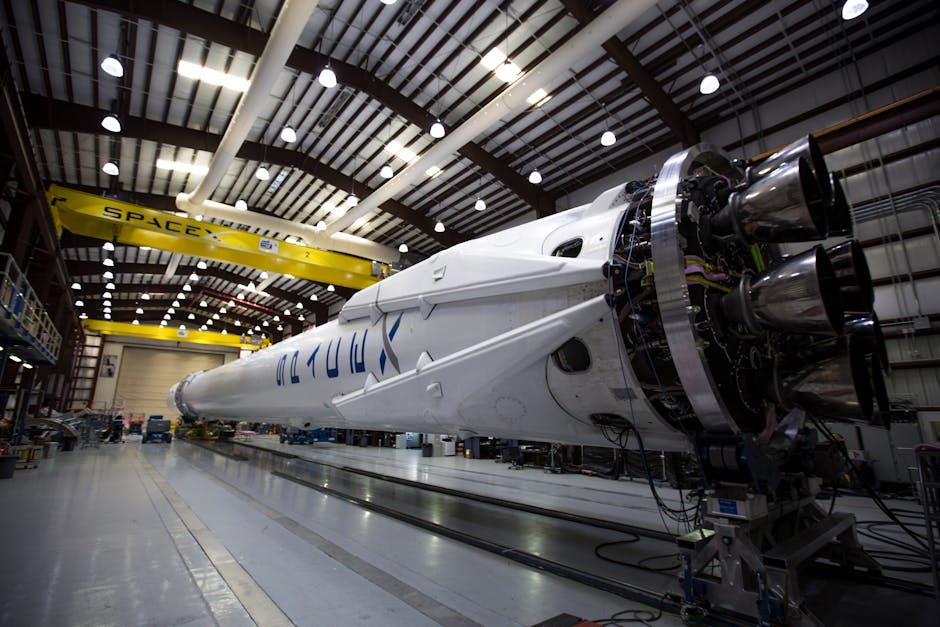
For those who missed it, Spacex has been quietly accumulating a staggering amount of cash over the years, with its most recent funding round raking in a whopping $1.5 billion from investors like Fidelity and Baillie Gifford. This influx of capital has enabled the company to aggressively expand its operations, from developing new rocket models to launching ambitious satellite constellations. At the same time, Spacex has been rapidly expanding its workforce, with some estimates suggesting it now employs over 30,000 people worldwide.
So what’s driving this unprecedented growth? One major factor is the government’s shifting stance on space policy. In 2020, the US Space Force was established as a separate branch of the military, with a focus on developing and deploying space-based assets. This has created a massive demand for commercial space services – and Spacex is well-positioned to meet that demand. Another factor is the company’s innovative approach to reducing costs and increasing efficiency, which has allowed it to undercut traditional defense contractors and capture a significant share of the lucrative satellite launch market.
Winners and Losers
As Spacex’s IPO inches closer to reality, it’s worth taking a look at the bigger picture. Who stands to benefit from this new wave of investment, and who might be left behind? On one hand, you have the likes of Blue Origin, United Launch Alliance, and Northrop Grumman, which are all vying for a slice of the commercial space pie. These companies have been around for decades and have a deep understanding of the industry – but they’re also heavily entrenched in traditional defense contracting, which may limit their ability to adapt to the changing landscape.
On the other hand, you have the likes of Virgin Galactic, Stratolaunch Systems, and Relativity Space, which are all pushing the boundaries of what’s possible in space exploration and development. These companies are often more agile and innovative than their established rivals – but they’re also more risk-prone and may require significant investment to reach profitability. As the IPO dust settles, it’s likely that these newer players will be the ones to watch.
Behind the Headlines
So what’s really driving the hype around Spacex’s IPO? One major factor is the company’s charismatic CEO, Elon Musk, who has become a cultural icon in his own right. Musk’s vision for a human settlement on Mars and his willingness to take bold risks have captured the public’s imagination – and investors are eager to get in on the action. Another factor is the company’s impressive track record of innovation, from developing the reusable Falcon 9 rocket to launching the first commercial crewed mission to the International Space Station.
But behind the headlines, there are also some more nuanced factors at play. For one thing, the IPO market has been relatively quiet in recent years – and Spacex’s offering is likely to be one of the largest and most highly-anticipated in years. This has created a sense of FOMO (fear of missing out) among investors, who are eager to get in on the action before it’s too late. Another factor is the growing recognition of space as a strategic asset, with governments and companies around the world recognizing its potential to drive economic growth and national security.

Industry Reaction
As the IPO process unfolds, industry observers are watching with bated breath. Analysts at major brokerages like Morgan Stanley and Goldman Sachs have flagged Spacex as one of the most promising IPOs of the year, with estimates suggesting the company could raise up to $20 billion in its debut offering. However, others have raised concerns about the company’s valuation, citing concerns about its profitability and cash burn rate.
The Space Foundation, a leading industry trade group, has also weighed in on the IPO, praising Spacex for its innovative approach and commitment to advancing the space industry. However, the organization has also cautioned that the IPO market is highly unpredictable and that investors should be prepared for volatility. “The space industry is a rapidly-evolving space, and investors need to be prepared for the unexpected,” said Lori Garver, CEO of the Space Foundation.
Investor Takeaways
So what should investors be taking away from the Spacex IPO? For one thing, the company’s innovative approach and commitment to advancing the space industry are clear strengths. However, investors should also be aware of the company’s valuation, which is likely to be highly sensitive to market conditions. Another key factor is the company’s cash burn rate, which has been reported to be in the hundreds of millions of dollars per quarter.
In terms of specific investment strategies, it’s worth considering the broader space industry as a whole, rather than just focusing on Spacex. This could involve investing in companies like Virgin Galactic or Relativity Space, which are pushing the boundaries of what’s possible in space exploration and development. Alternatively, investors could consider more established players like Lockheed Martin or Boeing, which have a deep understanding of the industry and a strong track record of innovation.

Potential Risks
As the IPO process unfolds, there are also potential risks to consider. For one thing, the space industry is inherently unpredictable, with unexpected setbacks and failures a regular occurrence. This could affect Spacex’s valuation and ultimately impact investor returns. Another risk is the company’s reliance on government contracts, which can be subject to fluctuations in government funding and policy.
In addition, there are also concerns about the company’s governance and leadership structure. With Elon Musk at the helm, Spacex has a highly-visible and influential CEO who is also a major shareholder. However, this also raises questions about the company’s corporate governance and potential conflicts of interest. “The IPO market is a high-stakes game, and investors need to be aware of the potential risks,” said Scott Galloway, a prominent analyst and academic.
Looking Ahead
As the Spacex IPO approaches, it’s worth considering what the future holds for the company and the broader space industry. One potential scenario is that the company will continue to grow and expand, leveraging its innovative approach and commitment to advancing the space industry. This could involve launching new satellite constellations, developing reusable rockets, and pushing the boundaries of what’s possible in space exploration and development.
Another scenario is that the company will face significant challenges and setbacks, potentially affecting its valuation and ultimately impacting investor returns. This could involve unexpected failures or setbacks, regulatory hurdles, or simply the challenges of scaling a rapidly-growing company. Whatever the outcome, one thing is clear: the Spacex IPO is just the beginning of a new era in space investment and exploration.

Frequently Asked Questions
What are the main reasons to avoid investing in the SpaceX IPO?
The main reasons to avoid investing in the SpaceX IPO include the company's high valuation, intense competition in the space industry, and lack of profitability. Additionally, SpaceX's reliance on government contracts and the uncertainty surrounding its Starlink project make it a risky investment. These factors contribute to a potentially volatile stock price, making it a less attractive option for investors.
What alternative investments could be more attractive than SpaceX?
Alternative investments such as established players in the aerospace industry, like Boeing or Lockheed Martin, could be more attractive than SpaceX. These companies have a proven track record of profitability and a more stable financial outlook. Additionally, investing in companies that support the space industry, such as satellite communications or space technology firms, could provide a more diversified and less risky investment portfolio.
How does SpaceX's lack of profitability impact its IPO?
SpaceX's lack of profitability raises concerns about its ability to generate returns for investors. As a private company, SpaceX has not been required to disclose its financial statements, but its high research and development costs and significant investments in its Starlink project have likely contributed to its losses. This lack of profitability makes it challenging for investors to evaluate the company's true value and potential for growth.
What role does government funding play in SpaceX's financials?
Government funding plays a significant role in SpaceX's financials, as the company relies heavily on contracts with NASA and the US military. While these contracts provide a stable source of revenue, they also create uncertainty and risk, as changes in government funding priorities or contract awards can significantly impact SpaceX's financial outlook. Investors should carefully consider the potential risks and benefits of investing in a company with such a high dependence on government funding.
How does the Starlink project impact SpaceX's investment potential?
The Starlink project is a significant factor in SpaceX's investment potential, as it represents a substantial investment of resources and a potential source of revenue. However, the project's success is uncertain, and the company faces significant competition in the satellite internet market. If the Starlink project fails to generate expected returns, it could negatively impact SpaceX's financial outlook and stock price, making it a riskier investment for shareholders.