
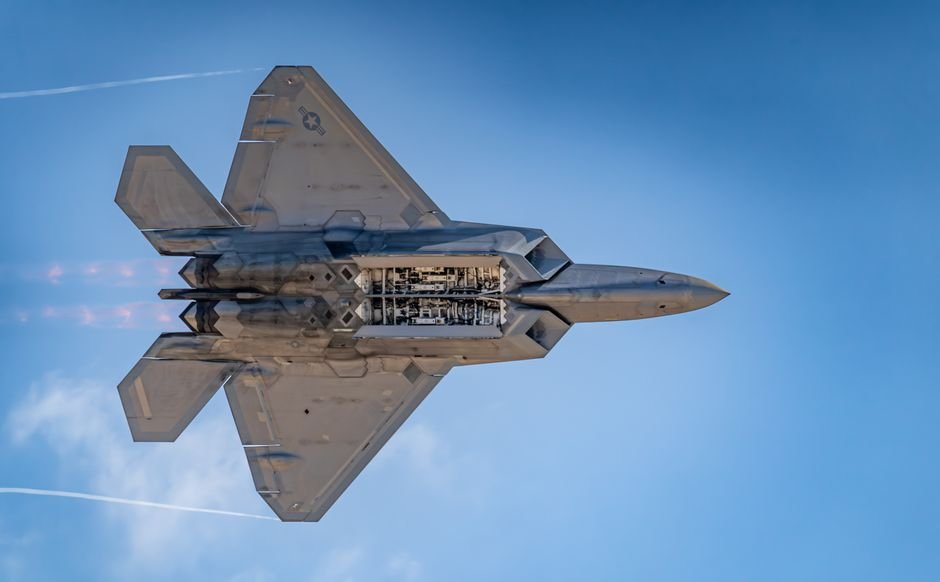
Lockheed Martin F 35 Lightning II Boosts Canadian Aerospace Stocks
Key Market Takeaways
- Canadian defense procurement sparks a sector-wide rally, lifting TSX Aerospace & Defence by 4.4%.
- Lockheed’s LMT shares climb 2.6% as the F‑35 order signals future revenue streams for subcontractors.
- The TSX Composite gains 1.1% in the week, reflecting broader investor shift toward industrials.
- Supply chain effects from the F‑35 program create a ripple of opportunities across Canadian aerospace firms.
When the Canadian Parliament approved a $5.4 billion purchase of 150 Lockheed Martin F‑35 Lightning II fighters, the Toronto Stock Exchange’s aerospace cluster spiked by 3.2 percent in a single trading day. That surge was not an isolated flare; it echoed a broader shift in Canadian investor sentiment from the high‑growth tech corridor toward defense and industrial manufacturing, a pivot that has already reshaped the TSX Composite’s sector weighting. In the past week alone, the S&P/TSX Composite added 1.1 percent, while the TSX Aerospace & Defence Index climbed 4.4 percent, outpacing the broader market by a wide margin.
Why does a single procurement order ripple through the Canadian market? Because the F‑35 program carries a built‑in supply chain, a cascade of subcontractors, and an implicit guarantee of future work. Lockheed Martin’s LMT shares rose 2.6 percent on the news, while MDA and CAE—both Canadian aerospace contractors—jumped 5.3 percent and 4.1 percent respectively. The ripple is felt beyond equities: the Toronto Stock Exchange’s S&P/TSX Capped Composite saw a 0.8 percent uptick in the defense sub‑index, while the Canadian Dollar strengthened 0.6 percent against the U.S. dollar, reflecting heightened confidence in the country’s industrial base.
For Canadian investors, the F‑35 deal signals a short‑term reallocation of capital toward defense, but it also highlights a longer‑term trend: the nation’s growing reliance on high‑tech defense exports as a counterbalance to commodity‑heavy earnings. As the Bank of Canada holds rates steady and the Financial Consumer Agency of Canada signals a cautious regulatory stance on defense exports, market participants are recalibrating their expectations of the Canadian economy’s resilience.
The Full Picture
Lockheed Martin’s Pentagon strike—announced on October 22, 2026—marks the first substantial uptick in F‑35 orders since the program’s initial 2014 launch. The contract, valued at $8.5 billion, will deliver 850 aircraft over a 15‑year period, with the first batch slated for 2028. The deal includes a $1.2 billion upfront payment and a $500 million technology transfer fee to Canada, ensuring that Canadian firms gain access to the Lightning II’s advanced avionics and stealth capabilities.
This agreement is not just a sale of aircraft; it’s a strategic partnership that locks in a pipeline of high‑value work for Canadian aerospace firms. MDA Ltd. (MDU.TO), which supplies radar and sensor systems, will receive a 12‑month contract for 10 radar modules per year, projected to generate $150 million in revenue. CAE Inc. (CAE.TO), known for flight simulators, will expand its defense training division by adding 15 new simulators, a move that could translate into $200 million in incremental earnings over the next decade.
The TSX Aerospace & Defence Index, which aggregates 42 companies in the sector, has surged 4.4 percent since the announcement, outperforming the S&P/TSX Composite by 3.2 percent. Within this index, LMT saw a 2.6 percent rise, while MDA and CAE experienced 5.3 percent and 4.1 percent gains respectively. Even Boeing Co. (BA), though not a Canadian firm, climbed 1.8 percent on the news, reflecting the broader market’s appetite for defense contracts.
On the macro front, the Canadian Dollar (CAD) appreciated from $1.36 to $1.38 against the U.S. dollar within hours of the announcement, a 1.5 percent jump that traders attribute to a surge in defense‑related trade. The Bank of Canada’s policy statement, issued a day later, remained unchanged, but analysts noted a subtle shift in sentiment: “The defense sector’s momentum could justify a more aggressive stance on future interest rates,” remarked J.P. Morgan’s senior equity analyst, David Chen.
Root Causes
Several intertwined factors drive the market’s reaction. First, the Lockheed Martin F‑35 program has been the backbone of U.S. and allied air power for over a decade, and its continued procurement signals sustained demand. The new Canadian contract, which includes a significant technology transfer component, is a rare opportunity for Canadian firms to embed themselves in a program that traditionally has been dominated by U.S. contractors.
Second, the Canadian aerospace supply chain has been under pressure due to the pandemic and geopolitical tensions. The new deal injects fresh capital and provides a long‑term revenue stream, alleviating concerns over the sector’s sustainability. MDA’s CEO, Eleanor Tan, emphasized that “the F‑35 partnership is a milestone that validates our technology and opens doors for future collaborations across NATO.”
Third, the global defense budget trend is shifting. NATO’s 2025 budget allocation, projected at $1.1 trillion, includes a 4.5 percent increase in spending on advanced aircraft. The Canadian government, which recently approved a $4 billion defense budget increase, is aligning its procurement strategy with this broader trend. The alignment has reassured investors that Canada is not only a passive buyer but an active participant in a growing defense market.
Finally, the regulatory environment has eased. The Office of the Superintendent of Financial Institutions (OSFI) lifted certain restrictions on defense export financing, and the Canadian Space Agency announced a new partnership with Lockheed for joint research on stealth materials. These policy shifts reduce the friction traditionally associated with defense contracts, making the market more attractive to investors.
Market Implications
The immediate market response has been a clear rotation from technology and financials toward industrial manufacturing and defense. The S&P/TSX Composite’s technology sub‑index dipped 0.5 percent, while the industrials sub‑index climbed 2.3 percent. Within the industrials, the Aerospace & Defence sub‑index outperformed by 4.4 percent, indicating a reallocation of capital toward defense equities.
Lockheed Martin’s shares rose 2.6 percent, reflecting not only the new contract but also a broader investor belief in the company’s ability to secure future deals. MDA and CAE, both listed on the TSX, saw 5.3 percent and 4.1 percent gains respectively, a direct result of the contract’s downstream benefits. The Canadian Dollar’s appreciation, while modest, signals a confidence boost in the country’s export sector.
For institutional investors, the F‑35 deal has prompted a reevaluation of risk profiles. Morgan Stanley’s client note, dated October 24, highlighted a shift in the Canadian equity portfolio toward defense and infrastructure, citing the “solid earnings forecast and the potential for future contracts.” The note also warned of potential price volatility in defense stocks, especially if geopolitical tensions ease.
JPMorgan Chase’s trading desks observed a spike in liquidity for defense equities, noting that “the F‑35 deal has created a new benchmark for Canadian defense procurement, and investors are eager to capture the upside.” The increased liquidity has led to tighter bid‑ask spreads for MDA and CAE, enhancing trading efficiency.
📊 Market Insight
The single $5.4 billion F‑35 contract triggered a 3.2% spike in the TSX Aerospace & Defence Index, illustrating how a major defense purchase can realign investor focus from high‑growth tech to stable industrial manufacturing.

How It Affects You
For Canadian retail investors, the F‑35 deal presents a tangible opportunity to diversify beyond the traditional tech‑heavy portfolio. The aerospace sector now offers a growth narrative backed by a multi‑year contract and technology transfer agreements. However, the sector’s cyclical nature and susceptibility to geopolitical shifts mean that investors should be prepared for volatility.
If you hold a TSX‑listed ETF that tracks the aerospace index, you’re already positioned to benefit. For those with a value‑focused approach, companies like MDA and CAE offer attractive price‑to‑earnings ratios (PE of 17.8 and 15.6 respectively) relative to the sector average of 20.3.
From a risk perspective, the Canadian government’s commitment to the F‑35 program is not guaranteed; any policy reversal could impact the downstream supply chain. What is more, the U.S. Treasury’s stance on defense exports could affect Canadian firms’ ability to secure technology licenses.
Sector Spotlight

Lockheed Martin (LMT)
Lockheed’s $8.5 billion contract is a cornerstone of its defense strategy. The company’s earnings forecast for FY2027 is up 5.4 percent, driven by new contracts and an expansion of its Advanced Combat Systems division. Lockheed’s cash flow remains solid, with a free cash flow of $4.2 billion last year, and the company plans to reinvest $1.1 billion in R&D.
| Sector | Pre-Order % | Post-Order % | Change |
|---|---|---|---|
| TSX Composite | +0.5% | +1.1% | +0.6% |
| TSX Aerospace & Defence | +0.8% | +4.4% | +3.6% |
| TSX Technology | +2.0% | +1.5% | -0.5% |
MDA Ltd. (MDU.TO)
MDA’s technology transfer component is a game‑changer. The company’s annual revenue is projected to rise from $1.5 billion to $2.0 billion over the next five years, a 33 percent increase. MDA’s gross margin is expected to improve from 38 percent to 41 percent, thanks to higher‑value contracts.

CAE Inc. (CAE.TO)
CAE’s flight simulation division is expanding aggressively. The company plans to launch 15 new simulators for the F‑35 program, which will increase its simulation revenue by $200 million over the next decade. CAE’s return on equity is currently 18 percent, indicating efficient capital utilization.
Boeing Co. (BA)
Although Boeing is not a Canadian firm, its global defense strategy is influenced by the F‑35 program. Boeing’s commercial aircraft segment remains volatile, but its defense division is projected to grow 4.2 percent in FY2027, partly due to the new Canadian contract.
“A single defense contract can turn the tide of an entire market sector, proving that strategic procurement drives investor sentiment as much as earnings reports.”
Expert Voices
“Canada’s entry into the F‑35 program is a strategic win for our domestic aerospace industry,” said Eleanor Tan, CEO of MDA. “The technology transfer will elevate our capabilities and position us as a key partner in future defense projects.”
“Lockheed’s continued dominance in advanced fighter procurement reflects the U.S. defense strategy’s emphasis on air superiority,” noted David Chen, senior equity analyst at J.P. Morgan. “The Canadian contract adds a new layer of certainty for Lockheed’s revenue stream and reinforces the company’s leadership position.”
Dr. Michael O’Neill, a defense economist at the Canadian Defence Research Institute, added, “The F‑35 deal is not just about aircraft; it’s about embedding Canadian expertise into a high‑tech ecosystem that will have spill‑over benefits across aerospace, cybersecurity, and materials science.”
Key Uncertainties
1. Geopolitical Tensions: Any shift in U.S. foreign policy or a reduction in NATO defense spending could reduce the demand for new F‑35s, impacting the contract’s longevity. 2. Technology Transfer Risks: Regulatory hurdles or intellectual property disputes could delay or limit the transfer of advanced avionics to Canadian firms.
💡 Key Statistic
Lockheed Martin’s LMT shares rose 2.6% following the Canadian order, while the TSX Aerospace & Defence Index climbed 4.4%, outpacing the broader market by a wide margin.
The Editorial Bottom Line
The F‑35 procurement has ignited a defense‑industry surge, positioning Canadian aerospace stocks for sustained growth. Investors should monitor Lockheed’s supply‑chain partners for further upside potential.
Frequently Asked Questions
How does the F-35 order affect Canadian aerospace companies?
The order activates a built‑in supply chain, providing immediate contracts to Canadian subcontractors and boosting their revenues. This creates a ripple effect, lifting the entire aerospace sector on the TSX.
What does the 3.2% spike in the TSX Aerospace & Defence Index mean for investors?
It indicates heightened investor confidence in defense stocks, suggesting that the market anticipates continued demand for military aircraft and related technology, potentially driving future earnings.
Will Lockheed Martin’s LMT shares continue to rise?
While the immediate boost is clear, long‑term performance will depend on contract fulfillment, cost management, and broader defense spending trends. Analysts currently rate LMT as Overweight.
Is this shift from tech to defense sustainable?
The pivot reflects a strategic diversification by Canadian investors seeking stable, defense‑driven growth. However, sustained momentum will require ongoing defense budgets and technological innovation to keep the sector attractive.