
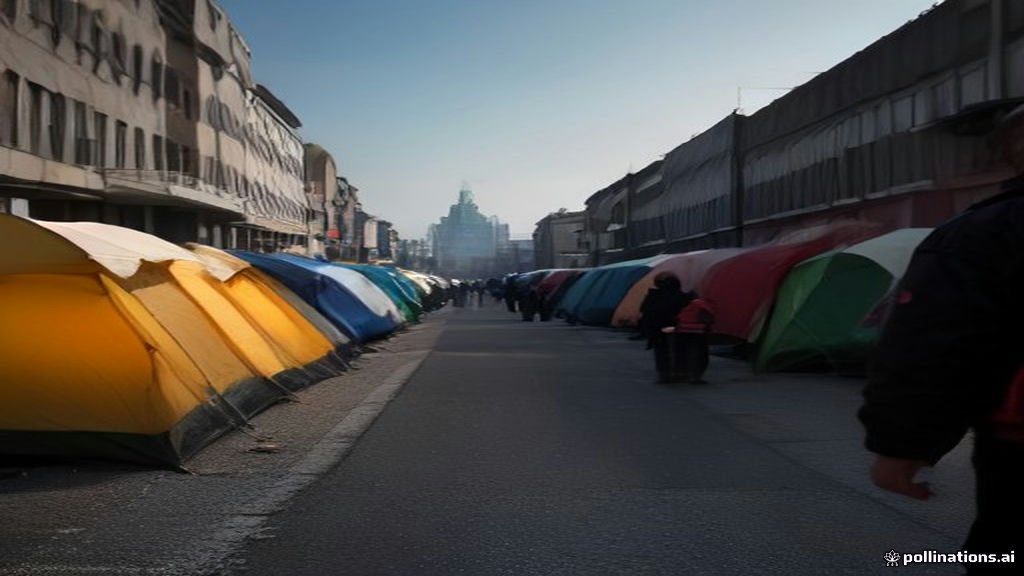
National Homelessness Rate Drops Over 6% as Administration and Advocates Clash Over Causes
The number of people experiencing homelessness in the United States fell by more than 6% in 2025, taking roughly 49,000 individuals off the streets and out of shelters. The drop marks the second consecutive year of decline following a smaller reduction in 2024, reversing years of record-high figures. Despite the positive trajectory, total figures remain elevated, with nearly 700,000 people across the nation still living without stable housing—significantly higher than pre-COVID-19 pandemic levels.
Official accounts of what drove the shift differ sharply between federal officials and housing advocates. Announcing the results of the annual nation-wide count, Housing and Urban Development Secretary Scott Turner pointed to federal enforcement actions. “President Trump’s actions to secure the border, get criminal illegals off our streets, and restore safety to our communities drove a historic decrease in homelessness,” Turner said in an official statement. HUD hasn’t yet published its full detailed report.
However, an independent analysis commissioned by the advocacy group National Alliance to End Homelessness reached a different conclusion. Ann Oliva, chief executive of the alliance, pointed to federal funding and targeted relief rather than border enforcement. “It’s good news that more people are getting housed, and that the programs that are funded by Congress are working,” Oliva said.
Immigration, City Policies, and Policy Disputes
Administration allies argue that shifting immigration trends played a major role in the reduction. Devon Kurtz, public safety policy director at the Cicero Institute, noted that cities like New York, Chicago, Boston, and Denver experienced massive influxes of asylum seekers into their shelter systems during the Biden administration. “That’s also the four cities that have driven half of the drop most recently,” Kurtz said.
Kurtz also highlighted local policy shifts in cities such as San Francisco, which has moved toward supporting sober-living models that prohibit drug and alcohol use. The Trump administration is seeking to overhaul several billion dollars in federal homelessness funding, shifting funds away from traditional “Housing First” approaches—which provide permanent shelter before treatment—toward short-term housing paired with mandatory addiction and mental health care. Federal courts have so far blocked those proposed spending changes.
Critics warn that requiring sobriety can force individuals back onto the street if they relapse. Federal officials maintain that the previous policy failed and caused the pandemic-era surge, but housing advocates counter that low-barrier housing remains vital, pointing to significant progress among former service members.
Targeted Support, Encampments, and Market Factors
Oliva highlighted federal programs that provide housing without preconditions as a primary driver of success for former service members. “Investments in programs like that are much closer to the scale of need for veterans than for any other population experiencing homelessness,” she said. Veteran homelessness fell by more than 7% last year and has dropped nearly 60% since 2010. By contrast, individuals experiencing chronic homelessness saw a small uptick last year, highlighting an ongoing need for permanent support.
The role of local encampment bans also remains controversial. HUD credited municipal crackdowns following a 2024 Supreme Court decision that allowed cities to ban sleeping and camping in public spaces. However, Oliva noted that the National Alliance analysis found cities enforcing public camping bans “actually did worse than the national average.”
Broader economic and environmental factors contributed to the national drop as well. Rents have cooled from peak pandemic highs, helping stem the inflow of newly unhoused individuals. Also, disaster relief deployments in areas hit by severe weather, such as Hawaii and western North Carolina, brought emergency HUD resources that connected previously unhoused residents with newly available aid.