
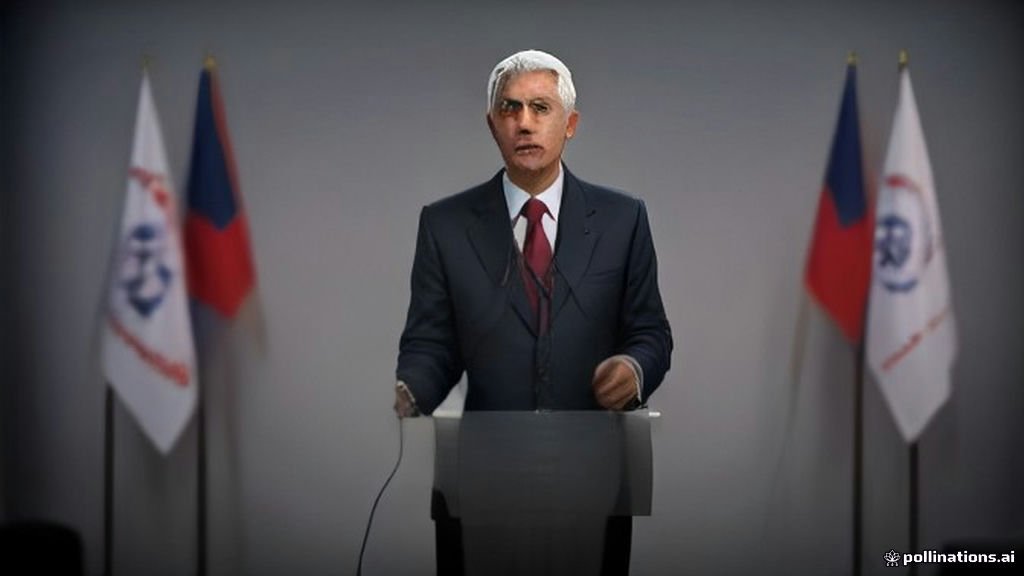
Serbia’s Reform Movement Selects Belgrade Chemistry Professor as Presidential Candidate
Serbia’s student-backed anti-corruption coalition has selected Belgrade University chemistry professor Radomir Saicic as its official candidate for the upcoming presidential election scheduled for December 27.
The announcement follows the movement’s October electoral victory, where its political wing, the Student List, secured 140 seats in the 250-member parliament. Saicic, 65, currently serves in the assembly as a representative for the group. He is also a member of the Serbian Academy of Sciences and Arts and was among the earliest university educators to align with the student protests when they began in 2024.
A Focus on Anti-Corruption and Institutional Reform
Addressing reporters during a televised news conference in Belgrade on Friday, Saicic outlined his priorities, emphasizing institutional recovery and anti-corruption measures. He pledged a “sovereign Serbia in which the constitution will be respected and in which every citizen will be able to live with dignity.”
“Now we have the opportunity to turn the freedom we fought for into lasting change,” Saicic said. “The assembly, the government and the courts must once again earn the trust of the people. The same applies to the institution of the president.”
Saicic criticized the previous administration, stating that “the last decade was marred by the crumbling of the rule of law, corruption and hate speech,” and warning that “the outgoing regime is still trying to disintegrate our state.” He stressed that the country must focus on restoring basic public institutions to counter these effects, expressing gratitude to the student activists for nominating him.
Political Realignment After Years of Protests
The presidential contest marks a major shift in the Balkan nation’s political landscape. Former President Aleksandar Vucic, who dominated Serbian politics for 14 years, resigned early from his second presidential term to run for prime minister in October. His effort failed after the student-led movement handed his party a decisive defeat in the parliamentary ballot. Vucic is constitutionally barred from seeking the presidency again due to term limits and now serves as an opposition lawmaker.
While the Serbian presidency is largely ceremonial, the officeholder holds key constitutional responsibilities, including nominating the prime minister and serving as commander-in-chief of the armed forces.
The political upheaval traces back to 2024, when a concrete canopy collapsed at a recently renovated railway station in Novi Sad, killing 16 people. Widely attributed to public sector corruption, the disaster touched off Serbia’s largest mass demonstrations since the fall of Slobodan Milosevic in 2000. Public pressure initially focused on demanding a transparent investigation before expanding into calls for early elections, which Vucic called after resisting for nearly two years.
Vucic has hinted that his Serbian Progressive Party (SNS) might boycott the December 27 election entirely. The party is scheduled to announce its final decision on whether to participate in mid-December.