
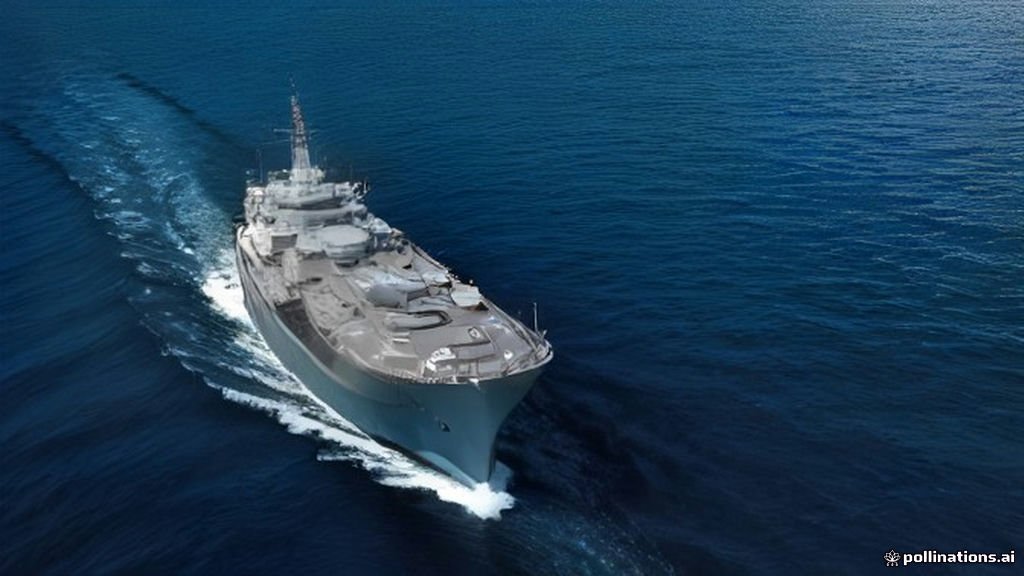
U.S. Retaliates Off Iranian Coast Following Third Drone Attack on Bahrain Bases
Tensions in the Persian Gulf escalated on Tuesday after Iran launched drones targeting a U.S. Radar installation in Bahrain, marking Tehran’s third attack on American military sites in the island kingdom over the past five days. In response, American forces retaliated using precision munitions against Iranian military targets on Qeshm Island, located along a vital maritime shipping corridor.
Bahrain announced that its air defense systems successfully intercepted the strike, while military authorities confirmed that the Iranian assault caused no damage to U.S. Equipment and no injuries to American personnel. An official speaking on condition of anonymity to discuss sensitive operations said the U.S. Counterstrike on Qeshm Island was a direct response to persistent Iranian aggression toward service members.
Surging Naval Might and Escalating Standoff
The latest exchange comes during the eighth month of the war initially launched by the U.S. And Israel on Feb. 28. Despite early promises that the conflict would last only weeks, U.S. President Donald Trump has deployed a massive naval force to the region to enforce a blockade on Iranian shipping. Trump has stated that further large-scale strikes are highly unlikely, yet he recently sent thousands more troops and a third aircraft carrier group to the Middle East, while telling Vice President JD Vance that diplomatic negotiations are unnecessary right now.
With the arrival of the USS Theodore Roosevelt carrier strike group, total American naval deployment across the Persian Gulf, Arabian Sea, Red Sea, and Mediterranean now exceeds the force originally assembled at the start of the conflict. The Roosevelt joins the USS George H.W. Bush and the USS George Washington, alongside smaller warships. U.S. Central Command declined to clarify whether all three carrier strike groups will remain deployed in the area indefinitely.
Diplomatic Fallout and Regional Flashpoints
The Iranian Revolutionary Guard Corps issued a warning following the exchanges, stating that continued aggression against Iran’s airspace and the use of regional military installations for hostile actions “won’t go unanswered.” The strikes against Bahrain follow earlier attacks on Friday against a U.S. Early warning radar site and on Sunday against a radar installation at an American helicopter base.
Neighboring Arab states—including Egypt, Qatar, Saudi Arabia, and the United Arab Emirates—swiftly condemned Tuesday’s attack on Bahrain as a direct threat to regional stability and a violation of Bahraini sovereignty. During a news briefing in Doha, Qatari Foreign Ministry spokesman Majed Al Ansari warned that the escalating hostilities present an “extremely grave danger” to potential diplomatic resolutions.
Analyzing Tehran’s strategic calculus, Hamidreza Azizi of the International Crisis Group noted that Iranian leaders are weighing whether “breaking the blockade through escalation is less costly than accepting its continuation.” Security experts observe that Tehran is also contending with mounting domestic economic strain, while maintaining pressure on international shipping routes like the Strait of Hormuz and supporting Houthi rebels who have solidified control over the Bab el-Mandeb Strait in Yemen.